Three Early Homes: 1954-1970 A.D.

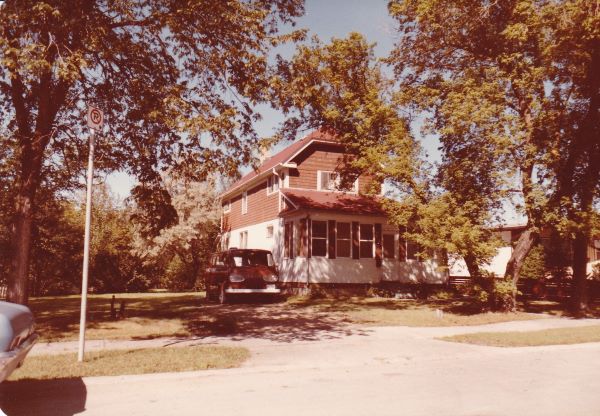
(1954-55: my grandmother’s house on Thompson Drive, two lots off Portage Avenue. She owned a cafe at the corner. Our upstairs bedroom had the wide window on the front. The house was torn down after the 1980s. I started grade 1 there in 1955.)
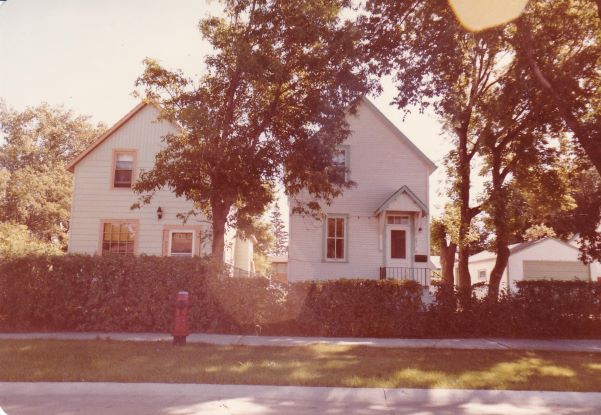
(1957-63: our own first house–on the right, of two houses built on Wallasey St. (one block over) in 1913, one year before WWI started. No garage. We sold the house in the summer of ’63 and moved out in September while I was in grade 9. My mother had me check the mail for the buyer’s cheque, then come to her workplace downtown to meet her for lunch so she could put it in the bank before the buyer changed his mind, as she put it! My room was in the back, upstairs, with an attached upper veranda which could be opened in summer months. There, I listened at night to my 2 transistor radio which brought in some big U.S. radio stations. My Dad decorated the veranda walls with stencils of Walt Disney cartoon characters.)
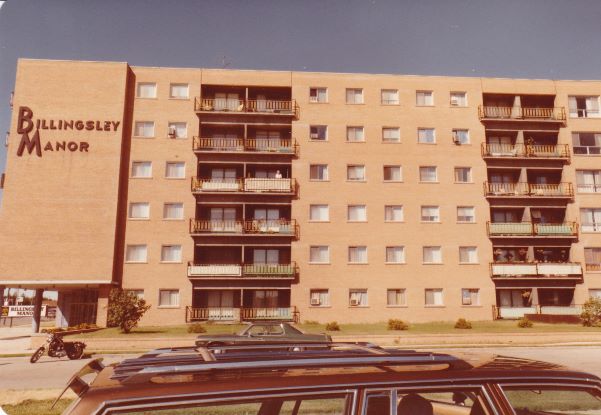
(1963-1970: we lived in 3 different suites: one in the front facing Portage Ave., two on the side facing Rita St. as shown here. We lived first on the second floor, two windows and balcony on the left of a 1 BR; then the far right windows and balcony of a 2 BR, same floor. It was a relatively short walk across the field behind Billingsley to my high school in ’64-’67, but, man, that field was frigid in winter! My friend Brad lived below the suite on the left on the first floor and we briefly would climb the balconies to go from one place to the other! Billingsley was nice and new compared to the old house and I was more comfortable entertaining and meeting friends there. When we go back to Wpg., we stay at a hotel conveniently located across from the block on the other side of Portage. One of the best features of the block was a fenced-in section on top which had a good view toward downtown. One summer, in grade 11, I was the caretaker, briefly, while the regular guy went on holidays. The furniture in the lobby was periodically re/stolen; I once called the police about one theft I witnessed. I moved out to Edmonton with my fiance after 2nd year u in the spring of 1970. My parents moved to another, smaller walk-up. Capri Apts. after that.)
Posted in Uncategorized | Leave a comment

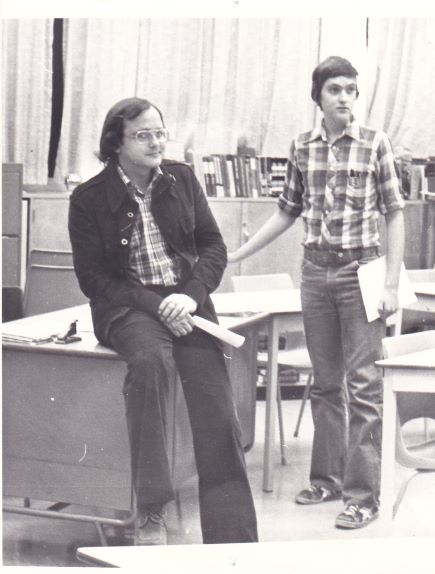
Teaching Memory, McNally, 1979

Posted in Uncategorized | Leave a comment

Band Memories, Grand Centre: ’72-75

’72: I did a duo with the guidance counsellor (who worked with me at Grand Centre High) which played the only lounge in town. We sang and played through my Fender Super Reverb. I was subsequently cased out and invited to a rehearsal with an existing trio.

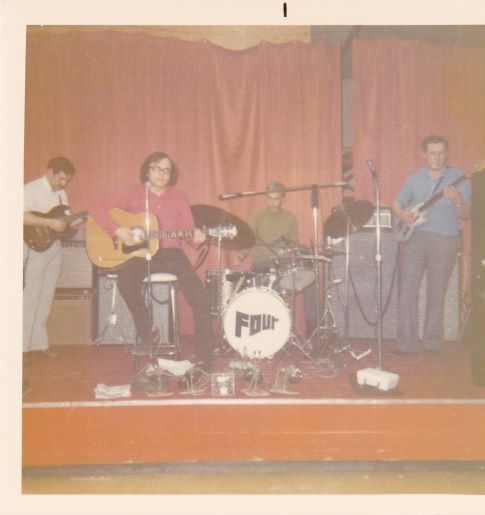
’73: I got the gig and we became Four and I eventually switched from playing my acoustic with a mike in it to a new Gibson Es 335TD and singing lead vocals.

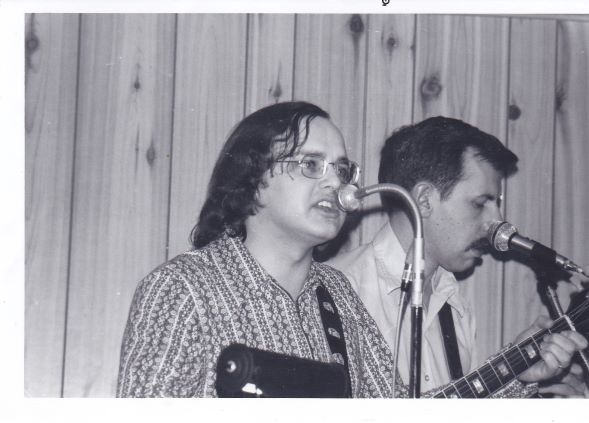
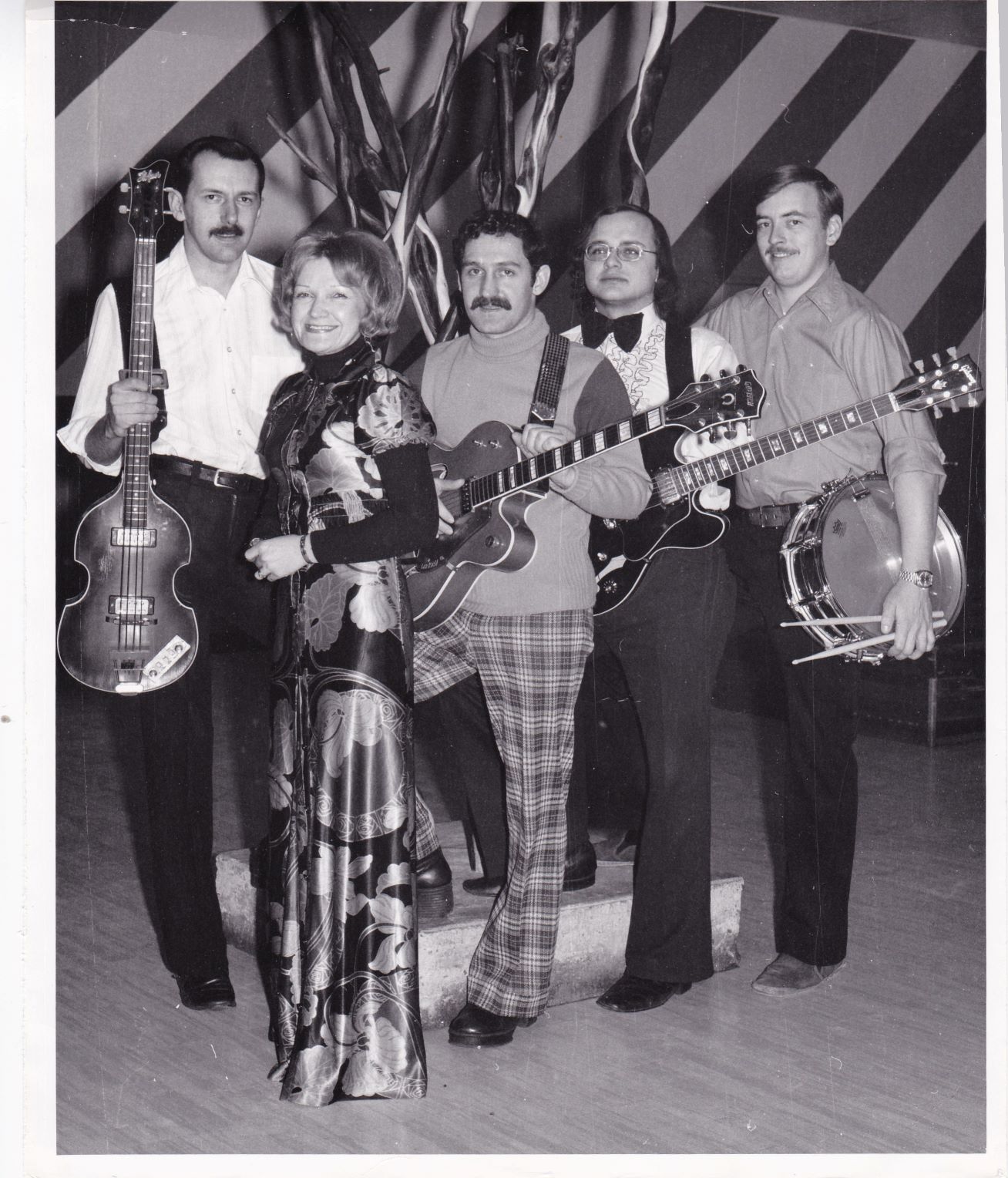
’74-75: We added a prominent female local singer and became Betty Plus Four, the best band in the area with many gigs in G.C., Cold Lake, CFB Cold Lake, and played Wainwright twice and CFB Namao.

1973: starting up with Four

1974: Betty Plus Four at the Cold Lake Legion

1975: the official band photo

Posted in Uncategorized | Leave a comment

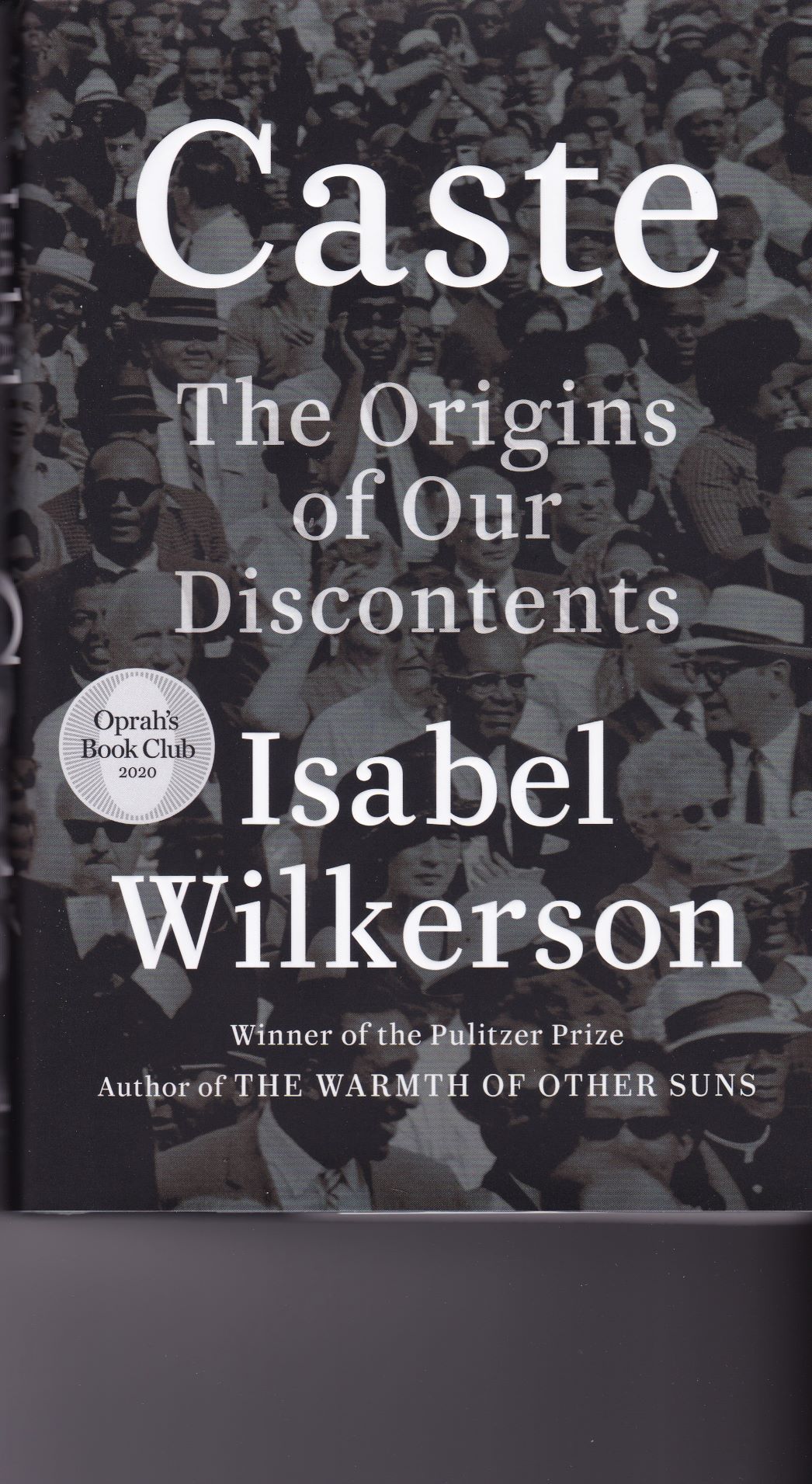
“Caste”: A Necessary Background Book on Race

Veteran black journalist Isabel Wilkerson has done an admirable job of exploring the history and recent manifestations of racism and caste in America. She opens with a fine metaphorical introduction about racism and caste being deeply embedded in the ‘old house’ that is America.

She then goes into America’s dark past about slavery in the States, and shows how the North withdrew its oversight over the South after the Emancipation Proclamation, leaving the ‘dominant caste’ to reassert their hold over blacks in the South. This was eventually followed by the Jim Crow laws that hardened the discriminatory structures in the South after WWI.

Africa and Nazi Germany also form two notable background ‘stories’ to the book. In one, Martin Luther King is surprised to discover that he is considered an ‘Untouchable’ in America and, in another, the Nazis learn lessons from America’s treatment of slaves to develop their infamous anti-semitism policies.

“The Eight Pillars of Caste” sub-section covers the basic assumptions that people have about racism and caste one chapter at a time to show what assumptions are below the social surfaces that presume white dominance.

Throughout the book, famous deaths, lynchings, and other violence from the past hundred years form a core of examples of the absurd, crazy injustices done to individual blacks including baseball pitching great Satchel Paige and, even, Barack Obama.

Along the way, the author tells of the uncredited black slave who innovated the idea of inoculation, the racial sympathies of Einstein, the amazing black forgiveness of a white woman black-killer in court, the important landmark work of the Davis anthropologists in the Deep South, the black boy Devonte offering free hugs who was publicly embraced by a white cop, and the health and economic consequences of skin color.

Her section on Barack Obama shows how much he was resented by a white majority through two terms (prefiguring the Trump claims and abuse), how much of that was based on fear and hatred, and the abuse he endured including the obvious in-the-face physical snub by a white woman governor.

It’s all quite the mixed bag and the home stretch is equally memorable with the section of white supremacist resistance to the very dangerous removal of Confederacy statues in New Orleans. Wilkerson finally leaves the reader at the end with hopeful thoughts about a caste-free world down the road.

The book’s many specific examples of racism are all memorable and often based on appearances, mistaken assumptions, and deep-seated unconscious fears and hate. Indeed, the author’s own instances of encounters with bare-faced discrimination are some of the most powerful in Caste.

In short, this 400 page opus is a must-read for anyone who wants to know more about the background of racism in America and the broader meaning and history of the caste system. Well-researched and engagingly-written, Caste comes highly recommended.

Posted in Uncategorized | Leave a comment

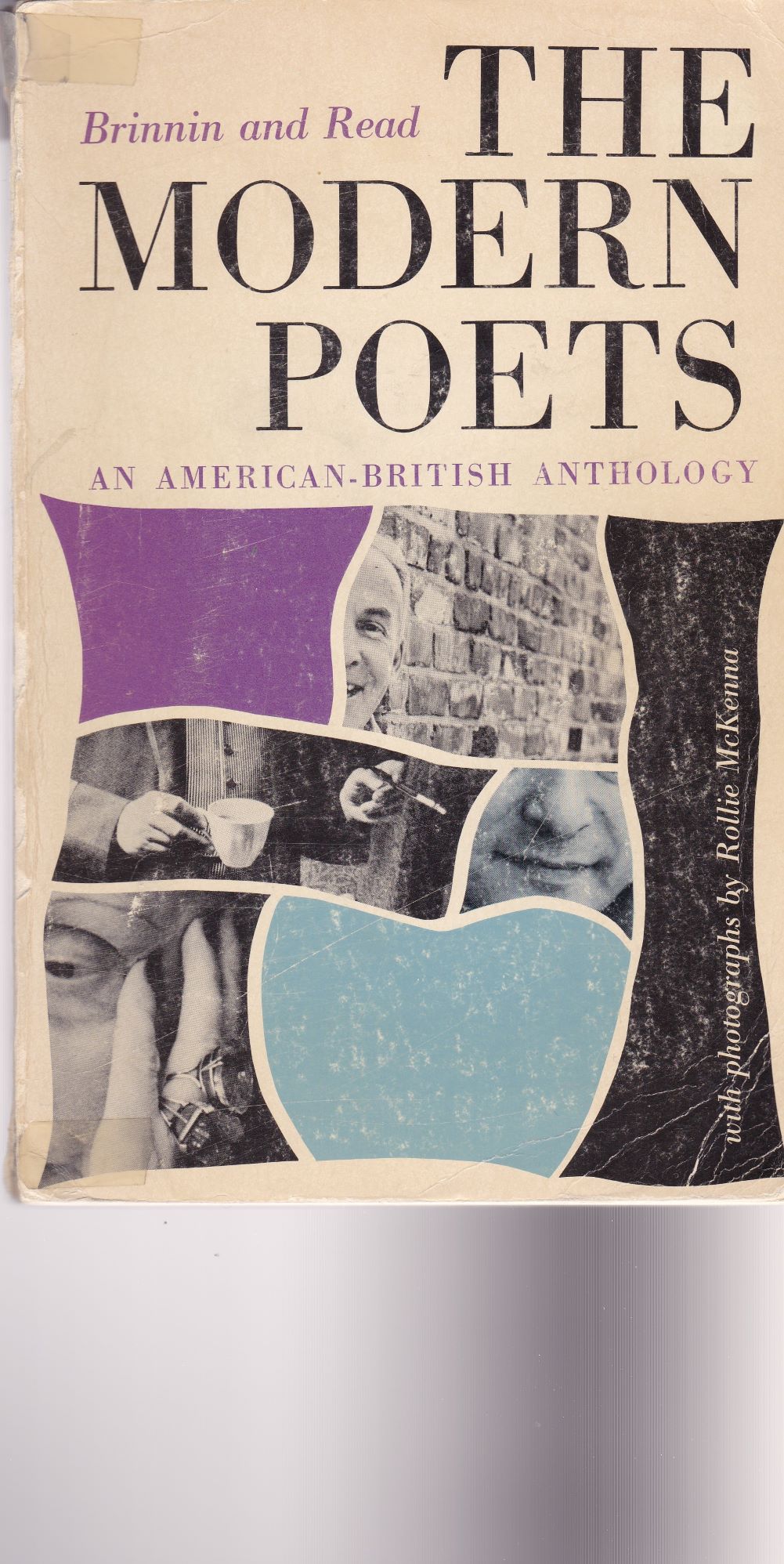
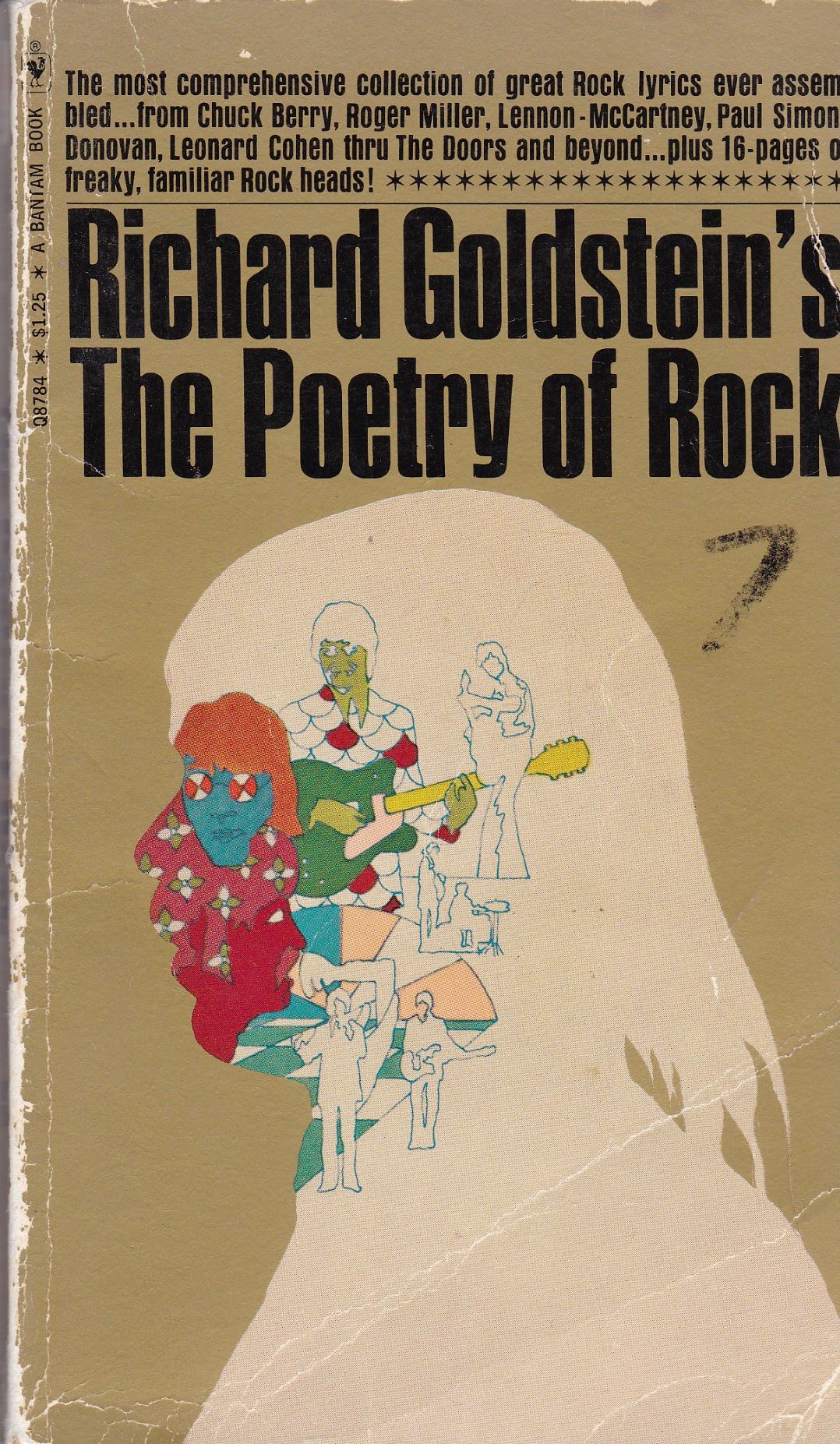
4 Memorable Poetry Anthologies, 1964-69,

that influenced my early teaching in 1972-75.

(this 1963 book I studied in my first u year, 1967-68, had a significant influence on me with its beautiful photos by Rollie McKenna and several poems by each of the major poets of the day including Auden, Cummings, Eliot, Frost, Stevens, and Thomas.)

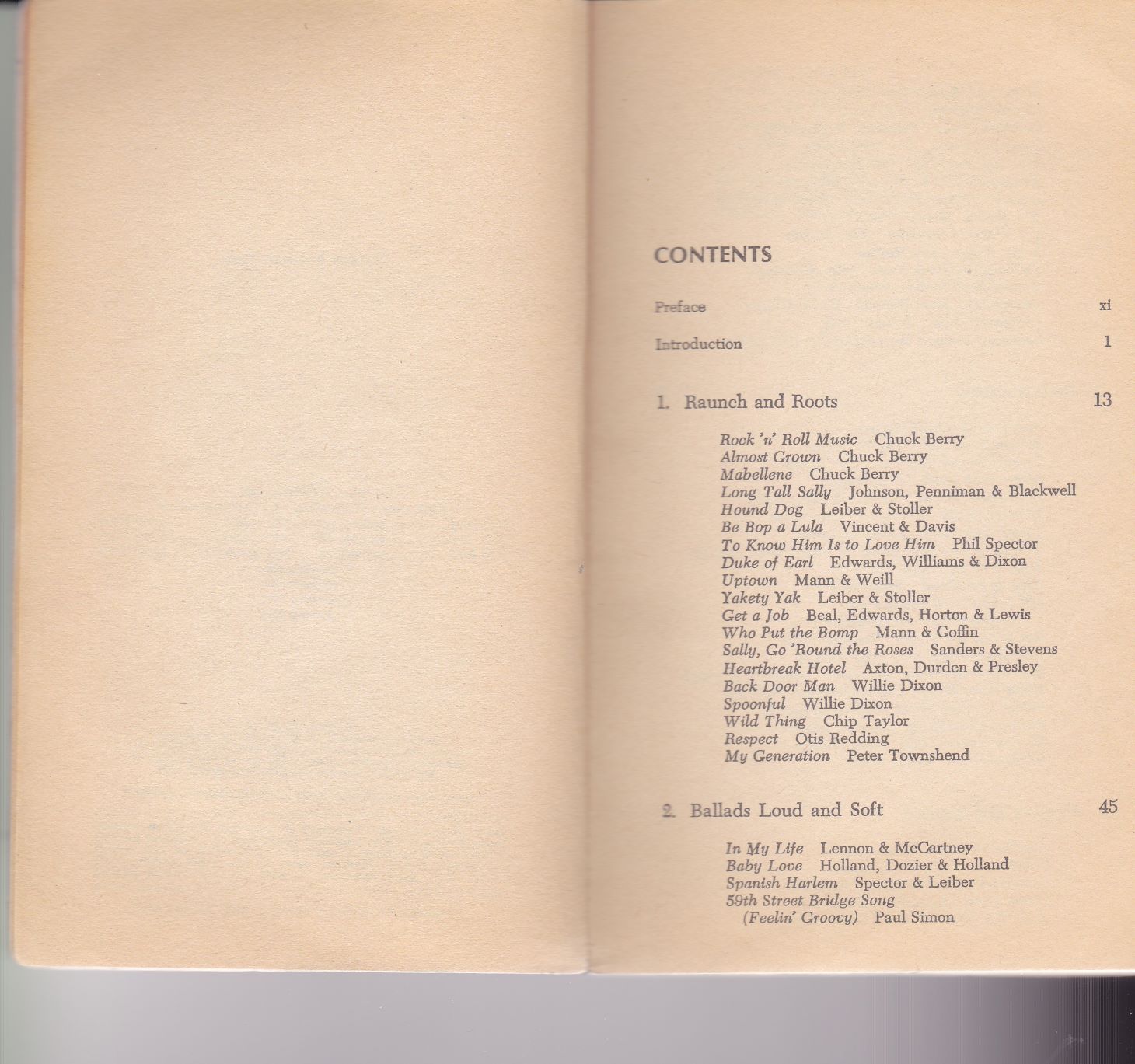
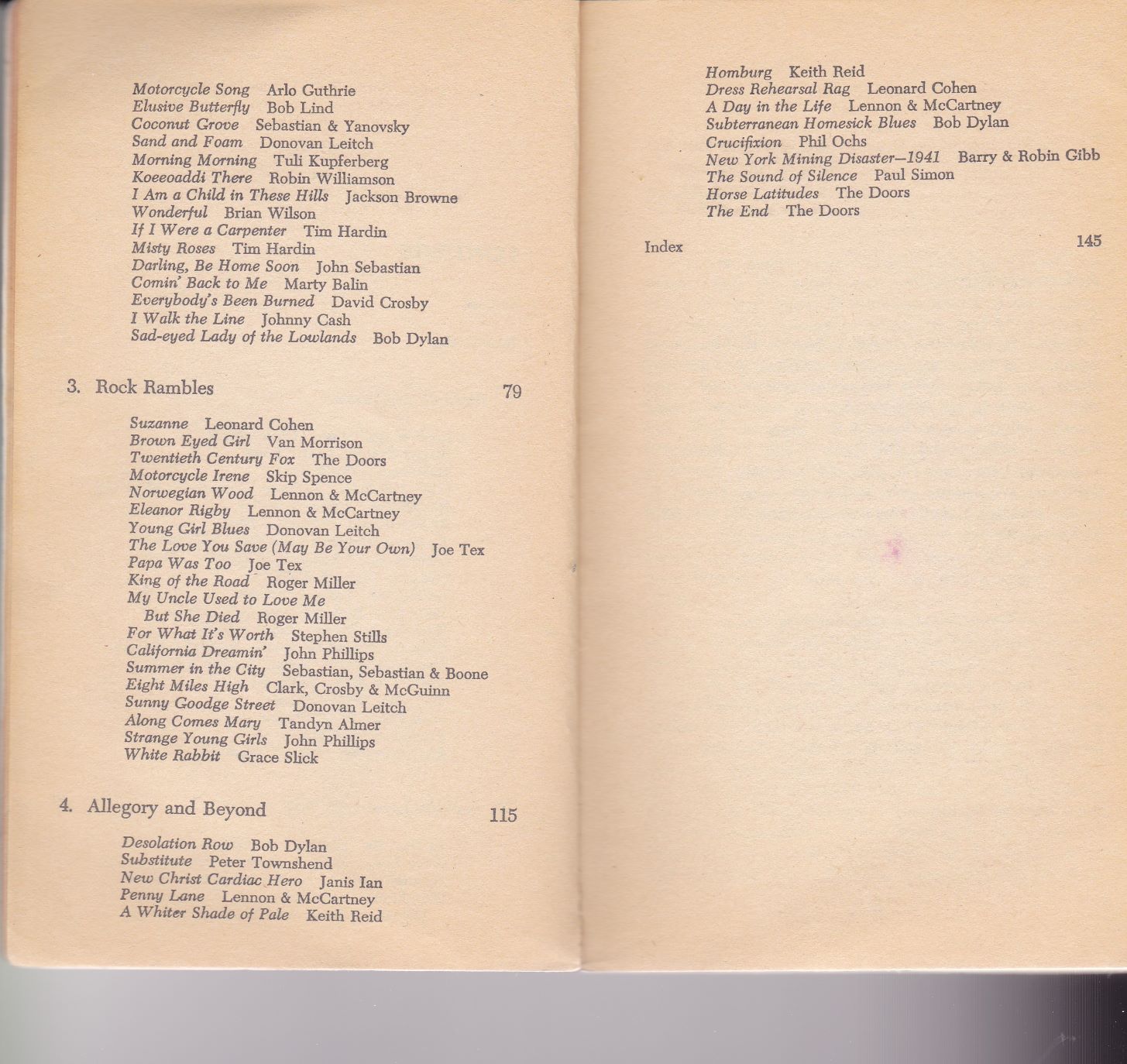
(a nicely done 1969 classic I found in a bookshop just before I started teaching in 1972. Nicely organized by Goldstein as you can see below with many classics. I was particularly impressed by the inclusion of “Sad-eyed Lady of the Lowlands”, “Suzanne”, “Eight Miles High”, “White Rabbit”, “Desolation Row”, “Penny Lane”, “A Whiter Shade of Pale”, “Dress Rehearsal Rag”, “A Day in the Life”, “Subterranean Homesick Blues”, “Crucifixion”, “The Sound of Silence”, and “Horse Latitudes”. I was so impressed that I offered a grade 11 option in ’73-’74 called The Poetry of Folk anchored by the likes of Dylan, Simon, Lightfoot, Mitchell, and others. The kids were knocked out by the Dylan songs.)

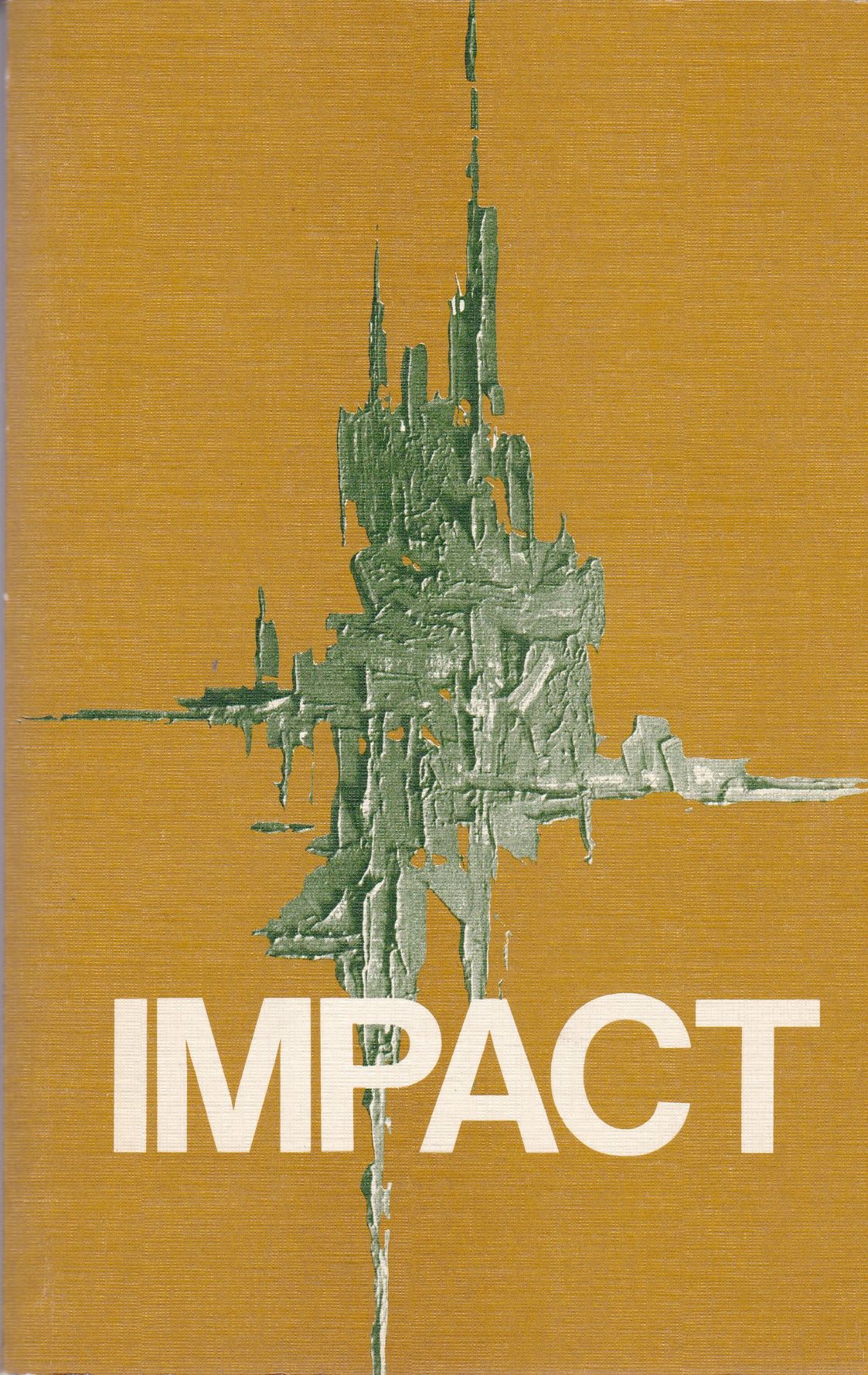
( a 1968 book of ‘popular’/’relevant’ American and English poetry I used in my first English 13–for general and nonacademic students. Many fine works including “Five Ways to Kill a Man”–Edwin Brock, “The Man Who Finds that His Son Has Become a Thief”–Raymond Souster, “The Unknown Citizen”–W.H. Auden, “Dulce et Decorum Est”–Wilfred Owen, “Snake”–D.H. Lawrence)

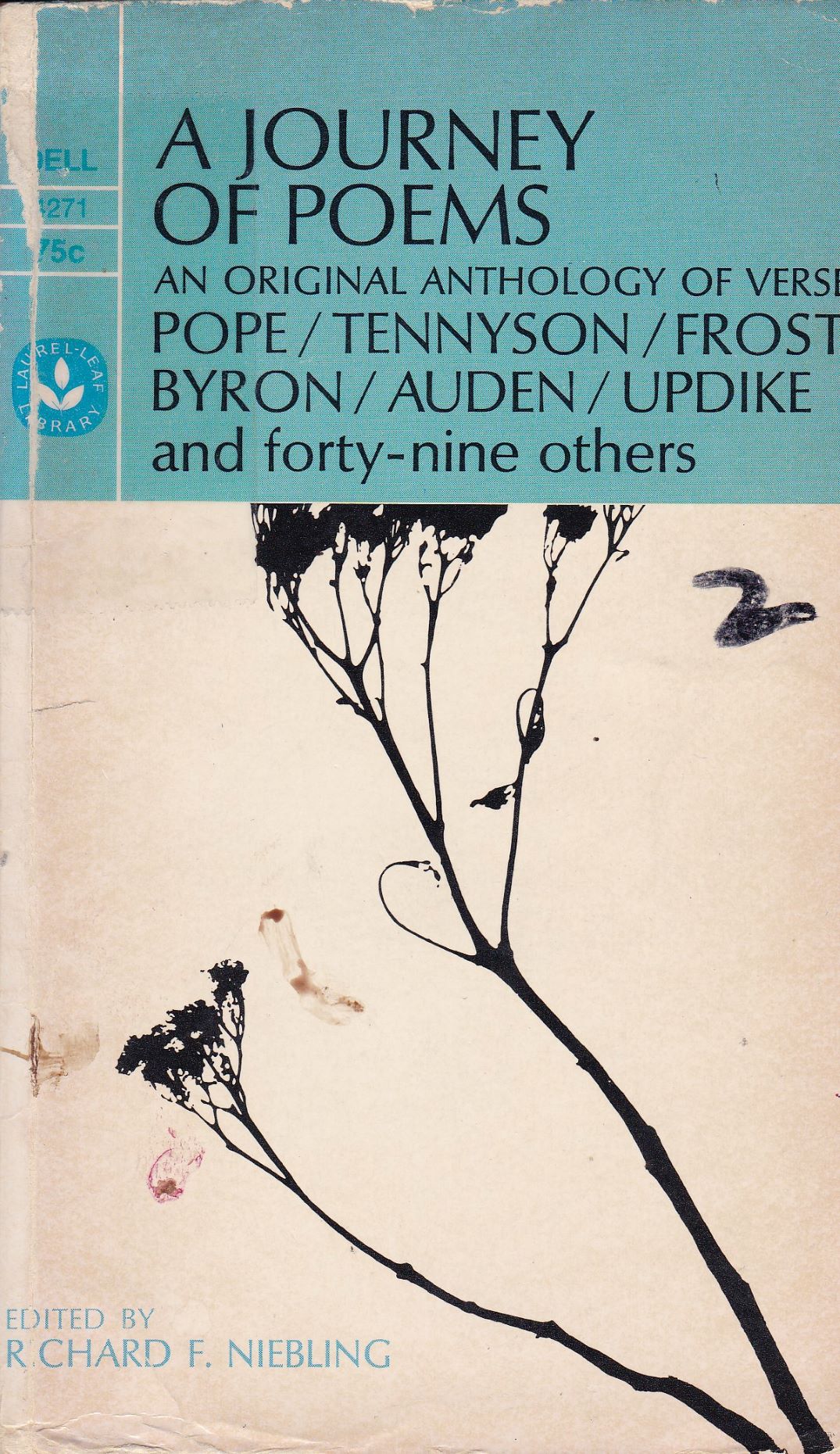
(a 1964 reprinted collection sold on the newsstand which I used for the gr. 11 Lit 21 option. It had many classics and old favorites including “Ulysses”, “Ex-Basketball Player”, “My Last Duchess”, “La Belle Dame Sans Merci”, and Coleridge’s long “The Rime of the Ancient Mariner” which I read aloud to the class in ’73-’74.)

Posted in Uncategorized | Leave a comment

A Good Oldies AB Radio Station Weekdays

1440 AM Wetaskawin.
Covers ’50s-’70s well.
And plays at least 1/3 olde Canadian you can hear nowhere else. Heard Edward Bear’s “Masquerade” and The Bells’ “Fly Little White Dove Fly” this morning, for instance.

Posted in Uncategorized | Leave a comment

Beyond War

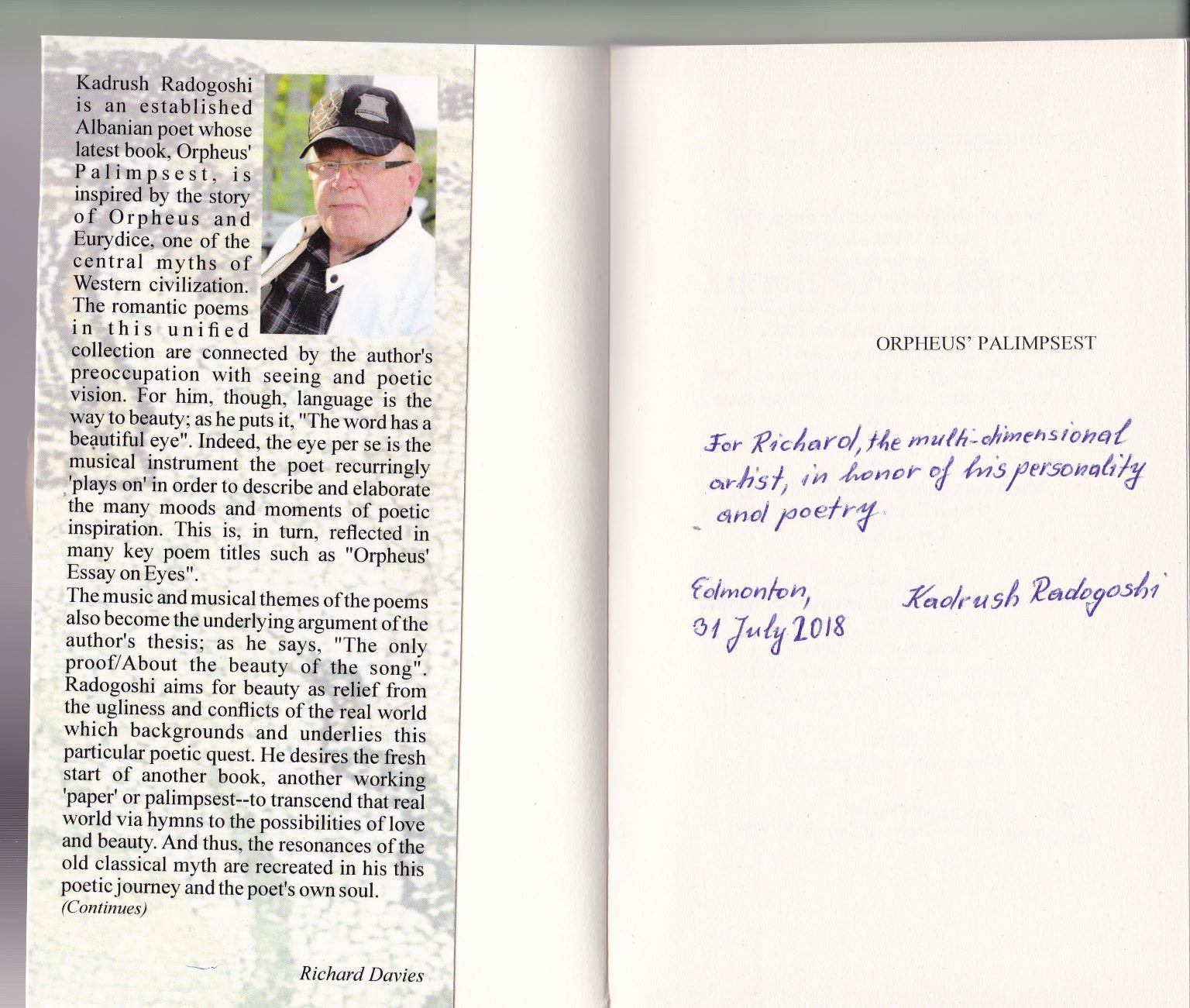
My Kosovo poet-friend Kadrush Radogoshi has written often about the war, violence, and injustices in his home region that he left to start a new life in Edmonton. This is one of his eloquent poems in translation from 2014’s A Devout Session 2 about the pity and aftermath of world conflict which I was rereading this morning.

The Monologue of an Unidentified Killed

The memory of me is decorated
In every just blossomed flower
With the morning dew covered…
In the dream of each migrator
To return to the genesis
Before the sundown,
Before the darkness imposes its power
Over all forms of being
The memory of me is carved…

On each lip ready to smile
Or to kiss any altar of beauty,

In the yes looking at the forbidden apple
In every bird twitter.
In the butterfly of memories,
In that sky of maidenly waiting
Is carved the memory of me.

The memory of me may knock
On a poetry when the summer breeze recites it,
In the dreamed ear of a love,
On any carved monument
For the square of mother’s saddened eye,
For the square of father’s burst lip…

(from Kadrush’s Orpheus’ Palimpest, 2018, which I had the honor to help him translate)


Posted in Uncategorized | Leave a comment

On Falls

Dumb stuff, often around the house.
Or in winter.
Not to be taken lightly.
Often leading to a long time off from work or the usual.
Time in hospital and convalescence.
And, too often, the very thing that takes out an elderly person.
One cannot be too careful when it comes to bathtubs, stairs, and rugs.
Or even mere balance in rising, sitting, standing and walking.
Yeah, sad and tragic to be taken out by an unnecessary, unexpected fall.

Posted in Uncategorized | Leave a comment

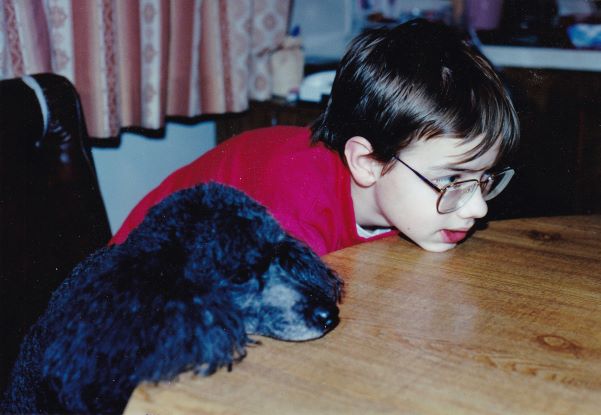
My Son Kidding with Poodle

early ’90s–an unexpected guest at the dinner table

Posted in Uncategorized | Leave a comment

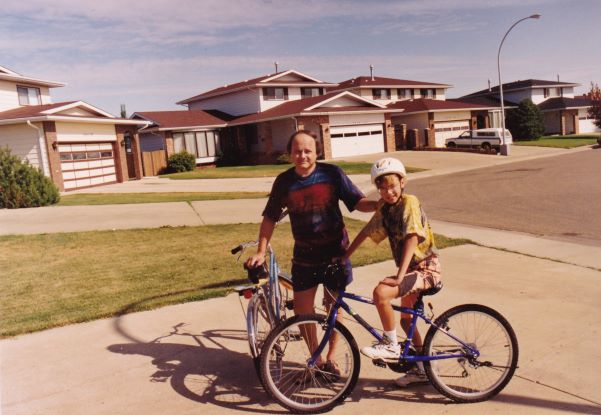
Cycling from Mill Woods to U of A

early ’90s with my son

Posted in Uncategorized | Leave a comment