Gregory Peck–A Truly Great Movie Actor

(Again, they don’t make ’em like they used to.)

Spellbound
To Kill a Mockingbird
Moby Dick
The Omen
Cape Fear
The Boys from Brazil
Arabesque
The Big Country
MacArthur
Gentleman’s Agreement
The Gunfighter
The Keys to the Kingdom
On the Beach
Pork Chop Hill
Twelve O’Clock High
The Snows of Kilimanjaro
Roman Holiday
The Guns of Navarone

Posted in Uncategorized | Leave a comment

Ingrid Bergman–A Truly Great Actress

(unlike most actresses today)

Spellbound
Casablanca
Autumn Sonata
Intermezzo
Murder on the Orient Express
Gaslight
For Whom the Bell Tolls
Notorious
Cactus Flower
Inn of the Sixth Happiness
Anastasia
Indiscreet

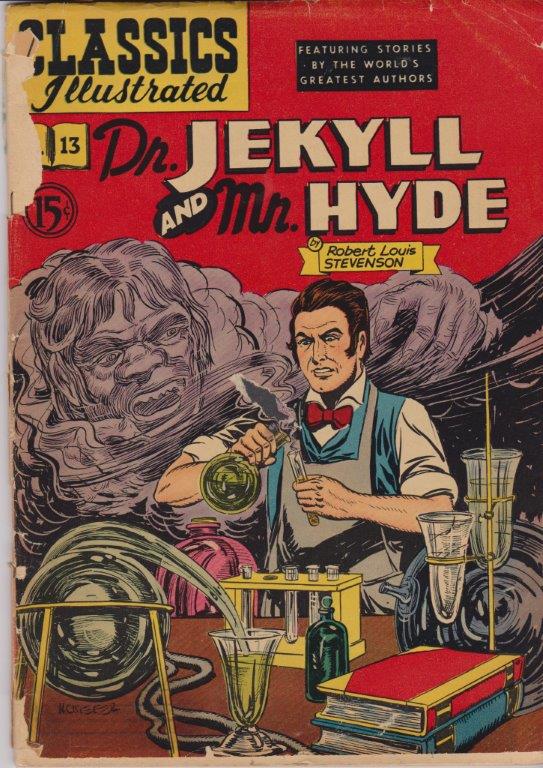
Dr. Jekyll and Mr. Hyde

Posted in Uncategorized | Leave a comment

Atwood

is the last of the good/more popular, older Canadian writers. When she dies, the olde pre-20th century CanLit school* is toast (except for maybe Ondaatje if you’re a fan). I would expect her to win the next or second-next Nobel Prize for Literature. She couldn’t fathom Dylan’s selection and was jealous of Munro’s selection. But she’s done enough, especially with the two new series, to get the big prize.

I think she’s overrated and always has been with her limited subject agenda. But I commend her courage in criticizing List Woman who has publicly condemned many men sans traditional presumption of innocence and criminal convictions. It is a disturbing trend smacking of real witch-hunting and McCarthyism. Absolutely no question, as Deneuve also put it, that this fad/trend has gone too far with insignificant people one has never heard of bringing down so many names, more and more lately on the basis of snowflake generation complaints.

The Internet has made it too easy to destroy people’s lives and careers and to make accusations not even entered in courts of law. Truth has often taken a hit these daze with what Trump called fake news. And there is something accurate to that view when applied broadly and generally to online opining by no-names and people with grudges and agendas looking to elevate themselves and their stars. Follow the agenda is my recommendation, as always.

*For the most comprehensive, chronological online history of pre-2oth century Can Lit, cf. my blog http://canlitbooks.ca


Posted in Uncategorized | Leave a comment

Although there is truth to Nature as being

peaceful and beautiful in a Wordsworthian Romantic way, the Byronic/Voltaire-ian view is probably more true in these turbulent, chaotic times. “Disasters” and “eruptions” as Shakespeare correctly described them.

Volcanos, wildfires and suffocating smoke, ice and icestorms, winter blizzards, heavy snowfalls, alternating rapid thaws and freezes, destructive floods, typhoons, tsunamis, hurricanes, tornados, rainfall deluges, pestilences, and plagues are the (new) norms.

Can there be any doubt that Nature is stronger, as unpredictable, and equally destructive as humankind? Now is the time to dispose of any namby-pamby notions that Nature is essentially and unilaterally harmonious and predictable. (So much for weather and climate forecasting.) It is, at best, forever changeful and irrational, much like human beings.

Nature being as freakish and violent as human nature and human destruction.

Posted in Uncategorized | Leave a comment

Spanish Memory, 1937

They appeared slowly one row at a time on the edge of the horizon. It was going to be another hot summer morning and the mist had faded. They had travelled far in the night–tired, hungry, walking on empty. It was very quiet everywhere and the soldiers were impressed to come upon some roses in a bush by the roadside. There it was they were suddenly reminded of home and all those who meant something to them before they had been conscripted. The long valley spread out before them and, at the end of it, the town. Seeing it, the men recalled all they had endured, their cause, and goal.

In the town, the people were awaking slowly. Some scratched themselves, drank coffee, fed the babies, and crossed themselves as they did each morning, wondering what the day would bring. Very few of them noticed an ant-like body moving steadily down into the desert as the sun began to get warm.

The soldiers, sweating now, had more certainty and occasionally glanced at one another as their walk turned into a march and the rows straightened out with more purpose–their boots kicking up dust along the centuries-old road which rolled downward toward the town.

In the town, there were breakfast smells, the sounds of babies crying, and old people muttering in their cots. All were still oblivious to the army advancing toward their quietude and peace.

Some of the soldiers began to feel a peculiar lightness and gradual exhilaration as they neared their destination, remarkably unimpeded. There were no airplanes or sentries during this last stretch.

It was only then that one of the townsfolk sounded the alarm, ringing the old chapel bell above the central square. This day would be different after all; the town was in for a change.

The glint of sun off the soldiers’ rifles struck fear in the townspeople now staring toward the east. The army had reached the bend of the road into town and their drummers were propelling them forward in readiness for the rout about to come. Engagement and carnage were now most likely; there would be no siege and little resistance. Today there would be glory and honour for the bravest. They would take the town easily and take it back for good.

The townsfolk ran like chickens in the narrow streets, trying to collect tools as they fled for a final stand. But it was too late; the enemy had entered the city in full regalia with their flags and gunfire. A cacophony of screams, explosions, and blood too long and awful to apprehend any further.

I saw a frenzied horse bolt from a man, his hands thrown up above the blaze he perished in. An incredulous mother howled for her dead child. A broken sword lay on the bloody ground. It would be of no use against the soldiers running from one building to another. But most of all, I remember the face of an agonized bull charging crazily through the wasteland that once was a quiet town on the road into a desert valley.

(based on listenings to Ravel’s 1934 masterpiece “Bolero” and viewings of Picasso’s 1937 mural “Guernica”)

Posted in Uncategorized | Leave a comment

I Would Concur:

“You cannot travel on the Path before you have become the Path itself.”
-Buddha

Clarity and achievement of significant purpose predisposes that an individual has the consciousness of being “It” in terms of choices in one’s own life and that there is no point in living according to what others think or say, or being restricted by the limits and limitations of others. Their lives are their lives. Your life is your life and you need to make your choices accordingly. There is no one-size-fits-all way to live life. People are individuals and have different flight paths and life stories.

“Life forms no logical patterns. It is haphazard and full of beauties–which I try to catch as they fly by, for who knows whether any of them will ever return?”
-Margot Fonteyn

Thank goodness for the beauties in life, eh? Fonteyn is right that a lot of life experience is fleeting, ephemeral, and essentially one-time. in that sense, opportunities, especially to experience beauty and love, do exist. One simply has to risk to activate these possibilities. And, for a lot of people, risk is, unfortunately just a four-letter word that limits the possibilities of their lives.

“If there is no struggle, there is no progress.”
-Frederick Douglass

Nothing good generally arises from passivity, laziness, not making choices, risk, hard work, and determination. each day I work on moving ahead in several ways, on several levels, in several worlds. A good day is when I can look back at the end of it and appreciate various progress and progressions forward.

“One doesn’t discover new lands without consenting to lose sight of the shore for a very long time.”
-Andre Gide

There have been days, weeks, and months when I have lost sight of the shore and significant purpose. Sometimes there was great restlessness or anxiety about lacking significant context. But, as with all journeys, they are processes and patience can help. Robert Frost talked of clearing the leaves on a pond to see more clearly, and sure enough, if one does, one will gradually see the purpose and path that are intended to inform one’s life ultimately.

Another poet, John Keats, inspired me with his “Negative capability” (the title of one of my books), which he defined as “when a man is capable of being in uncertainties, mysteries, and doubts, without any irritable reaching after fact or reason.”
Much of my retired life has gone that way, and I, going back to one of the earlier quotes here, could only have started on my own, more significant Path when at 40, I started doing more for myself and less for others, ironically. The consciousness that I was an individual who didn’t need others or could function well on my own was the beginning of the road to greater, more focused consciousness, and the best writing I and work I have taken most pride in. Becoming a full individual entails risk and increased responsibility, but the benefits and increased soulfulness are worth the risk and any loss of security.

Posted in Uncategorized | Leave a comment

Driving in to Sedona in January, 25 C (back in Edmonton, blizzard -25)

Posted in Uncategorized | Leave a comment

Hitchcock’s Film “Suspicion”

With one of his famous “unresolved endings” albeit a conventional romantic one, with perhaps shallower, less thoughtful audience members believing that Johnnie is really reformed after lying and manipulating his way through the entire plot, Hitchcock still has managed to create one of his classic ambivalent male-female character studies.

The rich only-child Lina is easily taken in by the lazy, charming, scheming n’er-do-well Johnnie who openly insults her by referring to her “affectionately” as Monkeyface throughout their relationship. A horsewoman, she figures she can control him (she says she’ll put the ‘bit’ in him) and that he really loves her despite such sneaky unforgivable acts such as selling off sentimental antique chairs–a wedding gift, no less, from her parents, and, unconscionably, trying to take out money against an insurance policy on her life. All very suspicious, of course, and midway through Lina has a potentially turning-point moment of wiseing up, by writing a farewell letter, then, ironically, tearing it up.

In one of his neglected, edgy classics, Suspicion, Hitchcock presents a deluded female protagonist who, despite numerous nagging doubts, naively clings to the fantasy that her chronically lying, scheming husband is really a good man at heart, who loves her very much. Completely baffling, of course, to the audience who is in on the real state of affairs from the beginning and which suspects Johnnie, long before Lina is finally convinced he is trying to kill her for money.

Cary Grant is outstanding, as his usual charming, generous, caddish self. (No one has ever played that role better except maybe George Sanders. C.f., his movie critic role in All About Eve.) He is also very funny and hard-to-dislike as his drinking/betting buddy Beaky points out. Somehow there is truth to what Lina wants to and finally believes about Johnnie and what he is like. But that is contradicted throughout the movie by such matters as Johnnie using and bilking Beaky as a convenient source of spending money. There is also the troubling matter of Johnnie’s handling of Beaky ‘s drinking problem and all the surface evidence that “Old Bean” who last attended Beaky before his murder was not some imaginary figure called “Olbean’ by the police, but rather “Old Bean” Johnnie.

And the climax of the car on the cliffs finale. Was Johnnie saving Lina or trying to kill her, unsuccessfully or with a sudden change of heart? Questions, questions. But Lina, unchanged and naively unwilling to believe Johnnie to be bad, buys into his final explanations, setting up what appears to be a conventional denouement. And yet that uncomfortable suspicion still left in more thoughtful audience members’ minds, questions like “Is he still lying? Are the final lies the consummate ones? Does Johnnie still plan to kill her for money? Is he promising reform just to continue using Monkeyface?” and so forth.

With perhaps the only answers being that they have both bought into who and what they are. That Lina, unchanged, will resume her irrational romantic fantasy, and that, realistically, Johnnie will never change and just continue to be Johnnie. Only an audience member, as shallow and naïve as Lina would accept and believe the movie’s apparent conventional happy ending. The sort of moviegoer with an innocent naivete like the female Charlie in the even darker Shadow of a Doubt, significantly Hitch’s own favorite film.

…………………………

Hitchcock, himself, was a very divided personality who himself was interested in romance (To Catch a Thief, Rear Window, Spellbound, Rebecca, and Vertigo, which is why he could realistically portray the romantic dreams of characters in love. But he was a cynic who had experienced and portrayed the lies and manipulations of many people and characters, quite often aided and abetted by superficial charm. As he pointed out, the Iago-like villain would often get nowhere close to his goals and successes unless he was attractive or likeable in appearance. Otherwise, no one would trust him. You see this in the above-mentioned film Shadow of a Doubt as portrayed by Joseph Cotton in the role of the male Charlie.

Much like two alter-ego peas in the same pod, he shows audiences how humans contain/embody both good and evil, innocence and corruption. Or two ends of the continuum, so to speak. But unquestionably, the Johnnies of the world must needs require the lenient, manipulable Linas of the world in order to complete/continue their selfishly egoic games and schemes. In this cynical Hitchcockian sense, Lina and Johnnie can be said to ‘deserve each other.’

In that sense, the movie’s conventional happy ending was actually a cynical sop served by Hitchcock to conventional-bound audiences of /for all time, and remains more dualistically open-ended or negatively-toned than it might at first seem.
Posted in Uncategorized | Leave a comment

Hitchcock’s Film “Shadow of a Doubt”

Uncle Charlie, a psychopathic killer of three rich widows on the run, arrives in Santa Rosa to stay with his older sister’s family which includes his overly-innocent niece-namesake young Charlie. A duality of good and evil and appearance and reality runs balancedly throughout Hitchcock’s own favorite movie. At one point, even the innocent young Charlie says she could kill her uncle herself. And in the ending, the town-beloved, philanthropic Uncle Charlie is given an absurd hero’s funeral by its citizens. What does it all mean? wonders young Charlie at the end. Was her uncle whom she once loved really a good man who simply went bad? Why did he hate the world and everyone in it? And so her shadow of doubt continues despite being the one flukey survivor of the strange duo.

Certainly, this is an essential core Hitchcock with the usual doses of abnormal psychology, murder, strong suspense, grim ironies and humor, and its challenges to audience. Most noteworthy is the blatantly cynical dinner-table speech of Uncle Charlie about the world as a “sty”, the people as “swine’, and the injustice of idle, non-working widows living off the hard work and saved money of dead spouses “eating and drinking the money” (incidentally, his motivation and rationalization for three murders).

A mask and a character’s views for sure, but one is left wondering if that is what the director really felt behind the mask of his many dark movies and evil characters. Did he himself live with the same shadow of doubt about the goodness, kindness, happiness, and innocence that young Charlie blithely espouses and ignorantly believes? Did he, like Uncle Charlie and his sister, miss an older, more idyllic age? And did the director believe, like the detective in the denouement, that sometimes perhaps the world just goes crazy?

Shadow of a Doubt is one of the strangest coming-of-age films ever made. Like other Hitchcock films, there are lessons to be learned–with some characters sadder, but wiser, and never the same after their own personal world views have been shattered. Hitchcock always pushed the envelope, time and again, presenting attractive, personable villains who aren’t just cardboard stereotypes. They trouble the viewer with their perspectives and get one to ponder that there are more things in heaven and earth than perhaps even we, not just young Charlie and the detective, had bargained on.

Shadow of a Doubt is a timeless, naturalistic-realistic (nothing fantastic about it), hard-hitting, and strangely true movie. Must-see viewing for anyone seriously interested in film, Hitchcock, ideas, human and abnormal psychology, views of the sexes, and life in a large, basic dualistic way.

…………………………

For many reasons, this movie parallels/echoes Shakespeare’s dualistically-viewed/constructed Macbeth. “Fair is foul and foul is fair”, “There’s no art/To find the mind’s construction in the face”, “Look like the innocent flower,/But be the serpent under ‘t”, “this even-handed justice”, “The primrose way to the ever-lasting bonfire”.

Posted in Uncategorized | Leave a comment

Antiques Roadshow Disappointments

The experts always say “Buy what you love. It’s the best reason to.” And yet…

An old woman on today’s show who wears clothes and adornments signalling her interest in appearances, images, and likely beauty. Thought she’d bought a certain vintage chesterfield, which looked like something she’d own anyway–the red plush cushioning, the wooden decorations. Paid 2 thou for it and believed it was the genuine article by a certain designer. She said, in any case, that she had had full value for it for as long as she had owned it.

And the appraiser slowly, painfully, took her through her missing information, leaving her with a value of several hundred and the unmistakable knowledge that the designer had been dead years before her chesterfield had been made. She was palpably disappointed.

She had bought something she really liked and maybe she did feel she had had her money’s worth of enjoyment quite apart from what she believed was the true nature of the item. But she had also bought a dream, an image, a surface, without adequate background, without complete information. She wanted to believe, and that hope had misinformed her choice on a number of levels. She had set herself up for disappointment because of a lack of info and experience with regard to genuine antiques.

Same thing happened earlier on the same show to an aging, grey-braided Lynyrd Skynard t-shirted hippie who came to find out if he owned genuine Remington and Russell cowboy sculptures. He didn’t. Both had believed they owned something genuinely valuable, but their dreams turned to dust for public viewing, and to serve as a lesson to buy carefully if one is planning to buy the real thing.

Posted in Uncategorized | Leave a comment