(A ‘Personal Record’ to Age 25)
To understand oneself–to know how one came to believe and value what one does.
Means an excavation of signposts or trail markings from the past. In my case, it means the literature I read in my teens and twenties. From that, I drew much of what I had not experienced personally. That information from literature helped to form me, in particular.
-“David” by Earle Birney: an early poem before my time, read to my class in grade 5. It created a fascination for mountains which has never died and a long-abiding acceptance of mercy-killing, emotionally and rationally argued.
-“Someone came knocking at my wee small door” by Walter de la Mare: that poetry could be memorized, remembered, and performed–I performed this one Halloween when trick or treating in grade 6.
-“Birches” and other poems by Robert Frost: I had grown up to some extent close to nature so this was a revelation that one could write about nature and its lessons on life
-“On First Looking into Chapman’s Homer” by John Keats: my choice of poem for class presentation (gr. 12) signalling my interest in poetry, literature, and the imaginative views, perspectives, and models (pre-encounter with Northrop Frye) of literature
-“Ozymandias” by Percy Shelley: an early awareness that none of what man built would last, regardless of what ambitions or arrogance–one of the earliest poems I wrote was about the irony of my high school’s project for Canada’s centenary–and how it too (the school) would not last and be mocked finally by the (imagined later crumbling) memorial block. (This later turned out to be prophetic when the school was burned down, then knocked down some 40 years after my graduating year.
-”A January Morning” by Archibald Lampman: my second significant exposure to Canadian literature and confirming that poetry about familiar scenes such as Canadian winter existed.
-“Snake” by D. H. Lawrence: that one could have mixed feelings about nature and that man often destroyed nature out of ignorance; also that ignorant action also produced guilt afterward
-“Tintern Abbey” by William Wordsworth: that nature offered freedom, refreshment, tranquillity, and wisdom.
-“To a Skylark” by Shelley and “Ode to a Nightingale” by Keats: a confirmation that humans like nature had souls or spirits and could transcend whatever cares and limitations via nature and imagination.
–Return of the Native by Thomas Hardy: that novels could be exciting, romantic, and reflect human desires and failings. Clym possibly was an influence in my becoming a teacher. My view of working class and poor people was confirmed by Hardy’s views. Eustacia Vye was definitely the dark-haired, free-spirited romantic woman of my dreams for many a year.
–Pride and Prejudice by Jane Austen: the follies and misunderstandings of relationships as well as a number of recognizable human types
–Macbeth by William Shakespeare: the absolute best first play a high-schooler could encounter. The influence of mystery and bad human choices on character destiny. “Fair is foul and foul is fair” pretty much sums up the mixed feelings and aspects of human experience. My first major lesson on the deceptiveness of appearances soon followed in grade 12 by
–Hamlet by Shakespeare: this one covers a lot of territory certainly a lot of human angst, cynicism, mixed feelings, and the usual run of Shakespearean misunderstandings and deceptive appearances. This play is probably the ultimate work on hypocrisy although some of the works of Ibsen and Arthur Miller would vie for consideration as well. I would have to say that although this play is a tragedy, that Shakespeare’s views of love are somewhat borne out by life experience–it is often not meant to be or last.
-Read on my own in gr. 12: the easy-to-identify-with rebellious Holden in Catcher in the Rye and the secret love in D.H. Lawrence’s Lady Chatterly’s Lover–an introduction to wild, free/d love and sex; a message which resonated in the still-repressed, buttoned-down conservative-hangover of the ’50s/Eisenhower years.
-transitioning to university first year, and my own independent public-library explorations for the first time, I discovered the poems of T.S. Eliot, notably “Preludes”, “The Love-Song of J. Alfred Prufrock”, “Portrait of a Lady”, and “The Waste Land”. For a mind which had been greatly opened by Hamlet, Eliot was the perfect writer for a questioning, rebellious lad.
-I also studied Othello on my own, encountering Laurence Olivier’s remarkable record set (1 year later I would see the memorable movie) of the play. Whatever I was missing in terms of misunderstandings in relationships was pretty much completed by this play. There was, of course, to discover so much more on the deceptiveness of appearances and much about evil and how it succeeds. Who can forget Iago? And Cathy and Heathcliff, doomed romantic lovers in Emily Bronte’s Wuthering Heights or Jane and Rochester in Jane Eyre–again the long odds against love and the role of character and choice in determining fate
-Much of what stuck from first year university was, again, poetry. “Th’ expense of spirit in a waste of shame” by Shakespeare–all anyone needs to know about the nature of lust; “Poor soul center of my sinful earth” by Shakespeare–the body-soul separation; “Let me not to the marriage of true minds” by Shakespeare–the greatest poem ever written about love; “My mistress’ eyes are nothing like the sun” by Shakespeare
–romance vs. the real in love; “The Sick Rose” by William Blake–secrecy and sexuality; “The Chimney Sweeper” by Blake– socially-sanctioned child abuse and the hopes of the poor downtrodden’; “London” by Blake–the mind-forg’d manacles in which we ‘do it to ourselves’ and the sins of the father…;“The Clod and the Pebble” by Blake–two basic views of love, both right; “They flee from me that sometime did me seek” by Thomas Wyatt–changing relationships and intimacies; “Since there’s no help” by Michael Drayton: when it’s over, it’s over, but maybe not; “The Canonization” by John Donne–an early understanding of sexuality and spirituality (later explored wide-openly when I encountered Leonard Cohen’s Beautiful Losers); “Elegy Written in a Country Churchyard’ by Thomas Gray–still a favorite study of fame vs. obscurity and the commonness of death; a great ‘levelling’/perspective poem, “The Twa Corbies” by Anonymous–the ways of nature and human nature (how quickly humans ‘move on’–shades of Gertrude and “Is My Team Ploughing?”by A.E. Housman; Antony and Cleopatra by Shakespeare–the games lovers play, unnecessarily hurting and destroying one another and themselves.
-an introductory course in Classics: The Odyssey: the hero’s journey and the drive to reach home, followed by an inherent restlessness (“Ulysses” by Tennyson–in search of one’s bliss); plays by Aeschylus, Sophocles, and Eurpides–the bizarre workings of mystery, fate, and character.
-a memorable course in Comparative Literature (in English translation): L’Etranger by Albert Camus: the ultimate story of modern man as drifter in an absurd world; I easily identified with the sensibility of Meursault; “The Death of Ivan Illych” by Leo Tolstoy: dealing with death and finding one’s ladder against the wrong wall and a strong portrait of a faithful servant–overall a memorable study of dealing with the dying; “The Metamorphosis” by Franz Kafka–if ever one needed a work that illustrates how family limits and controls children as well as the sacrifices made doing work one no longer wants to do–and how destructive these things are to the individual; Dante’s inferno section of The Divine Comedy: an introduction to human sin and the limits the damned placed on themselves and others.
-a formative course in Canadian Literature: the nature poetry of the Confederation group–again showing Canadian preoccupation with nature, Who Has Seen the Wind–about as close to an archetypal presentation of prairie boyhood as it gets, Where Nests the Water Hen by Gabrielle Roy–my favorite portrait of simple rural folk; Under the Ribs of Death by John Marlyn–the best Winnipeg novel ever written–captures the difficulties of the Canadian melting pot of the ’20s, ’30s, and ’40s–this is a picture which lingered into Canada of the ’50s and ’60s; Settlers of the Marsh by Frederick Philip Grove–the first ‘bad’ woman of CanLit; Sunshine Sketches of a Little Town by Stephen Leacock–a charming, droll collection of Canadian humor and an introduction to the Canadian funnybone (later developed by SCTV, Wayne and Shuster, and many others); the haunting portrayal of the Canadian West by Wallace Stegner in Wolf Willow; “You Have the Lovers” by Leonard Cohen–the most beautiful poem about love-making ever written; the bawdy poems of Irving Layton–along with Cohen’s Beautiful Losers–the other (sexual) sensibility coming into play in Canlit–the stretching of topics and views of relationships; Morley Callaghan’s Stories–the view of ordinary folk and ordinary events as story-worthy.
-a many-readings course in Modern British and American Drama: (revisited from gr. 12) George Bernard Shaw’s Arms and the Man: the comedy of love and the clash between realism and romance; Henrik Ibsen’s A Doll’s House: an introduction, in-depth to the limits and limitations placed on women and the free choices of an early liberated woman; Ibsen is often thought of as a feminist but he was against any stuffy, restrictive restrictions on any human individuals; Tennessee Williams’ plays and presentation of conflicts between men and women–centering around appearances/romance and often coarser reality; and Anton Chekhov’s The Cherry Orchard–the conflict between old and new worlds with human beings’ failure to respond successfully or survive change
-an amazing course in 19th and 20th Century English Literature: an amazing tour which began with Lewis Carroll’s Alice’s Adventures in Wonderland as an allegory for 19th and 20th century life with the quest for identity, the games people play, the absurdity of life, etc.; Joseph Conrad’s incredibly prophetic The Secret Agent which sums up all one needs to know about the destructiveness and self-destructiveness of political agendas, terrorism, and violence; W.B. Yeats’ “The Second Coming”–still light years ahead of its time with all its various predictions about the human world; W.H. Auden’s so-true poems about time and love including “As I Walked Out One Evening”; the glorious poems about time by Dylan Thomas including “Fern Hill”–we are all green and dying (Bob Dylan’s “He not busy being born is busy dying”); the mystery of the Malabar caves in E.M. Forster’s A Passage to India which contain, again, man’s heart of darkness; Virginia Woolf’s A Room of One’s Own–a significant view of what any writer or creative artist needs as a base to live free; James Joyce’s A Portrait of the Artist as a Young Man–the freeing of the individual and the artist; Tom Stoppard’s Rosencrantz and Guildenstern Are Dead–the ultimate opus on games and life as performance; Graham Greene’s The Power and the Glory–a good example of the outsider figure on the lam and the archetypal conflict of the individual against society.
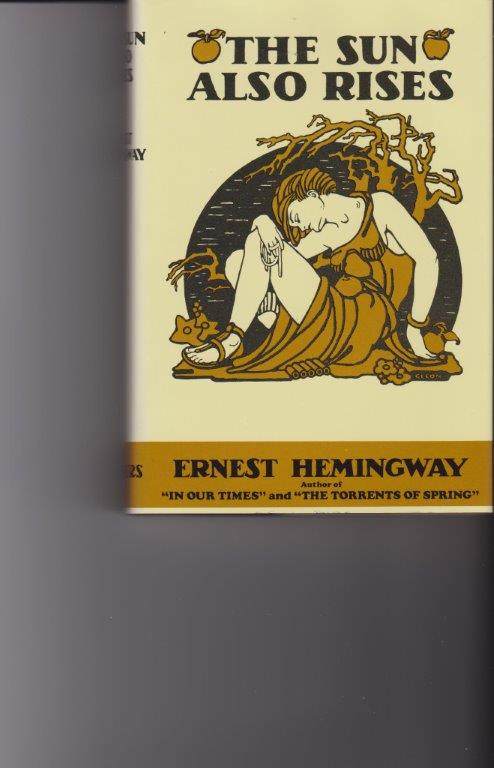
-a great introductory course in 20th century American Literature: Ernest Hemingway’s The Sun Also Rises–the search for meaning, purpose, and a code that works; dysfunctional male-female relationships; Theodore Dreiser’s Sister Carrie–following one’s bliss with tragic results; the illusory and delusional aspects of performance; John Steinbeck’s Grapes of Wrath–the harshness of nature and rural life; the achievement of individual and family goals against great odds; Willa Cather’s My Antonia–as in Where Nests the Water Hen–a nostalgic romantic piece about a spirited young woman and archetypal mother-figure; Lawrence Ferlinghetti’s A Coney Island of the Mind: ironic wittiness applied to contemporary life
-a memorable advanced course in Poetry: Walt Whitman’s Leaves of Grass–the ultimate sensitive, poetic response to life
-a turning-point Education methods course: Northrop Frye’s The Educated Imagination–the centrality of imagination in life and literature; and R.D. McMaster’s lecture “Why Read?” which became the foundations for my teaching of high school English for 30 years and eventually a career in high school English textbook publishing resulting in 60+ plus student texts and teacher’s guides.
…………………………………………………………………………………..
Well, some signposts and highlights, indeed. A sample of the information of literature, reading along the way, and their influence in my life. A significant part of what I have learned in life.
As can be seen from this reading list, I have been/was very lucky: ‘Born at the right time’. To have been exposed to some of that old Western culture Matthew Arnold called “the best which has been thought and said in the world”. The information of literature–part of the great information still available through the arts, but sadly no longer offered or available in many schools and universities nowadaze.
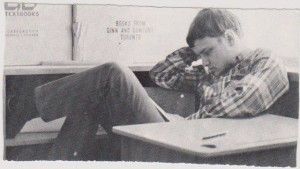
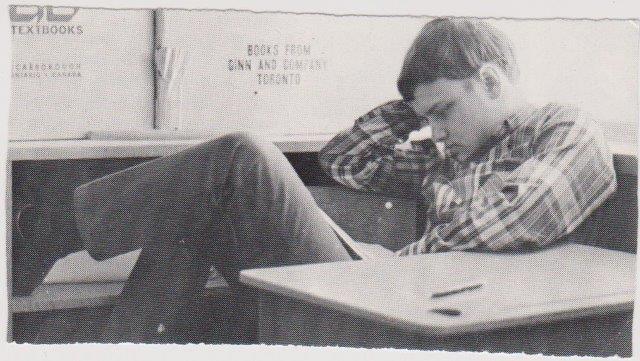
Winnipeg’s Rick Davies begins his long serious reading career in grade 12/age 17/1966 A.D.: