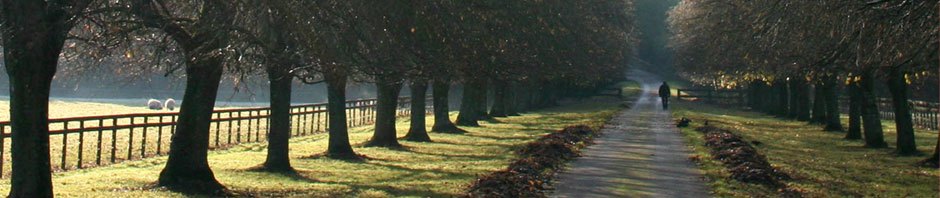
Alienation, Within

“Follow your bliss.” ”Live from your own centre.’”–Joseph Campbell

“Since in the world of time every man lives but one life, it is in himself that he must search for the secret of the Garden.”–Loren Eiseley

Alienation is a word which was very popular and in wide use in the 1960s. For example, “blacks in the United States are alienated from whites and should have the vote” or “Women are being alienated by male-dominated society by being underpaid”. Usually, then, the alienation called for and resulted in a variety of social changes–long-forgotten and taken for granted by subsequent generations in the decades that followed.
Alienation, then, often referred to the generation gap and the quite different experiences and behaviors of young and old.

The sense of the term alienation has long–going back to early modern thinkers–such as Fromm and Kierkegaard–referred to a significant separation between social, ethic, and gender groups as well as what might be referred to as ‘personal alienation’.
Personal alienation would refer to the sense and experience of being alienated from others–ironically, today in a wrap-around world of 24/7 smartphones, e-mail, and texting. In some ways these e-devices have made it possible for us to be and remain instantly connected, but do they give us a true closeness beyond a lot of ‘me-ness’ and otherwise, practical, convenient communication?

By and large, our experiences are best known by/to ourselves, no matter how many or how much others may ‘walk in our shoes’. Conversely, we may empathize and even sympathize with others, and have some sense, perception, understanding, or appreciation of their condition, but this will never be exactly, fully, the same as/identical to the actual felt and known experience of someone else. In other words, we are in a permanent state of isolation or alienation from one another–a fact that that usually becomes obvious when someone we know commits a serious crime, gets a divorce, or has a large agenda or crisis we were previously unaware of.

So the question quickly becomes, “Despite whatever apparent connectedness, how close are people really?” or “To what degree are people alienated from others in their lives?” (as in ‘how much alienation’)?

So the further question then becomes one of actual closeness and depth of connection or connectedness with someone else or others. How truly close are people beyond their roles in family, with spouses, friends, workmates, and other groups of people generally speaking?

There is, of course, much restlessness ‘out there’ today in the contemporary scene, that is, lots of ‘lost souls’, unhappy, chronically dissatisfied folks with (and here’s the cue for the next subtopic) many or large ’missing pieces’?

Alienation, finally, comes down to alienation from self. Those who are restless and incomplete or unhappy are usually separated from their dreams or goals. They are leading false, fakey lives which are largely just roles and performances. In other words, they’re living on and for surfaces, for images, for various self-delusions that often keep them going in some kind of permanent state of alienation from who they really are. In my opinion, roles and performance are easily about 80% minimum of what passes for daily life and immediate purpose and necessity.

Can one be authentic and true to oneself constantly and perpetually playing roles (in public, so to speak)? I think not, especially if following one’s bliss is not reflected in those surfaces. I think that only when one drops the roles and to, some extent, drops out, to find out who one is, without societal or work distraction, can one really begin to understand better ‘who I am’.

Life is a lot easier when one knows, mostly, their own self and identity, when one is listening to and acting out of one’s soul and spirit more simply and directly. Ironically, this may mean or lead to more social isolation or alienation, but to a large extent, that does not matter if one is more fully true to oneself–without kowtowing, masking, or pretending to others–a large %age of what passes for typical social interaction, And without projecting onto others authority and responsibility for one’s own unique, time-limited, ephemeral, ever-changing life. Basically, assuming authorship for one’s self and one’s own life.

Only then will the alienation within cease or be no more. Only then, free of unnecessary, distracting, limited/limiting people, conflicts and contexts, will one ever be truly free and autonomous.

………………………………..

“I must create a system or be enslaved by another man’s.”–William Blake

“The goal of the hero’s journey is yourself, finding yourself.”–Joseph Campbell

(previously published Jan. 27, 2013)

Posted in Uncategorized | Leave a comment

Robin Williams

“There are no rules. Just follow your heart.”

Posted in Uncategorized | Leave a comment

A New Kind of Love

A strange screwball romantic comedy from 1963 with husband-wife team Paul Newman and Joanne Woodward. (In real life they were married 50 years–the 2nd longest Hollywood actor marriage.)

“Strange” is certainly the word for just about everything in this entertaining oldie. Strange music throughout with Frank Sinatra unexpectedly singing the opening theme. Strange, but funny fantasy scenes including an Elizabeth Arden makeover of the ugly duckling female protagonist. Amazing, colorful costumes by the legendary Edith Head. A strange plot premise: Newspaper reporter Newman is sent to Paris after he philanders with his immediate boss’s wife. There he meets Woodward, a middle-class-fashion-buyer-plagiarizer who wears blue-tinted glasses and who has chosen a “half-maiden” nose-to-the-grindstone existence after one failure at love, and who has become distinctly unfeminine right down to her preferred name Sam. (Both stars are fun to watch together, in particular.)

The supporting cast is likewise strange with cynical Thelma Ritter as a boss’s associate who pines to marry him despite his dalliance with sexy Eva Gabor. Maurice Chevalier guests as an experienced ‘father-figure’ who tries to get Sam to see the beauty of male-female love.

Many of the attitudes and choices are politically incorrect today, but do reflect the time of the film, in which many male-female relationships conventionally ended up in marriage. There is also the typical ‘hip’ womanizing and female longing to find romance and marriage subthemes likewise. But these touches are more comic than offensive when viewed today.

Most of this film’s touches are just plain odd and strange compared with other typical ’60s romantic comedies. The men pointedly smoke cigars and cigarillos. Steve, the journalist, is strangely forgiven by his boss and heads back to America after a series of humorous columns about a prostitute’s amorous adventures. A drunk Sam talks on a ladder to St. Catherine about her love epiphany. Ritter originally wants to go out for onion soup with her bachelor-boss, which he later does with Gabor, then finally does with Ritter, which finally bonds them. One oddity follows another such that it is hard not to like this comedy which heavy-handedly parodies all the usual clichés and stereotypes.

In the end, A New Kind of Love turns out to be a uniquely strange, quirky, but light, humorous retro-trip and a nice, original variation of the familiar ’60s romantic-comic turf.

Posted in Uncategorized | Leave a comment

Prophetic Orwell

George Orwell, author of Nineteen Eighty-four, forecast many things that have become truths and truisms today. Here are some quotes from that book and others by one of the most unappreciated authors of the twentieth century:

The essence of being human is that one does not seek perfection.

At 50, everyone has the face he deserves.

Happiness can exist only in acceptance.

Of pain you could wish only one thing: that it should stop.

Reality is inside the skull.

Reality exists in the human mind and nowhere else.

Nothing was your own except the few cubic centimetres inside your skull.

To see what is in front of one’s nose needs a constant struggle.

To think, to think, even with a split second left–to think was the only hope.

Until they become conscious, they will never rebel.

Orthodoxy means not thinking–not needing to think. Orthodoxy is unconsciousness.

Perhaps a man really dies when his brain stops, when he loses the power to take in a new idea.

If people cannot write well, they cannot think well, and if they cannot think well, others will do their thinking for them.

Ignorance is strength.

Doublethink means the power of holding two contradictory beliefs in one’s mind simultaneously, and accepting both of them.

Great spirits have always encountered violent opposition from mediocre minds.

If both the past and the external world exist only in the mind, and if the mind is controllable–what then?

The consequences of every act are included in the act itself.

Freedom is the right to tell people what they do not want to know.

Early in life I noticed that no event is ever correctly reported in a newspaper.

There was truth and there was untruth, and if you clung to the truth even against the whole world, you were not mad.

The very concept of objective truth is fading put of the world. Lies will pass into history.

The most effective way to destroy people is to deny and obliterate their own understanding of their history.

In a time of deceit telling the truth is a revolutionary act.

Myths which were believed in tended to become true.

Advertising is the rattling of a stick inside a swill bucket.

All issues are political issues.

The opinion that art should have nothing to do with politics is itself a political attitude.

Political language is designed to make lies sound truthful and murder respectable and to give an appearance of solidity to pure wind.

Power is inflicting pain and humiliation.

Power is tearing human minds to pieces and putting them together again in new shapes of your own choosing.

If you want a picture of the future, imagine a boot stomping on a human face–forever.

The power is not a means; it is an end….The object of power is power.

Big Brother is Watching You.

Within certain limits, it is actually true that the less money you have, the less you worry.

Perhaps one did not want to be loved so much as to be understood.

If you loved someone, you loved him, and when you had nothing else to give, you still gave him love.

Posted in Uncategorized | Leave a comment

And They Call It Hockey

N.H.L. hockey, that is. The Todd Bertuzzi-Steve Moore lawsuit settled after 10 ridiculous, dragged-out years. (Bertuzzi sucker-punched Moore and ended the rookie’s career as the Vancouver fans howled for revenge and got more than they, Bertuzzi, and Moore all expected.) The end of two careers and two lives.

And they call it hockey violence. Or primitive, retributive revenge and savage goonery.

The confidential settlement is reputed to be eight figures. And, in the end, they call it Money, ultimately. It’s all about $$$$. Big bucks on/off ice. The top ‘sports’ story of the day.

Posted in Uncategorized | Leave a comment

Our Double-Thinking Times

(heard on intercom at chain drugstore): “Feel the Freedom! Restrictions apply.”

Same kind of psychological in tv drug ads–in which scenes of happy, healthy people are shown as the narrator quietly runs through serious and deadly side effects.

There are no shortage of Orwellian applications and relevance out there today.

Posted in Uncategorized | Leave a comment

On Freedom

Freedom is universally acknowledged to be a good, desirable thing. There are the large en masse freedoms for the many, such as the end of a war or a dictatorship. As seen on tv news, people are usually quite happy to be free from the many limitations that those negative contexts impose. On the basis of utilitarian philosopher Jeremy Bentham’s greatest good for the greatest number, these examples might be considered strong instances of freedom at its obvious, maximal best.

There are other freedoms available to individuals that are more familiar to most of us, albeit on a smaller scale. There is the freedom given to a baby or child to wander and explore his or her environment. There is the freedom to pursue whatever pleasures, pastimes, hobbies, and passions in whatever leisure time people can eke out in their busy lives. There is the freedom to pick one’s friends or where one wants to go to school or university, or to decide what one finally wants to do to make a living, career- and work-wise.

As is always the case with freedom, there are always limits, limitations, and restrictions that hold people back from being free to choose and act. A child may have to go against parental wishes or leave home in order to have friends or a freely-chosen career or lifestyle. A wife may have to go against her husband’s wishes and work in a job in which she earns her own money and makes more of her own choices. A man may have to leave a marriage in order to find himself and do more of the things he is interested in, perhaps things he once enjoyed and were ‘more him’ in his youth. Individual freedoms, then, which people choose and decide for themselves can be very liberating and lead to the realization of dreams, plans, goals, and self.

But what of the freedom shared between two? Sometimes when we fall in love, we may find that we are stretched such that we are moved beyond many familiar limits (including the ones we place on ourselves) to experience and embrace new ways of living and loving that free us from the same-old. In such shared moments of coupledom, we may find that are reborn anew, changed, and enhanced by this revitalizing two-ness. Our minds, bodies, feelings, and souls are released to experience the life-changing liberation that can only come through the open-heartedness and intimacy that are only possible through close contact with another.

There is a proverb that says “Love laughs at locksmiths.” Indeed, true, deep love unlocks the many limits and limitations that we and others place upon ourselves. At its best, it is the ultimate liberation: the shared, mutual, simultaneous experience of multi-levelled heart, mind, and soul connectedness. It can change the way we live and experience, and free us forever from a monolithic ‘single’ way of living and allow us to know and realize our life with and through others to the fullest. And so it is that the best freedoms might be the ones that consciously connect us deeply and meaningfully with at least one other person. And that the best freedom that most of us will ever know will be beyond that experienced as ‘one’, and encompass at least one more person, likely someone whom we love and become very close to.

…………………………………..

There is a lot to said for autonomy and independence, especially from situations and contexts which don’t or no longer work. The freedom of one is the most basic mode of freedom and has many advantages. The freedom of two I am writing about above has to do with the possibility that two people can, in fact, free each other from limited, limiting experiences.

In other words, there is a different consciousness based on deep connection between two people in which the individual is freed of the potentially isolating and therefore limited basic ego state which is, in itself, basically interchangeable with autonomy and independence. And in many ways, a close relationship between two people is greater (more multi-layered, multitudinous) or a greater entity or possibility than that of just one person. It is only through the expanded consciousness, experience, and depth of two that an individual might come to realize a richer, deeper, more intense life, love, and freedom.

…………………

(previously published here October 23, 2012)

Posted in Uncategorized | Leave a comment

A Need for Play

“All work and no play makes Jack a dull boy [and Jill a dull girl].”–from Mother Goose

Many animals play: dogs, cats, horses, otters, monkeys, dolphins. People, too, play beginning in their first year of life, once they hit the floor. This process seems to increase exponentially in the first two decades, moving through the toys and games of preschoolers, through elementary school recesses, the playing of sports, the other kinds of play fostered by art, music, and drama, and via computer and screen interactions of secondary school right into college and university.

Something there is which wants, needs, and loves to play from the simple activities of peekaboo, hide-and-seek, to some of the older bygone pastimes of marbles, skipping rope, and hula hoops. Much of that desire comes from the Inner Child that remains with us from our childhood into adulthood. The latter being a period when parents and grandparents discover all over again the joy and spontaneity of play, its pleasures, engagements, and meanings.

Some even get to play for prizes, competitions, and a living as in the case of professional athletes. Others get to play at different roles in plays, musicals, or as performers in concerts. Play permeates our lives and, indeed, the bored person in line at the bank playing Angry Birds distracts him/herself, as we all do with the play of various screen entertainment, be it on a smartphone, television, or bigger screen. Diversion and distraction similarly found by millions of others listening to their MP3s, car radios, CDs, and the like.

It seems in these distracted/distracting times, that much of what we do, in fact, is play or seek the latest gadget that will facilitate play of some kind. And yet much of adult life is awash in the seriousness of educating oneself, job training, working, careers, meetings, working for a living, working to maintain a home and family. Something people often take very seriously often for long periods of time. Until, in some cases, individuals may wake up to the seriousness, responsibilities, and heaviness of life which they have traded for, losing much of their personal freedom, leisure, and carefreeness.

In short, the missing play, inner child, and wisdom of both may get lost and forsaken, a ‘lost childhood’ and innocence described by Wordsworth in his “Ode: Intimations on Immortality” and recovered by Scrooge in A Christmas Carol. It is this freedom to play and engage enjoyably and simply that may not resurface at all if not for new love, retirement, or the joys of grandparenthood.

Life’s seriousness is guaranteed by all manner of things: divorce, illness, debt, bad luck, accidents, and so forth. At times, it may seem as if the glass looks half or mostly empty. But the return to/of the pleasures and engagements of play reveal some of the best of life– the possibilities of fun, and shared pleasure. In that, the recovery of the best and simplest of what one once was and can be again through will, attitude, and choice.
……………………
(previously published here November 5, 2012)

Posted in Uncategorized | Leave a comment

Basic

“But what is happiness except the simple harmony between a man and the life he leads?”–Albert Camus

Posted in Uncategorized | Leave a comment

Calendar Game and More

(grandson update, 29 mos.)

requirement: Backyard Birds Calendar.

Take Gwanma’s finger and touch each of the numbers of the month, giggling more and more once she begins to touch the 20s. Loud hearty laughs when she reads 30 and 31. Make a sound for the bird picture at the top. Turn the page. Repeat process.
…………………….
Pictorial Book Game

requirement: a book of color horizontal pictures of various English landscapes
Variation A: Put stickers of Thomas the train on bridge pictures in book.
Variation B: While reading with an adult, put your fingers on the page and walk them along paths, roads, beaches, saying do-do-de-do-de-do. ‘Walk off a page’, then turn page and find new places to walk. Laugh while repeating process.

Posted in Uncategorized | Leave a comment