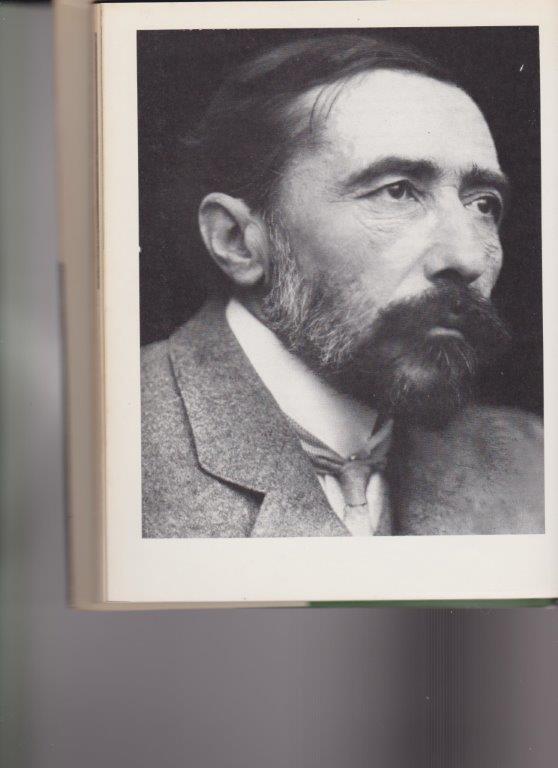
(bust on my bedroom English literature bookshelf)
There are many quotable lines and speeches taken from Shakespeare: “Beware the Ides of March”, “It was Greek to me” , “Romeo, Rome, wherefore art thou Romeo?”, but some have a greater ring of truth than others and I have selected some below which have stood out for or influenced me significantly.
…………………………………………………………………………….
“Love looks not with the eyes but with the mind.” -Midsummer Night’s Dream
(a romantic/idealistic view of love, but perhaps a more significant version than the mere sensory or physical kind)
“Nothing can come of nothing.” -King Lear
(one needs something to work with if one is going to produce anything/get anywhere; for instance, there have to be words, experiences, imaginings, facts, some context, etc. in order to create)
“Can one desire too much of a good thing? -As You Like It
(good question; the questioning of surfeit occurs elsewhere in S’s poems and plays; no doubt people certainly are/get disappointed whenever a good thing ceases)
“True it is that we have seen better days.” -As You Like It
(as one matures and ages, there will be better days and experiences that are recalled when the going gets tough or one is having an off-day or rough patch)
“Wisely and slow; they stumble that run fast.” -Romeo and Juliet
(this advice often comes in handy especially for young or immature people and old/er people who can physically hurt themselves if moving too fast or incautiously)
“True nobility is exempt from fear.” -Henry VI, Part II
(those we respect and look up to often display courage and a lack of fear even in difficult situations or crises)
“I bear a charmed life.” -Macbeth
(we may feel ourselves to have been lucky or fortunate enough to say the same thing.)
“The play’s the thing.”
–Hamlet
(much of life seems like a play, as reflected in other Shakespearean quotes; this may help us to better understand our lives if we appreciate the wisdom of this metaphor.)
“The native hue of resolution
Is sicklied o’er with the pale cast of thought.”
-Hamlet
(we have all procrastinated about various things in our lives, simply by delaying and thinking too much about them without taking action.)
“There is a diivinity that shapes our ends,
Rough-hew them how we will.”
-Hamlet
(often there are times when we feel that there is a fate or destiny beyond whatever personal choices we make.)
“We are such stuff
As dreams are made on, and our little life
Is rounded with a sleep.”
-The Tempest
(at times and in the long run, life can tire you out literally; ironically, too we spend a lot of our life dreaming as well as sleeping; much about our lives is basically illusion or dream-like )
“The fool doth think he is wise, but the wise man knows himself to be a fool.”
-As You Like It
(we’ve certainly run into both types of people and understandings; there is irony either way–much of life, as shown in Shakespeare’s writing, is ironic, ambiguous, and paradoxical–these factors are reflected, likewise, in life experience.)
“Lord, what fools these mortals be!”
-Midsummer Night’s Dream
(a lot of human behavior is foolish/absurd which is not surprising given our love of humor and play; we certainly do take ourselves too seriously at times–something mentioned in the previous quote.)
“There is a tide in the affairs of men
Which, taken at the flood, leads on to fortune.”
-Julius Caesar
(Timing is very important, as Shakespeare often points out; one has to act when ‘opportunity knocks’ if one wants to be successful in some way; one has to ‘ride the wave’ and ‘go with the flow’ when there are ‘windows’.)
“What’s gone and what’s past help
Should be past grief.”
-Winter’s Tale
(something Robert Frost matter-of-factly records in his “‘Out, Out–‘” poem about the accidental death of a boy–“And,they, since they/ Were not the one dead, turned to their affairs”; there is nothing wrong with facing/accepting facts and stoicism in matters of death.)
“Ay, sir; to be honest, as this world goes, is to be one man picked out of ten thousand.”
-Hamlet
(there seems to be a lot of dishonesty in so many different social situations–cheating on taxes, white lies, plagiarism, etc.; it is always refreshing to meet an outwardly honest person.)
“Forbear to judge, for we are sinners all.”
-Henry VI, Part II
(perspective–judging is easy and common; we all make mistakes; no one is perfect)
“Give every man thine ear, but few thy voice;
Take each man’s censure, but reserve thy judgement.”
-Hamlet
(same as above, hold off on easy and fast judgements; be prepared to get judged a lot in the process; it is a good idea to listen closely, too, and get all the facts before responding.)
“We know what we are, but know not what we may be.”
-Hamlet
(this applies to a lot of people who have hidden possibilities and potential, often unknown to themselves.)
“The course of true love never did run smooth.”
-Midsummer Night’s Dream
(it is hard to be pleasant or happy at all times with one’s significant other–no relationship is perfect; there will be upsets, hardships, disagreements, arguments, setbacks, and challenges.)
“Love sought is good, but given unsought is better.”
-Twelfth Night
(sometimes one can look too hard for love; sometimes one gets lucky and someone finds us and loves us anyway.)
“To hold, as t’were, the mirror up to nature.”
-Hamlet
(there is some point to this process–what Hamlet did to Gertrude in the closet scene–it may not be easy but be necessary, nonetheless, to level with people and show who they are and how they are behaving with the end of improvement in mind–‘tough love’)
“One touch of nature makes the whole world kin.”
-Troilus and Cressida
(nature definitely is what we are a part of, what we arise from; there are many benefits to incorporating nature in our lives and being close to it; potentially, a very positive, renewing and fulfilling relationship.)
“There are more things in heaven and earth, Horatio,
Than are dreamt of in your philosophy.”
-Hamlet
(although we may know quite a bit and figure we have a handle on stuff, there are many mysteries and unknowns; these come into play and influence us in significant, unexpected ways.)
“I am a man
More sinn’d against than sinning.”
-King Lear
(this does happen sometime that those who are blamed can also be victimized or marginalized as Lear was; Shakespeare is often perspectively ‘measuring things’ and is concerned about fairness or injustices as much as crimes or mistakes.)
“There is nothing either good or bad, but thinking makes it so.”
-Hamlet
(many situations are relative and not always black-and-white matters; there are usually multiple perspectives on the same thing, different and differing viewpoints; we always reach our conclusions about something through our own thinking; there is ultimately a subjectivity to the process of morality, ethics, and our personal choices.)
“To thine own self be true.”
-Hamlet
(the title of this blog/site; always a starting and reference point; it is usually good to follow your gut instinct, hunches, or intuition when not sure.)
“Brevity is the soul of wit.”
-Hamlet
(Shakespeare intended many meanings for ‘wit’–it can refer to humor and intelligence. Most people prefer concise speeches and humor, brief e-mails, and people getting to the point quickly, clearly, and sometime humorously.)
“For I am nothing if not critical.”
-Othello
(that judgemental side of humanity referred to previously; certainly most people have or find things to criticize and complain about.)
“Some are born great, some achieve greatness, and some have greatness thrust upon ’em.”
-Twelfth Night
(beyond the quote’s context, some, indeed, are seemingly different, unusual, and unconventional, seemingly marked from birth for greatness; I can’t think of a famous person from history who didn’t have to work to achieve whatever fame and greatness he or she had; it is true, also, that some people are lucky to be in the right place at the right time or become great unexpectedly, perhaps undeservedly.)
“All the world’s a stage,
And all the men and women merely players;
They have their exits and entrances;
And one man in his time plays many parts.”
-As You Like It
(life is like a play and the metaphors here clarify in what ways and senses that is true; we experience many scenes and other actors every day; the process of life is play-like or movie-like.)
“The quality of mercy is not strain’d…
It blesseth him that gives and him that takes.”
-The Merchant of Venice
(mercy is good and necessary in some cases; and it does benefit the people who judge as much as the people who are judged–many people need a break; it is particularly good to cut slack in non-life-and-death matters.)
“We have heard the chimes at midnight.”
-Henry IV, Part II
(at some point, we have all stayed up late having fun or carousing, enjoying life)
“When sorrows come, they come not single spies,
But in battalions!”
-Hamlet
(seemingly, once we experience troubles, they often mysteriously multiply)
“If music be the food of love, play on,
Give me excess of it”
-Twelfth Night
(beautiful music is extremely pleasurable and satisfying; one can never get enough of it; beautiful music and love go together, complement each other)
“The poet’s eye, in a fine frenzy rolling,
Doth glance from heaven to earth, from earth to heaven;
And as imagination bodies forth
The forms of things unknown, the poet’s pen
Turns them to shapes, and gives to airy nothing
A local habitation and a name.”
-A Midsummer Night’s Dream
(truly inspired poets and writers use imagination to create something fine or great out of nothing)
“In delay there lies no plenty.”
-Twelfth Night
(no point in wasting time especially if one is trying to or needs to accomplish something)
“Sleep that knits up the ravell’d sleave of care,
The death of each day’s life, sore labour’s bath,
Balm of hurt minds, great nature’s second course,
Chief nourisher in life’s feast.”
-Macbeth
(sleep is very important and does relieve our worries, restores our faculties, and enables us to go on more clear-headedly)
“Our remedies oft in ourselves do lie.
Which we ascribe to heaven.”
-All’s Well That Ends Well
(too often people rely too much on outside others or external forces to solve their problems; not assuming ultimate responsibility for their own lives)
“All that live must die,
Passing through nature to eternity.”
-Hamlet
(the fact of mortality of all of nature; ‘no one gets out alive’; ‘eternity’–there is a foreverness to death)
“Use every man after his desert and who would ‘scape whipping?”
-Hamlet
(we all make mistakes, have sinned; a certain amount of mercy, leniency, or forgiveness is fair/always a good idea)
“We must speak by the card, or equivocation will undo us.”
-Hamlet
(imperfect language is our medium of communication; we need to be clear in what we say and intend or others will not understand or misunderstand us.)
“The readiness is all.”
-Hamlet
(the readiness for when the time to decide, choose, or act comes; there is merit to preparedness and organization as well as imagination to foresee possibilities and likelihoods)
“The time of life is short;
To spend that shortness basely were too long.”
Henry IV, Part 2
(we need to spend our time more judiciously, thoughtfully, sensitively, usefully)
“O! for a Muse of fire, that would ascend,
The brightest heaven of invention.”
-Henry V
(the grandest call for inspiration and to creative expression)
“The fault, dear Brutus, is not in the stars
But in ourselves, that we are underlings.”
-Julius Caesar
(again, we are responsible for what happens to us; character is destiny)
“But I am constant as the northern star,
Of whose true fixed and resting quality
There is no fellow in the firmament.”
-Julius Caesar
(a statement of integrity and unchangeability, but potentially, too, one of stubbornness and pride before a fall)
“How sharper than a serpent’s tooth it is
To have a thankless child!”
-King Lear
(a parent’s worst nightmare: a child’s ingratitude or abusiveness)
“I am tied to the stake, and must stand the course.”
-King Lear
(there always will be those moments when one can’t run, hide, or dodge conflict, crisis, and suffering; one must ‘face the music’)
“The wheel is come full circle.”
-King Lear
(it does so, from time to time, whether good or bad, and we find history repeating itself or familiar situations and recurring truths all over again)
“Fair is foul, and foul is fair.”
-Macbeth
(well, no one’s perfect’ e.g., Macbeth; sometimes what is fair to someone is foul to someone else–the basic matter of perspective; this is a core life statement which can also refer to the transitions between good and evil, positive and negative situations; given life’s dualities and ambiguities, this is pretty core stuff)
“Nothing is, But what is not.”
-Macbeth
(not surprisingly from the same play, but you can also find many examples of this quote as well in Hamlet, Othello, King Lear; core stuff: appearances can be deceptive, are not always what they seem; reality and illusion are difficult to sort out even on good days!)
“There’s nothing serious in mortality.”
-Macbeth
(very existentialist thought: death is a fact, common, needs to be accepted; this existential point can affect an individual’s attitude)
“To-morrow, and to-morrow, and to-morrow,
Creeps in this petty pace from day to day,
To the last syllable of recorded time;
And all our yesterdays have lighted fools
The way to dusty death,
Out, out, brief candle!
Life’s but a walking shadow, a poor player
That struts and frets his hour upon the stage,
And then is heard no more: it is a tale
Told by an idiot, full of sound and fury,
Signifying nothing.”
-Macbeth
(the poetry of the depressed and nihilistic, the lost soul; life is absurd seen a certain way; well if you were Macbeth….)
“Men should be what they seem,”
-Othello
(would that were true, but people are sometimes/often not what they seem as proven by experience)
“Then you must speak
Of one that loved not wisely but too well.”
-Othello
(one can love too much or make mistakes in love; ironically, there are many instances of people, like Othello, hurting or even killing others because they loved them ‘too much’)
“He jests at scars, that never felt a wound.”
-Romeo and Juliet
(very true–once you’ve been hurt, it is possible you will become less sarcastic or more sensitive to others’ pain and suffering)
“These violent delights have violent ends.”
-Romeo and Juliet
(a cautionary note: violence breeds violence–an old story; lots of examples in the day’s headlines)
“How beauteous mankind is! O brave new world
That has such people in ‘t!”
-The Tempest
(true on a good day or a lucky day; there are lots of interesting, ‘beautiful’ people out there; one often stumbles over/onto them)
“When in disgrace with fortune and men’s eyes
I all alone beweep my outcast state.”
-Sonnet 29
(failure can be personally isolating and depressing; ‘1 is the loneliest number’, though the rest of this poem is about the power of true friendship and love–the remedy for alienation, isolation, and loneliness)
“Haply I think on thee–and then my state,
Like to the lark at break of day arising
From sullen earth, sings hymns at heaven’s gate;
For thy sweet love remembered such wealth brings
that then I scorn to change my state with kings.”
-Sonnet 29
(this is the solution to alienation, isolation, and loneliness, a Shakespeare prescription for what still ails many)
“Not marble, nor gilded monuments
of princes shall outlive this powerful rhyme.”
-Sonnet 55
(the power of great writing, good literature–beyond the physical and ephemeral)
“Love is not love
Which alters when it alteration finds,
Or tends with the remover to remove:
O, no! it is an ever-fixed mark.”
-Sonnet 116
(if it’s ‘the real thing’, it is not subject to the forces of change; it is sustainable and a form of proof and reference simultaneously)
“Love’s not Time’s fool, though rosy lips and cheeks
Within his bending sickle’s compass come.”
-Sonnet 116
(ditto, with a note on aging and the passing of time)
“The expense of spirit in a waste of shame
Is lust in action; and till action, lust
Is perjured, murderous, bloody, full of blame
Savage, extreme, rude, cruel, not to trust.
-Sonnet 129
(a rather broad-based view of physical lust, but as usual candid Shakespeare is right; in this case, about the loss or waste of spirit and the extremes of lust)
“All that glisters is not gold.”
-Merchant of Venice
(we’ve all been there; if it looks too good…, the deceptiveness of favorable appearances; also, this quote is about true value and how it is not necessarily guaranteed in the case of materialism or material acquisition)
“The dog will have his day.”
-Hamlet
(even your favorite underdog sports team may win the odd game)
“Thereby hangs a tale.”
-Taming of the Shrew
(it’s often the story that is most interesting or back of whatever event; we have all lived, told, read, and heard stories; story is a basic metaphor for our lives, much as in the previous play metaphor quotes of Shakespeare)
“If it were done, when ’tis done, then ’twere well
it were done quickly.”
-Macbeth
(excluding murder, one sometimes needs to take decisive action and this is often best done quickly for various reasons, especially in the case of decidedly unpleasant stuff)
“Dost thou think because thou art virtuous there shall be no more cakes and ale?”
-Twelfth Night
(the moral of Prohibition: people will continue to pursue pleasure even if you encourage them to do otherwise; that is, human nature is what it is and some people cannot be changed; temptation and pleasure-seeking are non-stoppable)
“I must be cruel only to be kind.”
-Hamlet
(presumptuous Dr. Phil stuff–very popular these daze; ‘tough love’; but we sometimes ‘have people’s better interests at heart’ when making tough decisions and choices)
“I am not what I am.”
-Othello
(more on the deceptiveness of appearances; the basic irony of evil, too)
“For ’tis sport to have the enginer
Hoist with his own petard”
-Hamlet
(it can be pleasurable to outwit others, especially those that are trying to exploit, manipulate or destroy us)
“More matter with less art”
-Hamlet
(“Brevity is the soul of wit’ revisited; a plea for substance since style is ‘easy’ and can get in the way of communication or the message)
“What a piece of work is a man, how noble in reason, how infinite in faculties, in form and moving how express and admirable, in action how like an angel, in apprehension how like a god! the beauty of the world, the paragon of animals.”
-Hamlet
(more ‘on a good day’ stuff; can be true–inspirational stuff; after all, there is art, charity, law, civilization, etc.)
“There is special providence in the fall of a sparrow.”
-Hamlet
(one of those heads-ups; a call to pay attention to ‘signs’; maybe we are getting ‘messages’, maybe there is a greater, larger, unseen plan)
“Who steals my purse steals trash.”
-Othello
(Shakespeare, cynically, on money; what’s it worth? as this play points out, when contrasted to honour and reputation, for instance; there are far more valuable, important and essential things than mere money; “All that glisters…”)
“But I have that within which passes show.’
-Hamlet
(most people do; but we often judge on the basis of physical appearance; as Hamlet later points out and as Iago pointed out, appearances can be faked and both characters get into that ‘game’)
“I do not know
Why yet I live to say this thing’s to do,
Sith I have cause, and will, and strength, and means to do ‘t.”
-Hamlet
(laziness? procrastination? uncertainty? indecision? fear? cowardice? There are many reasons why people put off doing what they should do)
“The time is out of joint–O cursed spite,
that ever I was born to set it right!”
-Hamlet
(it ain’t gonna be easy, but someone’s gotta ‘bell that cat’ or take out Claudius in Hamlet’s case; there are always difficult things or dilemmas that ‘hang us up’; often the question simply becomes ‘Uh, who else is going to take care of biz’? The fact of the matter is that we may not like or relish the roles we are/seem cast in)
“To be, or not to be, that is the question.”
-Hamlet
(not just a question of whether to live or die and why; also about being in the sense of taking action or becoming what one needs to become–basic stuff again)
“What’s done, is done.”
-Macbeth
(ironically, not really in this tragedy; at other times, yes, kaputsky–something is over, fini and can’t be revisited or changed down the road)
“The whirligig of time”
-Twelfth Night
(doesn’t that image give some sense of time flying and the neverending swirl of days and years? What Joni Mitchell called “The Circle Game”–we’re all “on the carousel of time”)
“Now is the winter of our discontent”
-Richard III
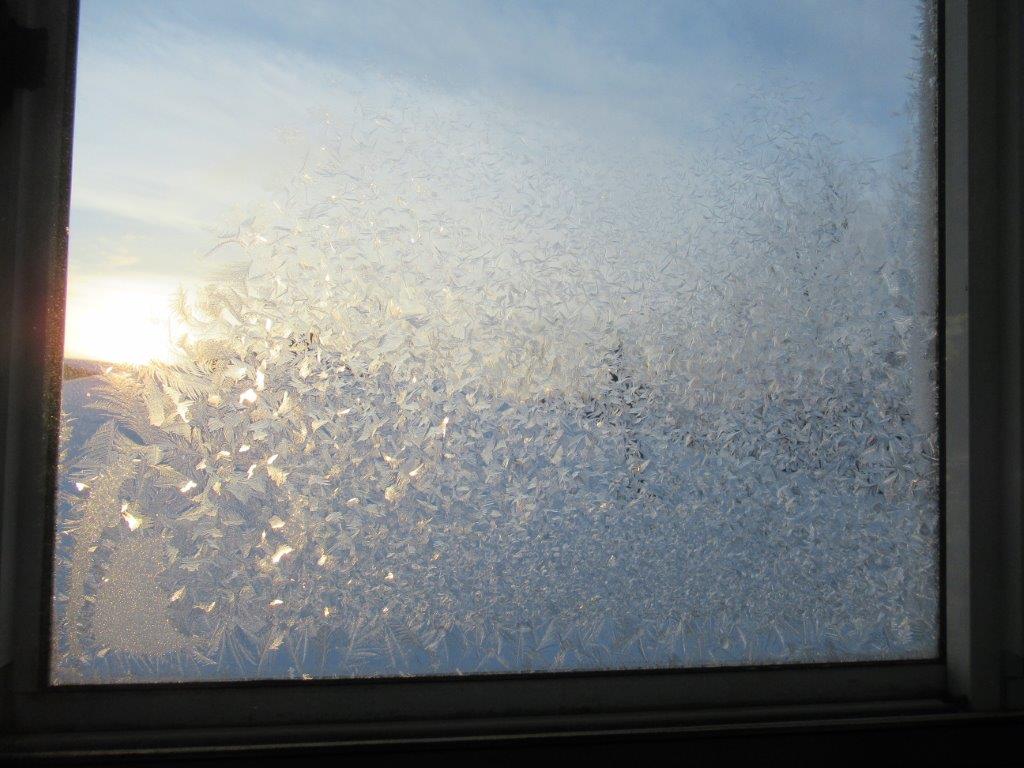
(your typical Canadian winter with accompanying ennui and snow-shovelling)