Long an eclectic collector of books, videos, movie posters, and music,

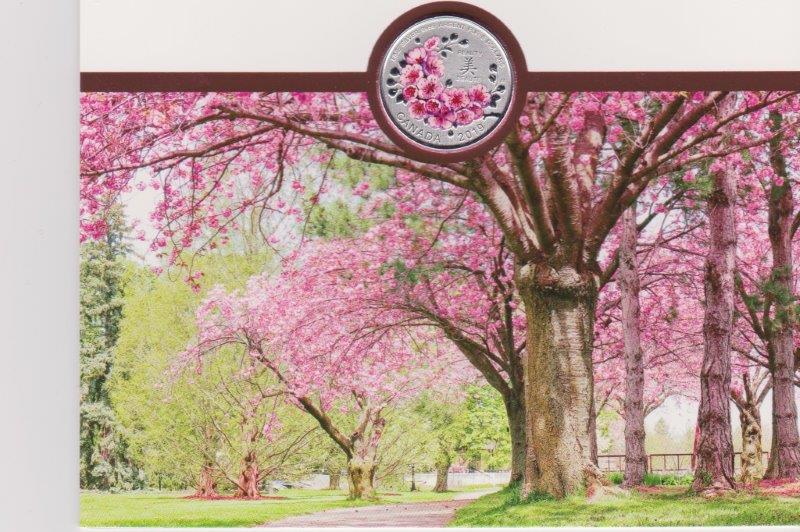
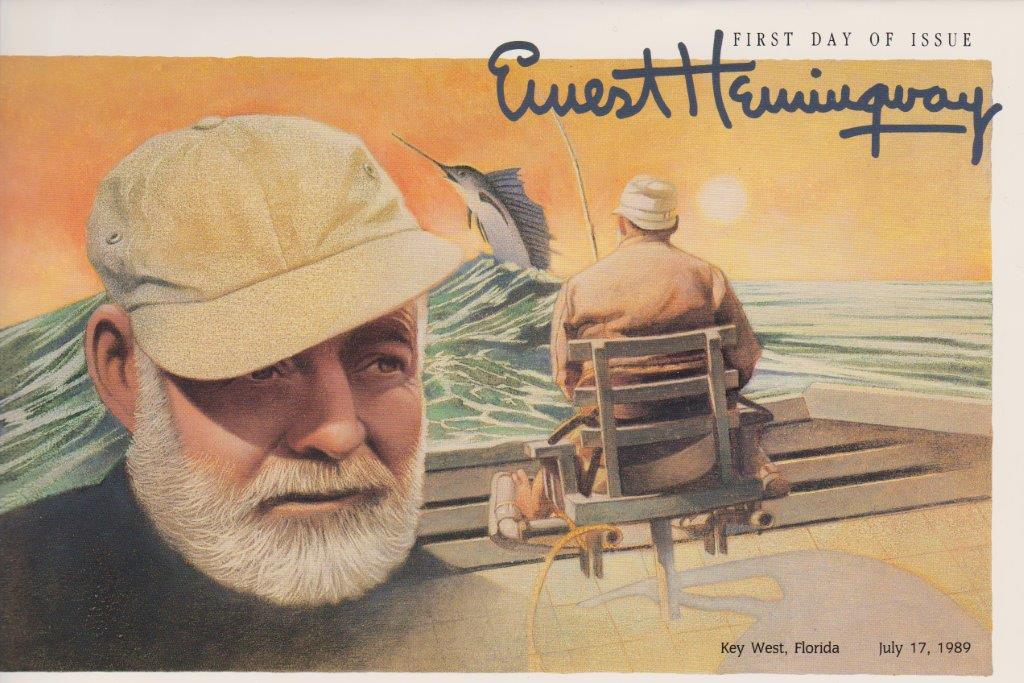
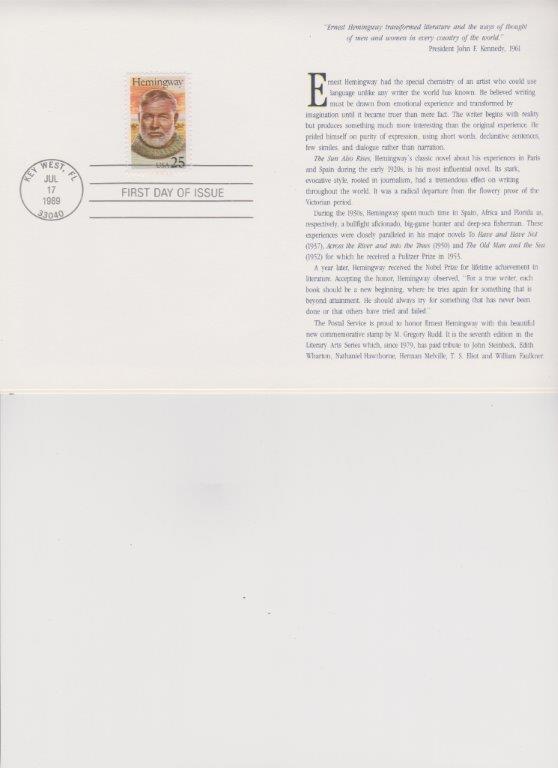
I am also a collector of special coins and author stamps. Two examples herewith.

“A Gift of Beauty” which features brilliant cherry blossoms was a must-have given how many times we’ve been out to Vancouver and Victoria in April. If you have not made this trip, it is a wonderfully unique aesthetic experience.

The Ernest Hemingway First Day of Issue is typical of the fancy American author stamps I own. As a significant literature fan, it’s been natural to collect stamps of other authors including Poe, Rachel Carson, Tennessee Williams, James Thurber, Carl Sandburg, Edna St. Vincent Millay, Marianne Moore, John Steinbeck, F. Scott Fitzgerald, Robert Frost, T.S. Eliot, Willa Cather, Edith Wharton, Thoreau, Emily Dickinson, Walt Whitman, Eugene O’Neill, Langston Hughes, Ogden Nash, Thornton Wilder, Longfellow, Stevenson, Tolstoy, and A. A. Milne. Other special commemoratives include Hitchcock, Charles Schulz, Mandela, Henson, the Group of Seven, the Halifax Explosion, Alex Colville, Glenn Gould, Alice Munro, Robertson Davies, Pauline Johnson, Gordon Lightfoot, Joni Mitchell, Northrop Frye, and W.O. Mitchell.


Posted in Uncategorized | Leave a comment

Connected Consciousness

E. M. Forster’s “Only connect” is probably the truest two-word statement ever uttered. And one can connect on many levels: between oneself and others, between one and nature, and between one and any work of art, be it film, book, painting, or piece of music.

Connection is a state that starts as early as a baby returning a parent’s gaze. We also feel connection to family, others, and our various environments before we begin attending school. Connection usually means that one consciousness recognizes the existence, presence, and consciousness of others. In that sense, there is an inner connection, not just the exterior connection or superficial glancing off ‘the other’ like a couple of billiard balls on the table of life. One of the challenges of living is the extent to which we can connect with the consciousness of ‘the other’, whether in the form of person, situation, object or surroundings.

Our minds and egos typically predispose us to living mostly in terms of self; as expressed by songwriter Paul Simon–“I am a rock. I am an island.” Most of us live inside ourselves and see and relate to the ‘outer world’ in terms of our selves. The challenge often is to recognize the common humanity of other people or our similarity to other species such as animals struggling to survive possible ecological disaster or planetary crisis. There is, then, a large central bedrock of consciousness that connects everything on Earth, and it is that basic field of consciousness recognition that holds the possibility of significant individual growth and positive personal learning.

For instance, when you read a book and are moved by the experiences and ideas of real people or fictional characters, you and your awareness or consciousness are changed by that process. You may end up feeling as if the characters or people are you and feel an indefinable or inexplicable close connection to them. Likewise, if you are on a team that wins a championship, there is a bond between the team members that connects them in a lasting, significant way. Much the same thing happens when people go to a school reunion and remember and relive those old days, roles, and events. There is a sharing of consciousness that accompanies the reconnection.

Hence, consciousness is potentially the important aspect of connection. Just consider the perceptions, awarenesses, recognitions, knowledge, understandings, insights, impressions, and appreciations that occur in such key, moving, and memorable moments.

“Making mental connections is our most crucial learning tool, the essence of human intelligence to forge links; to go beyond the given; to see patterns, relationship, context.”–Marilyn Ferguson

And, too–returning to Forster’s quote about relationships–the best of what happens between any two people is often simply the agreements and connected consciousness—the shared experiences and mutual learning that occur in those very close ties. It is the connected consciousness that is the greatest value of whatever significant connections.

*********************************************************

Further:
It is difficult to talk about connection without mentioning consciousness. When we seek to connect, we seek to know more about who or what we are connecting with. We seek an awareness that is a vital part of connection. And to a large extent, our connections won’t happen or be significant unless they presuppose imaginative empathy or sympathy, other forms of knowing, other forms of consciousness.

Ideally, some of the best connections with other people will arise from talk and ‘comparing notes’. In those exchanges of feelings and ideas, we may potentially experience similarities of feelings, thinking, and experiences that create the bridges of connection and, in turn, connected consciousness.

Over the days and years, our consciousness alters and, hopefully, grows. We learn more about others, ourselves, human nature, nature, society, and the world. As Ferguson suggests, learning occurs through our ability to make connections whether studying a person, a mathematical theory, a period of history, and so forth. Those connections become a part of us as much as we may, as Paul of Tarsus said, become a part of someone, something else, a process–of who and what we know.

Above all, shared consciousness and the seeking of common ground remain basic to one’s fulfillment as a person and as an individual.

(1st published here August 29/2012)
Posted in Uncategorized | Leave a comment

The Great Misassumption

The great misassumption is believing that other people will be here forever whenever we want to see or talk with them at our convenience.

Posted in Uncategorized | Leave a comment

Nice Series on Art and Old Civilizations

How Art Made the World (How Humans Made Art and Art Made Us Human) 2 discs presented by Dr. Nigel Spivey. An unusual series spanning 5 continents and 100,000 years. Consists of 5 episodes. The best ones are “More Human Than Human” (about how artists frequently picture the physical aspects and sizes they do), “The Art of Persuasion” (which traces how ancient world leaders used art to advertise themselves), and “Once Upon a Time” (about fusions between image and music in creating larger experiences). “The Day Pictures Were Born” and “To Death and Back” round out the series with the latter focusing on dual views of art culminating in crosses and crucifixes (slight Catholic and Western religious bias). Overall, though, the ideas are fairly original and off the beaten track normally taken by historical art documentaries. Visuals, narratives, and locales are all strong and evidence provided from ancient and modern cultures. Provocative in stimulating discussion and thought.

Posted in Uncategorized | Leave a comment

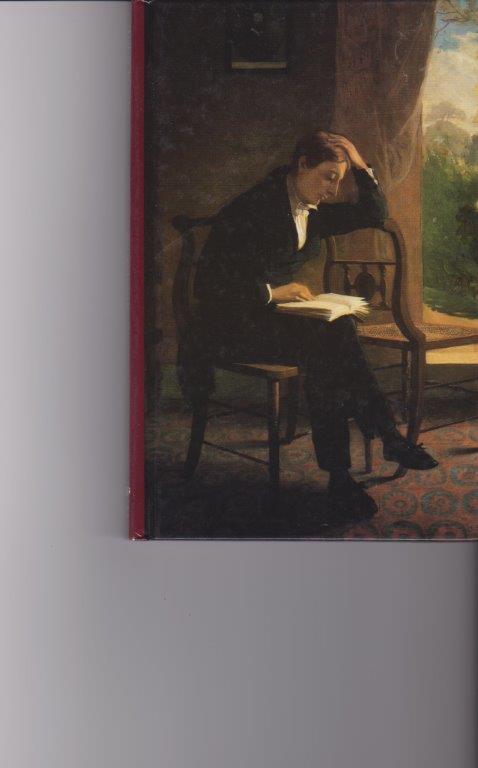
My Desert Island Poems

(John Keats as painted by his friend Joseph Severn, 1821)

-Gray’s “Elegy Written in a Country Churchyard”
-Shakespeare’s “Let me not to the Marriage of true minds”
-Wordsworth’s “Tintern Abbey”
-Shelley’s “Ozymandias” (remembering Trump)
-Keats’ “Ode on a Grecian Urn”
-Yeats’ “The Second Coming”
-Earle Birney’s “David” (the great Canadian poem still)
-Eliot’s “The Love Song of J. Alfred Prufrock”
-Frost’s “The Road Not Taken”

If I had been citing collections of poems by individual poets, Keats would likely have been number 1, followed by Shakespeare and Frost. In drama, the greatest poet was Shakespeare, of course hands-down. In the novel, Virginia Woolf would have been my choice as top prose poet. In film, I would have picked David Lean and Orson Welles as significant cinematic poets.

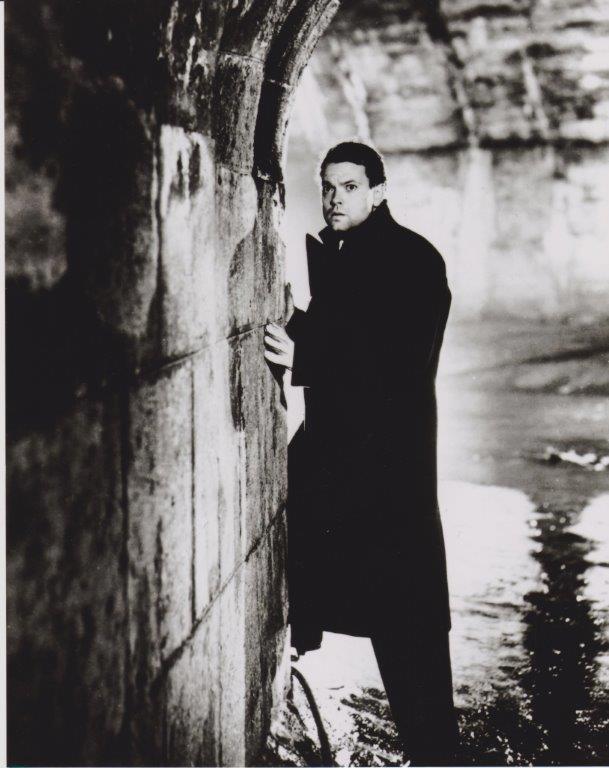
(the poetic film director Orson Welles acting ‘poetically’ as Harry Lime in The Third Man)

Posted in Uncategorized | Leave a comment

My Desert Island Books

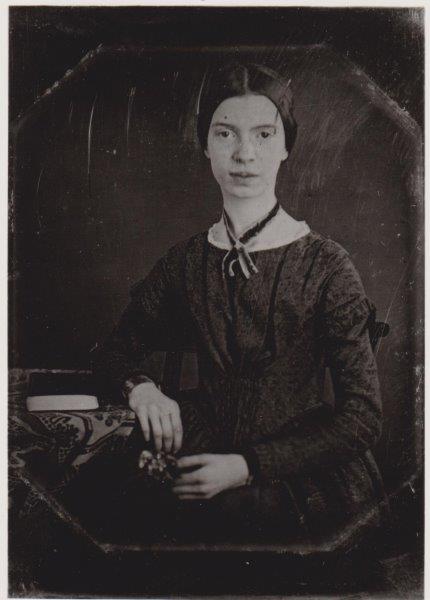
(author of the only book of poetry I’d ever need…)

-Shakespeare’s Hamlet
-Woolf’s To the Lighthouse
-Emily Dickinson’s collected poems (Harvard ed.)
-Dickens’ Great Expectations
-Conrad’s The Secret Agent
-Orwell’s Nineteen Eighty-four
-Fitzgerald’s The Great Gatsby
-O’Neill’s A Long Day’s Journey into Night

Posted in Uncategorized | Leave a comment

My Desert Island Discs

(8 of them, as suggested by Trevor and Anne)

-Dave Brubeck’s “Take Five”
-Erik Satie’s first gymnopedie
-Tchaikovsky’s “1812 Overture”
-Nat King Cole’s “That Sunday, That Summer”
-Leonard Cohen’s “In My Secret Life”
-The Beatles’ “A Day in the Life”
-Frank Sinatra’s “I’ve Got You Under My Skin”
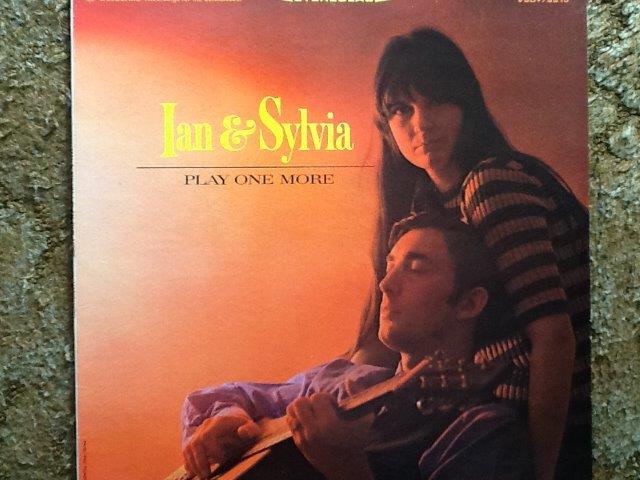
-Ian and Sylvia’s “Changes” (song by Phil Ochs; featured on the LP pictured above)

Posted in Uncategorized | Leave a comment

“They know not what they’re missing.”

The fantastic annual New Year’s concert on PBS by the Vienna Philharmonic one week after Christmas. The perfect way to start the year musically.

Usually includes scenes from around Vienna, ballet dancers, close-ups of the concert hall and the orchestra playing. Pieces and conductors chosen by the orchestra members. Always culminating with “On the Beautiful Blue Danube” (often with visuals of the river and its countryside) and the well-heeled-audience-gets-to-clap-along “Radetzky March.”

Simply outstanding always. The perfect tonic to start the year afresh. January’s tv highlight. Goes a long way to showing how the Strauss family belong up there with the other classical greats. Two thumbs way up.

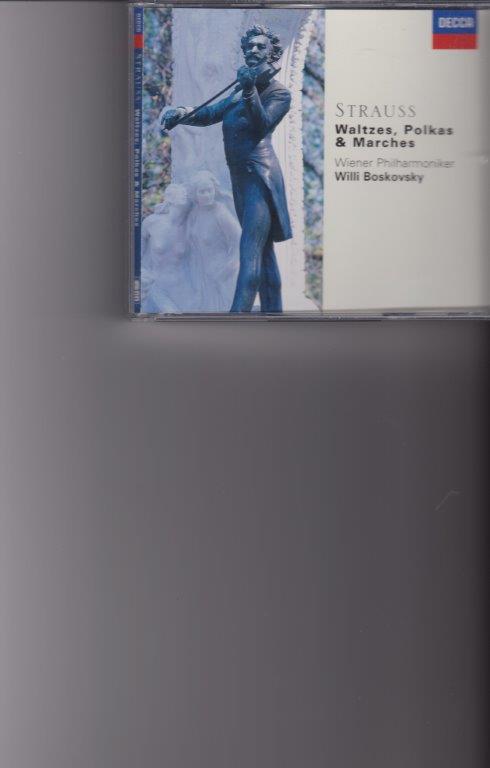
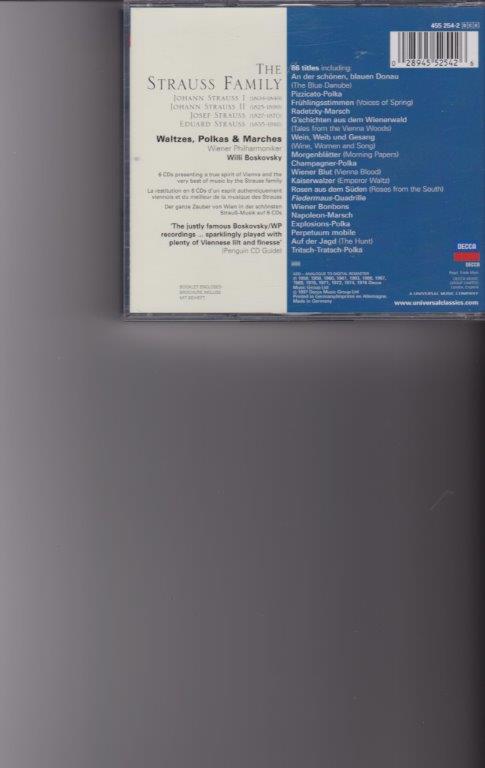
(Recommended for Strauss novices: the Decca multi-CD set shown above–includes all the main famous pieces)

Posted in Uncategorized | Leave a comment

If I was given a choice between

a life of thought and feeling, I’d choose feeling as E.E. Cummings described in his famous poem “Since feeling is first”.

Posted in Uncategorized | Leave a comment

2019: Count Your Blessings!

You’ve had a lot of luck to still be here. You still have a lot going for you that others don’t necessarily have, likewise. And, always, things could be much, much worse.

Posted in Uncategorized | Leave a comment