Happily, Far Far from the Madding Crowd: On Choosing Solitude

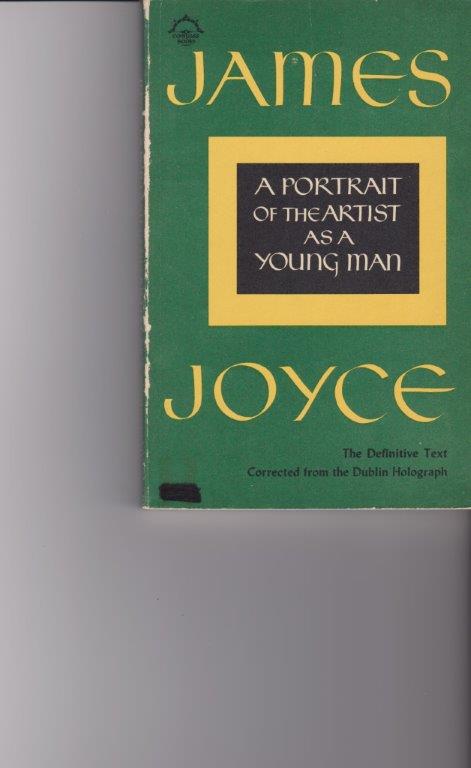
(my first exposure to Joyce in the late ’60s via the popular green paperback edition)

(the 1977 film by Joseph Strick who did Ulysses in 1966)

An only child of the ’50s, I was often plunked in front of the radio-record player, while my mother popped out to work part-time. For the most part, my first 6 years were ones of isolation, away from other kids and other people. Later, in elementary school, I was a latchkey kid with a pet dog, which afforded me a ton of freedom and autonomy–something I still look back to with fondness–our poverty lending itself to the cultivation and development of a rich imagination and extended fantasy life.

You can get used to being alone and living a very individual life in such a context, which carried through my university years. That’s not to say I didn’t have many friends, girlfriends, and other possibilities. I consider myself very lucky to have had as much freedom and fun as I did until I began a full-time career as a teacher.

Quite often, my solitude through those years included my wife and young family as well. They got to experience the joys of solitude vicariously, too. Even when I became an author, I still had the freedom to work on my own and could not have accomplished as much as I did–over 50 school publications–without the support of my kind wife who often looked after our kids alone during writing times.

On the other hand, one can’t help getting connected with many others through teaching, playing music, doing poetry readings, and going to conferences (the latter which I did for 30 years). Up to the 1990s, I was an intensely socially-involved individual, but then I began to withdraw from the fire as teaching and schools started to decline with an onslaught of continuing government cutbacks and a changing society in which technology and parents started to have too much influence. This took out most of the fun and autonomy (the best of teaching) of being a teacher. I started doing more things for myself and began a long retreat until 2002, in which I basically followed my own bliss which was, for that last decade, very solitude-centered.

A good example of this were my two fall trips to New England in the ’90s (on personal leaves during the school year). This was a significant turning point, which brought me in contact with the spirits and haunts of American writers I had long admired–notably Frost and Dickinson–and introduced me to a great kindred spirit, a master of solitude–Thoreau. There began a close reconnection with and extension of my interests in Nature, capital N.

After a bitter strike in 2001, I gave up on politics, the ATA as a political force, and the negative way education was going in the province. I had worked hard enough in my life to create freedom 52, and retired happily from teaching in 2002. I had gone as far as I could go or wanted to go. (I had been offered administrative possibilities, but don’t much cotton to appearances, social lies, and playing someone’s else’s games according to their limited/limiting orders.) Let’s face it–there is more to life than school, teaching, and working to make money–largely unappreciated, let alone sufficiently acknowledged in the first place. Despite a financial hit, initially, I have never regretted the day I left the profession on my own terms when I was ready and unprepared to continue on the slavish school-calendared treadmill, especially working for care-less, agenda-ed people I did not respect.

Today, I continue happily with enough social contact from and with my family and a few close friends. (One needs no more, really.) So I am far, far from the madding crowd–where I have been most of my life with the exception of my 30 years of teaching (though, as previously noted, the last 10 were more on my terms for the most part). It has been refreshing and downright rejuvenating to have made this final big break. (The only crowds I ‘do’ are at concerts where I am happily unknown and unrecognized for the most part.) I never have needed ‘a lot of people in my life’ like some or many. I seldom feel a pang to rush out to talk to others or to be part of some social group. There are, in fact, a lot of people I’m simply not interested in, don’t hold with, and would want nothing to do with.

Looking back, I have and have had an embarrassment of riches and ridiculous ample luck along the way. My essential sensibility is and has been predisposed toward solitude and its many pleasures and freedoms. (Family remains the lone very pleasurable exception to this.) The blog has served quite well in allowing me to express the unique consciousness and inner life and freedom I have so long preferred and enjoyed. In and of itself, no, one does not need crowds and lots of other people in order to be successful, happy, and content. Especially not when an individual has had this much solitudinous experience, confidence, success, and luck in pursuing this blissful route through most of life.………………………………..

On St. Pat’s, I often hearken back to Joyce’s A Portrait of the Artist as a Young Man (first read at 19) and Stephen’s experiences and choices in the latter part of the book. I, too, have ‘left the herd’ some time ago in order to pursue personal freedoms, particularly the freedom to express and write as I may. The freest and most natural writing I have done in many a year, and my favorite by far, has been the writing of the past 3 years, most of which has appeared on this blog. Topics, like this one, simply write themselves as I reflect and contemplate without the interference of others. Today I shall raise a glass to Joyce and his example. “Cheers, my fellow artificer. Thou hast stood me in good stead.”


Posted in Uncategorized | Leave a comment

Katherine Mansfield’s Goodbye

(from Journal of Katherine Mansfield, 1914-1922)

“By health, I mean the power to live a full, adult, living, breathing life in close contact with what I love–the earth and the wonders thereof–the sea–the sun. All that we mean when speak of the external world. I want to enter into it, to be part of it, to live in it, to learn from it, to lose all that is superficial and acquired in me and to become a conscious direct human being. I want, by understanding myself, to understand others. I want to be all that I am capable of becoming so that I may be (and here I have stopped and waited and waited and it’s no good–a child of the sun. About helping others, about carrying a light and so on, it seems false to say a single word. Let it be at that. A child of the sun.”

…………….

“I want so to live that I work with my hands and my feeling and my brain. I want a garden, a small house. grass, animals, books, pictures, music. And out of the expression of this, I want to be writing.”

…………….

“But warm, eager, living life–to be rooted in life–to learn, to desire to know, to feel, to think, to act. That is what I want. And nothing else. That is what I must try for.”

Katherine Mansfield (1888-1923)

Posted in Uncategorized | Leave a comment

On Dwelling in Doubtful Joy

This morning on Antiques Road Show, a mature adult son confidently sat with his mother’s vase and letter from his aunt regarding its importance and Tiffany nature. As things unfolded, the appraiser identified the vase–which the son couldn’t find with other Tiffany vases online–as a Loetz from the tail-end of the Austrian-Hungarian empire. His information was wrong; the aunt’s and mother’s information and understandings were also wrong and had perpetuated this error in perception, understanding, and appreciation. All these years had gone by and the piece was finally known by someone in the family for what it really was. And all that time had gone by with people dwelling in illusion, misinformation, and blind joy as to the real identity of the piece.

There have been many of these kind of errors on Roadshow before. And we know only too well that instructive game exercise of passing a message down a line of persons only to arrive at a humorous distortion of truth. Truth is an elusive quality, albeit very desired and desirable. So, too, is correct and accurate information about many aspects of ourselves, others, life, the human condition, relationships, and the world. As so many of us live in dream–our often separate, individual dreams–we seek information, affirmation, and validation in this all-too imperfect world of experience. Only to be often surprised by what the true state of any act, thing, or process really is. Only to realize how little we really did know about something or someone. In the dark more then than in the light–our (entrusted) information and (assumed) knowledge.

Posted in Uncategorized | Leave a comment

Of Woolf, Coleridge, and Shakespeare

Virginia Woolf writing about the greatest writers and greatest minds–

“If one is a man, still the woman part of the brain must have effect; and a woman must also have intercourse with the man in her. Coleridge perhaps meant this when he said that a great mind is androgynous. It is when this fusion takes place that the mind is fully fertilized and uses all its faculties. Perhaps a mind that is purely masculine cannot create, any more than a mind that is purely feminine. It is fatal to be a man or woman pure and simple: one must be woman-manly or man-womanly.”

Posted in Uncategorized | Leave a comment

Performance: Of Freedom and Gifts of Self

(photo of William Blake’s “Glad Day” aka “The Dance of Albion”–an image of Albion liberating himself and others from limited/limiting materialism)

Granted professional performers need to work hard to make a living, you still have to look beyond that simplistic, limited pragmatic side to understand and appreciate the nature of performance.

I was thinking about The (3) Stampeders, first on this, how they’ve been reunited since 1992, travelling most of the year to play and share their ’70s with other baby Boomers for 40+ years. Pretty satisfying for them, being able to perform credibly, have sell-out crowds wherever they play, have fans still show energy and enthusiasm at the shows and after when they meet them in person.

On-stage performers typically have to prepare and rehearse to keep in shape (and there are a many behind-the-scenes factors such as diet and exercise–Mick Jagger jogged the Edmo river valley on a previous Edmo visit). They have to work hard, dig deep to stay in healthy, reasonable playing mode. Creativity, even for performers of old material, also remains important, with changes of selections, revised treatments of material, and so forth.

And always, there is the sense of ‘putting it out there’ for masses of complete strangers, sometimes a more invisible audience. The performers make a gift of themselves and their material and openly express that–a risky thought for most people. No question there has to be ego, but essentially self-confidence and a belief in oneself and one’s material in the first place before the expression or sharing takes place. A freeing and giving of one’s self to begin with.

Recalling the audience’s response to The Stampeders and The Mavericks (their concert two weeks ago), one then has to factor in audience response. Although audiences don’t usually do more than standing ovations after exceptional play productions, jazz or classical music, for instance, other audiences at what might be termed pop music shows are far more activated and openly energetic, often clapping or singing along enthusiastically or getting up and dancing. The freedom in the music, of the performers has in turn freed them, and they respond, expressing themselves uninhibitedly, ‘giving back’ to the performers. A two-way street of gifts and expressions of self accompanied by a mutual freedom of both parties.

Play begins early in our human lives, with performing and trying on or playing roles following in its wake. We all of us go on to play many roles and to perform (sometimes quite badly) for others. And there are many of us who end up doing it for a living: dancers, musicians, writers, athletes, teachers, et al. What is interesting about performing is how it brings together people, how it frees our spirits and us as individuals, and how it enables us to share our various gifts of self freely to one another. All of these undeniably positive human experiences that lift us beyond the mundane ordinary and whatever negative experiences we might otherwise encounter. Optimally, William Blake’s “Glad Day” personified.

Posted in Uncategorized | Leave a comment

Loneliness, Missing Pieces, ‘Agendas’, and Mrs. Stone

Tennessee Williams’ The Roman Spring of Mrs. Stone is, basically, Blanche du Bois revisited: the ‘problem’ of lonely, aging women. Karen Stone’s husband who was some 20 years older than her was more of a father-protector than a lover, so she has missing pieces that she has avoided out of fear and not faced honestly (as things are always finally framed in a Williams’ work), notably about the connection involving desire, consummation, and possible extinguishment of loneliness and alienation. Because of ego, pride, and integrity, there is also something within which refuses sometimes to ‘use’ or employ others as a means to an end, or to be used that way in kind.

The author’s main view, as reflected by the novella and movie’s endings, is that life and love are basically ambiguous and risky. The latter offers possibilities and a chance to end loneliness and to explore natural, very human desire, with whatever implied fragility and ephemeralness. Mrs. Stone and Paolo do use each other (as in ‘agenda’) and do drift, finally, apart. But, for a time, the treatment of one another as a means to end simply did not matter to Karen. Before it was too late, she had addressed her need and filled her emptiness with Paolo’s attentions. Briefly, she no longer lonely and just drifting, as she had done for most of her life. Even her final act of throwing her keys to a complete menacing young man is a brave choice to move ambiguously ahead and forward, regardless of risk. At this point, she knows herself better and has honestly assumed more control over her life, independent of Paolo. As Joseph Campbell said, Sometimes you have to break eggs in order to make an omelette, or that one sometimes needs to jump; the chasm is not as wide as one thinks. (Mrs. Stone breaks eggs and jumps that chasm.)

It would be quite unfair or wrong to pass moral judgement on Mrs. Stone as being simply weak and finally ‘corrupted’. We have all of us been lonely and alienated at various times in our lives. We have all, as Williams puts it, in A Streetcar Named Desire, “depended on the kindness of strangers” to get us through whatever dark nights of the soul. Much as one might turn to artificial/technological means (e.g., Prozac), when nothing natural works, to alleviate darkest emotional and spiritual times. Perhaps we need to adjust our language from the harsh, judgemental (e.g., “weak”) to the more fair, more human (e.g., “basic need”) in how we view people like Mrs. Stone and their significant life-altering actions and choices.

Posted in Uncategorized | Leave a comment

Worth Quoting Relative to Now

“Imagination and fiction make up more than three quarters of our real life.”
–Simone Weil, Gravity and Grouse

“I have to protect myself from the toxicity of this culture.”
–Kate Braverman, quoted in “From the Tropic of L.A.”

“The moment of change is the only poem.”
–Adrienne Rich, “Images for Godard”

“A poet is a state of mind.”
–Virginia Moore, “Saint Teresa”

“I am like an owl in the desert.”
–Anne Clifford, Diary entry, May 1616

“There is nothing good or bad, but thinking makes it so.”
–William Shakespeare, Hamlet

“In delay there lies no plenty.”
–William Shakespeare, Twelfth Night

“Everything hinges upon our realizing the essentially transitory possibilities.”
–Viktor Frankl, Man’s Search for Meaning

“Live from your own centre.”
–Joseph Campbell

“Irony is wasted on the stupid.”
–Oscar Wilde

“I dwell in possibility.”
–Emily Dickinson

“I dream therefore I become.”
–Cheryl Grossman

Posted in Uncategorized | Leave a comment

“Granite & Rainbow”

1st American edition of this essay collection; cover by her sister Vanessa Bell, 1958

(Random quotes from Virginia Woolf’s last-published, posthumous collection of criticism. Each one rich, expansive and yet so-o concise. Each one a potential subject for a meditation, a blog entry, an article, an essay, a talk, a workshop. Quintessential Woolfisms.)

(from “The Narrow Bridge of Art”)

“There is a zest in their presence, an interest in their doings. They seem alive all over….when they come into action, they cut real ice.”

“Shakespeare’s plays are not the work of a baffled and frustrated mind; they are the perfectly elastic envelope of his thought.”

“And the very freedom and curiosity are perhaps the cause of what appears to be his most marked characteristic–the strange way in which things which have no apparent connection are associated in his mind.”

“Poetry has always been overwhelmingly on the side of beauty.”

“We long for ideas, for dreams, for imaginations, for poetry.”

“Every moment is the centre and meeting-place of an extraordinary number of perceptions which have not yet been expressed. Life is always and inevitably much richer than we who try to express it.”

(from “Hours in a Library”)

“It would not be hard to prove by an assembly of facts that the great season for reading is the season between the ages of eighteen and twenty-four.”

(from “Phases of Fiction”)

“Truth-telling implies disagreeableness. It is part of truth–the sting and edge of it.”

“The true romantic can swing us from earth to sky.”

“The novel is the only form of art which seeks to make us believe that it is giving a full and truthful record of the life of a real person.”

“Prose perhaps is the instrument best fitted to the complexity and difficulty of modern life.”

Posted in Uncategorized | Leave a comment

The Continuing Values and Truths of Jean-Paul Sartre

Jean-Paul Sartre, the key French Existential philosopher, correctly stated that life is mainly and ultimately an individual matter, even if ‘we make it up as we go’. He’s right that, over time, we largely exist and, in reaction to this fact, we have the responsibility to define the potential meanings and purposes of our life. For Sartre, this is a matter of honest and free personal choice, quite apart from all the typical conventional buck-passing and avoidance of responsibility that plagues modern man even more than ever, especially today.

Seen this way then, life is a serious, weighty process of neverending choices, by which we define ourselves through our choices in media res. (This, in turn, consequentially, sets an example or role model for and influences others.) Life is quite risky and there are no guarantees except for what we can choose, will, and act on. In Sartre’s view, because one’s basic choices are honest and true to oneself, there is a tangible positiveness and optimism engendered, if one is willing to actualize one’s own destiny, so to speak.

Posted in Uncategorized | Leave a comment

Of Dumb Luck, Consciousness, Parmenides and Reality

The dumb luck of my life–so much of it, continuing…

For what am I most grateful beyond love, family, nature, the arts? 16 years retired from teaching now, I’d have to say the incredible freedom, including that when a preschooler, when a latch key kid (9 to 5, five days a week) when going to school–holidays built in, when 5 years at u; also including the holidays over the 30 years of teaching, plus 12 years mostly off since 2002. Freedom has proven the most valuable, cherished thing allowing me to slake my curiosity, follow my bliss, get to know myself, and develop my consciousness more than the average person.

Yes, consciousness, as this blog attests to, has been the main bliss, especially the past 5 years.

Today I am writing about another key Greek philosopher Parmenides of Elea (510-440 BC?). He is the first guy to suggest that if you can conceive of something, it must exist, whether or not it is found in the material world, outside of you. Unicorns, for instance. So subjective reality is every bit as ‘real’, especially to the viewer, as externally-agreed-upon-by-others’ reality.

He also connected thoughts, words, and things/others/external reality. Ideas do become expressed and get connected to others as well as to things we can experience. As I have commented on above–consciousness is (about) ideas and these get expressed in places like this blog to others, as well as to myself. (My blog is mainly me thinking ‘aloud’, after all.)

I do like the subjective reality part of Parmenides’ ideas. We all have memories (the past gets subsumed by our minds) and can imagine the future as a reality that will often mostly happen (again, because of the autonomy and power of individual consciousness, as well as individual will). Personally, I believe both subjective and external/objective reality (though the latter depends on subjective/personal perception anyway) exist, and that subjective reality may be as or more important than the other. It is after all, our own lives and own consciousnesses that we live with 24/7.

Earlier in other blog entries, I talked of how we search for information daily. For me, that often translates into ideas and knowledge as well as the personal consciousness changes that ensue. None of this is communicable without language, though you also have to admit the power of the representative arts like painting, photography, and dance which may be wordless, technically speaking, can communicate thought and feeling effectively, too.

Thinking, language, and consciousness are central, basic and–for me as a writer and sometime-performer–very essential. And the balance on the attractions and distractions of the external world reality depends heavily on key people, nature, and the arts. Those are all aspects which can thoroughly focus or engross my interests, pleasure, engagement, feelings, and thoughts. Nothing like a stimulating external environment to spur your own personal creative expression and response as well as consciousness, eh?

………………….

That all said, there is much pleasure and delight to be found in ordinary, common, or basic sense experiences. The empirical/physical world is meant to be experienced in many ways, on many levels. It is there one will find, experience, and confirm many proofs of life and philosophy. By itself, a mostly abstract, philosophical or platonic life is an incomplete, thin, relatively bloodless life. There are many times when E.E. Cummings’ “since feeling is first” is the better ticket to freedom, happiness, or love.

Posted in Uncategorized | Leave a comment