Teechrs aftr hrs

Th howls r sighlint now
Zombeez shuffl 2 th mayn offis
wear janitur tecknishuns
cunnect th regulurz
2 tall hummean genuraturz
Kwalifyed pursonel
delicutlee remoov th leftovr braynz
cheking them 4 damidg
& vakuum out th hedz

Fullee sirvisd & smyleen wuns agin
th teechrs trayd all-noing glansez
(Boy if th kidz cud c us now!)
& reterneen buy instink
2 there classroom sells
thay clime on wuden deskz
& lie soopine i’s opin
awayteen dawn &
the furst arriveen skool bus

…………………………………..

Published in On Spec, the Canadian magazine of speculative writing and read by me on CJSR with recorded synthesizer background music by Wendy Carlos For those who don’t know, Canadian poet bill bissett anticipated textspeak by a couple of decades at least. And one of the banes of my existence as a teacher was student spelling!

Posted in Uncategorized | Leave a comment

Moments of Being

“God is in the details.”–Gustave Flaubert

Moments of being are those more elusive transitory times when one is especially aware of the sublime pleasure and excitement of a given moment, and how it is unique and distinctly different from the many more ordinary, mundane moments in the passing flow of daily life. Moments of being tend to ‘announce’ or ‘proclaim’ themselves with an extreme obvious feeling of positiveness. At the time that they are experienced, the person (and sometimes persons) involved know and sometimes even share the specialness, uniqueness, and importance of the moment. Often there is a definite pleasurable sense of discovery, revelation, or epiphany about the moment in question.

The “being” part of whatever moment usually manifests itself in/as a heightened sense of being or becoming. A moment of being might very well also be the consciousness of significant change–possibly of imminent or possible change–an awareness of great hitherto inexperienced individual or situation potential. In any case, moments of being are primarily inner individual experiences in response to context and external events.

It is not surprising that moments of being comprise our most treasured memories of important things that have happened to us in the past. Think back to when you had special recognition that no one else you’ve known has had such as being chosen by your principal to receive the gift of a painting for the school’s official opening, or of being allowed the privilege of playing disc jockey in charge of your high school’s noon-hour intercom music. Often it is these sorts of special defining moments which determine one’s direction in life, too, career-wise.

Often moments of being have to do with relationships such as the first time one spoke to or spent time closely with a particular person. Experiences with members of the same or opposite sex in a first-time intimate way can introduce us to aspects of ourselves and others that ‘mark us’ for life.

Moments of being sometimes occur in moments of learning through the arts such as when we read a very emotionally moving book such as To Kill a Mockingbird, experience a powerful piece of music such as Beethoven’s “Diabelli Variations” or visit a gallery containing Monet’s enormous panels of water-lillies. In such experiences, we are moved through our senses to experience something deep and true about the human condition that connects us with other people and other times. Moments of being can have that kind of broadening, enriching impact and influence.

We know, too, that nature can also create moments of being, an effect we attain anytime we go to the mountains, the seaside, or desert. Under favorable active or contemplative circumstances, interaction with nature can produce deep inner effects that go way beyond words to transportive spiritual satisfactions, akin to those we might call religious. In that sense, ‘God’ can be found in the “details” that make up whatever moving moments of being.

As we look back on our lives, we find that our lives can, to a large extent, be defined and understood by the many personal moments of being that we have been lucky to experience and sometimes fortunate to share and communicate to others. To them, we should pay special attention, as we should, indeed, to all passing, precious transitory moments, regardless of their relative ‘shine’ in the great scheme of things.

“We have only this moment, sparkling like a star in our hand…and melting like a snowflake.”–Marie Beynon Ray

……………………………………………………………………..

The title of this ‘probe’ (a McLuhan term) comes from a phrase by Virginia Woolf. I have tried to keep some of the meanings she intended, but it seems to me the term is broader, more connotative, and self-defining. The “details” are in many ways the most important aspects of moments of being, as well, incidentally, as this blog. Viewed another way, they are how we know what we know. From pondering these for possible meanings, the general patterns and larger insights emerge.

Moments of being tend to be personal, though when other people figure in them, they become larger and often more connective. (In a meditation still to come, I write that the freedom of two, for instance, can exceed and be more profound than the freedom of one.) Consciousness and reflection are necessary to recognize, understand, and appreciate moments of being. I believe we seek moments of being, although these can happen quite wonderfully on their own spontaneously. And sometimes, if we are fortunate and paying attention, we can be conscious of moments of being as they happen, savouring them as they do. In that instance, moments of being can be glorious, inspiring, and loving.

“Keep a green tree in your heart and perhaps a singing bird will come.” –-Chinese proverb

Posted in Uncategorized | Leave a comment

As Good as It Gets

(for the late Stu Millman, consummate Edmonton jazz bassist)

There is so much to like
about this trio, this gig.
In a word, movement.
Piano lets you know which standard
is to be resignatured.
And then the momentum
of bass and drums and
you are into it before
the waitress even takes your order.

Courtyard lounge,
big-screen tv menacingly above
the real news and true art.
What is there about
these 3 that delights?
A look, a glance,
a sideways motion?
Cymbals splash and then
bassman is on–
spontaneously composing
in public–an unnatural act
if ever there was one
for this space.
Up and down, he speaketh
and what rhythm, man!
What memory of melody.

It may look like work
and yet is so effortless,
this desire to put it out there–
to declare oneself:
one`s chops and sensibility.

And stopping and waiting
for that first tentative clap,
no matter how quiet–
to know there`s a connection
going down, a bridge
gapped by noteful play
and interplay.
(These 3 have evidently met before.
This is not their first or last time.
The encore of divorce aside,
some marriages are charmed.)

Like this one–
piano precise, taste-full
and yet open-ended
to what the crowd might bring
to this swingin`smorg.

Drummer only seems to be
`way over there`–
distance a mirage.
His brushes and accents
an undersong bonus.

And then those bass arms–
over, under, and finally thru.
Who`da thunk he could re-
enact a chiropractor`s dream?

But pay close attention:
this is a very good story.
An encapsulation of all
of life`s gigs and quest
for spiritual nourishment.
A plot rolled out like
a Kerouac teletype novel.
As life could and might be.

Three pairs of eyes and ears
on the very same page
saying, We are unit–
our experience and jazz wisdom
times three.

Another break, a laugh
and no one knows
who it came from.
Well, that was easy,
that was a slice.
What next, o brothers?
Wither wilt we goest?
Duke? Porter? Train?
So much to recall now,
so much of the ideal–
the jazz gods be praised tonight
for this assemblage of mortals.

The limitation of lounge,
non-listeners and chatter
now forgotten and small.
Irrelevant.
There are always limitations.
But maybe this once,
for some anyway:
a remembered lyric
a nameless glow
a gentle communion
a momentary stay
against confusion.

And thus curiosity becomes a drummer`s brushes.
Whim, a bassman`s bow.
Wonder, a minor 6th chord.
It`s all there with a first-drink mind,
the charts momentarily abandoned.
So many tones and colours
to be sampled and voiced,
each player imagining
his own way and role.

Look.
It`s all in their faces–
the way the eyes focus
as a zone is ascended.
Out there and yet
strangely here.
Passing strange, in fact.
The great balancing act of all art
and all that jazz.

Consummate,
a word devoutly to be wished.
One can only savour
the tonal axe-stasy of these 3.
The Glad-To-Be-Alive.
This moment.
A truly cool place to be.
As good as it gets, folks.
No kiddin`.

………………………………………………..

For me, music has been one of life’s great possibilities. This poem is an homage to live jazz, a particular trio (Charlie Austin Trio), and a very special bassman-friend. What I tried to capture was the emotional, mental, physical, and spiritual equivalent of a performance. I think what interested me most was the communication that was going on here, especially amongst the musicians. Music can be a transcendent experience; in this case, the musicians transcended the context of a somewhat impersonal setting, their three instruments, and some initial audience distraction. What jazz musicians impressively do is very risky, far riskier than anything played by a classical music orchestra or a commercial rock act, for instance. They basically create something beautiful, true and good out of nothing, spontaneously and continuously.

Good and great music speaks to the feelings, the mind, and the soul. In concert, this can be seen and experienced en masse for large numbers of different people. No other form of art (except dance) can do this with large numbers of people in one spot, in one time. Music offers the great life possibility and experience of transcendence from one’s own cares and situation. The best music depends on intuitive communication between players and audience. And good or great music offers depth, richness, and connection. At its best, music makes us feel less alienated and more connected to something other or greater than ourselves.

“That is happiness; to be dissolved into something complete and great.”–Willa Cather, My Antonia

Posted in Uncategorized | Leave a comment

Life Possibilities


The kingdom…is spread over the earth and men do not see it.–The Gospel of Thomas
(as quoted by Joseph Campbell)

We all start life in various relative contexts of safety, security, advantage, disadvantage, family, and love. All these things affect our initial possibilities in life. Context–as played out through school, work, relationships, places lived in–continues to play a major role in what our life possibilities might be.

But to a large extent, life is what we make of it, via our choices and the process of living. When we are young, we are usually blessed with more time, freedom, and uninhibited imagination, that we can distract ourselves, and ‘create our own fun.’ Just about anything is possible, in that sense, when we are, say, three or five years-old. Although we may be confined to playing in the backyard, there is a richness to be found in whatever nature or man-made-objects we are left to play with, with or without playmates–the possibilities of one or more than one, socially speaking.

School introduces us to the possibilities of increased knowledge and interaction with many different other people and texts. We learn the possibilities of languages, mathematics, sciences, history, the fine arts, and physical education. Again, our possibilities may increase through socializing and learning more about ourselves, others, various subject areas, society, and the world.

We are presented with a variety of possibilities via our introduction to the working world as we try out different jobs and, possibly, careers in the exploration of employment possibilities. If we are lucky, we may end up doing work we enjoy and make an adequate living. Through a similar trial and error process, we also arrive at our home bases and mature relationships, usually involving parents, friends, neighbors, staff at work, and, possibly, significant others.

Along the way, we are the unique people we are with various attitudes, values, beliefs, dreams, strengths and skills. Whatever life possibilities we actualize are dependent on those key personal elements or aspects. And so we arrive at certain points in our lives where we stop and take stock of ourselves and remaining life possibilities. What might and can we still do? What dreams do we still want to realize and achieve?

But life possibilities are more microcosmic than the dreams of the so-called ‘big picture’. There are the possibilities of seconds, minutes, hours, days, months, and years. At any given moment, everywhere around us, are life’s possibilities in the precious process of an individual lifetime. What these possibilities are or may be is largely a matter of perception and attitude, how one feels at any given time about his or her own life.

At any given moment on a weekend or evening, for instance, one can likely go to the nearest book-store coffee shop and not only relax with a favorite beverage, but wander the aisles in search of what subjects may interest one all over again as they once did in school. If one really wants to see a concert involving a favorite performer, one can easily book tickets online when they first become available. If one wants to be surrounded by natural beauty for three seasons of a North American year, one can go to greenhouses to buy whatever flowers and plants one wants to nurture and be able to derive viewing pleasure from. If one wants to see the classmates of one’s youth, one might attend an anniversary reunion. If one wants to ‘get out of town’, one can travel to any place that appeals to deeper needs of soul and preferred imagery.

In short, just about anything is possible even in adult life, be it changing a mate, a home, a job, a stale lifestyle, and so forth. Life’s possibilities, for the most part, remain nothing more than what we can and might choose if we wish through simple acts of will. Minister-author Norman Vincent Peale had an interesting suggestion regarding this topic: “Become a possibilitarian. No matter how dark things seem to be or actually are, raise your sights and see possibilities–always see them, for they’re always there.”

………………………………………………………………………………………..

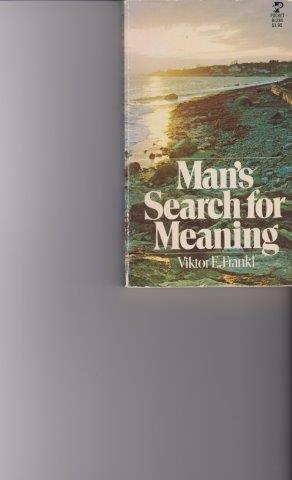
Life possibilities are ever-present in any situation, as Viktor Frankl persuasively argues in his book Man’s Search for Meaning, in which he speaks of willing seemingly impossible dreams, attitudes, and behaviors into being. Possibilities are to be found even in the most stressful or depressing situations and contexts, and we have the free will and inner capacity to rise above any crisis or extremely limiting situation. “Life is what we make (of) it” goes the old cliche.

In “As I Walked Out One Evening”, W.H. Auden wrote “Life remains a blessing/Although you cannot bless.” Hamlet said “There is nothing either good or bad, but thinking makes it so.” In those two statements, the ideas that there is a “kingdom” of opportunities (cf. the meditation’s epigraph), and that attitude and perspective play large roles in actualizing whatever possibilities of said kingdom. Indeed, if we cannot “bless”, the fault may be an internal one, one resting largely on personal will and individual choice.

A song lyric of mine from the late 1960s goes:

And if you want, you can slide/And if you want you can ride/The day is like a daisy/Pick it off if you’re lazy or crazy

And with your dreams you can fly/Spread your wings touch the sky/All that remains is for you to do it/Close your eyes there’s nothing to it/Come on and try

Takin’ a chance on a star/Findin’ out who you really are/Strummin’ on a magic guitar

……………….

“I am large….I contain multitudes.”–Walt Whitman
Posted in Uncategorized | Leave a comment

Edges

Well you know, it`s been a long winter
Hearts & minds all covered in snow
Some got hot, but some turned colder
Some stayed home, while others turned foes

Some got young as some got older
Some went up while others came down
Livin` on the edge of desire
Some went crazy for all we might know

There`s a long hair on my pillow
How it got there, I don`t know
Livin` on the edge of desire
Hidin` wounds that are startin` to show–

Some came slow, but some came runnin`
Some lived dreams while others stayed home
Some gave up & some got bitter
Some got free while others got ‘owned’

Some got light though some got heavy
Some killed love they thought they might gain
Livin` on the edge of desire
Various persons goin` stark ravin` sane

There`s a long hair on my pillow
How it got there, I don`t know
Livin` on the edge of desire
Hidin` wounds that are startin` to show–

Some got reborn & some got smothered
Some of us here don`t remember our names
Some went down to check out the river
All of us here got caught in the flames

Some got cut & some got wounded
Some got burned while others got maimed
Livin` on the edge of desire
Certain people have died in this game

There`s a long hair on my pillow
How it got there, I don`t know
Livin` on the edge of desire
Hidin` wounds that are startin` to show–

…………………………………………………………

Phil Ochs–“So good to be alive when the eulogies are read”. This song lyric about relationships process covers and illustrates the ironies, ambiguities, contrasts, juxtapositions, and paradoxes . To some extent, ‘you had to be there’ circa 1990 when this wrote itself as a rock (or country-rock) song. I have performed it a number of times live, most memorably at Cafe la Gare in Edmonton with my Fudge band cohort Ken Klause.

(some musical notes: I first sang in operettas at my high school, including a lead role in Gilbert and Sullivan’s Trial by Jury. I played coffee houses, churches, community clubs, and on campus as a solo folk singer-guitarist in addition to folk groups during my university years. One gig was as the first act in front of a thousand people at the Voyageur Festival in Winnipeg. In the Grand Centre-Cold Lake area in the early ’70s, I was in a folk duo as well as a country-rock group, in which I was leader, lead singer and rhythm guitarist. We played a 100 gigs easily in three memorable years and 4-5 thousand people. From 1975 to 2003, I formed several teacher bands which played for several thousand more people in various high school functions. In addition, I have written about 30 songs which have been praised by the likes of Glen Campbell’s manager, the Guess Who’s producer Jack Richardson, and Rita McNeil!)

(one of my bands: Betty Plus Four, Cold Lake, AB, 1975)

Posted in Uncategorized | Leave a comment

The Irrelevance of Itinerary

There were no more maps
just bite-marks and dry lips
that bled on their own.
Hair that stuck to skin
and smells that lingered on
like good music.

There were no more frontiers,
the proper guides left far behind.
Previous roads meant nothing now
and the mirror of time
was broken once and for all.

There were no more names
in this territory and everything
had stopped making sense.
There was no telling if they
would ever arrive or even stop.

Much of the their time was spent
lost in the country of desire.
Destinations changed daily.
A touch, a glance or single word
could shift forever the travel plans
of all these crazy tourist-lovers.

………………………………………………….

This poem won first place in a love poetry contest for Winnipeg`s Zygote magazine in the `90s. It had the honour to be read at a makeshift cafe one fall evening under the dome of the great entrance hall of Winnipeg`s Union Station, a beautiful structure built by the same architect who built Grand Central Station. I was always think of that context in conjunction with the process of this favorite.

(Union Station, Winnipeg)

Posted in Uncategorized | Leave a comment

Process, Context, and Choice

(a must-read classic on the importance of choice re. transitory possibilities and contexts)

Our lives and any moments or situations you care to name are simply a combination and interaction of three things: process, context, and choice. Life and its many episodes consisting of seconds, minutes, hours, days, weeks, and months is nothing more than a process, a long series of never-ending moments that unfold in a person’s life. We talk of life process whether we are describing a man, a pelican, a tree, or the ocean. Process can be applied as a concept to many things: the history of a nation, a procedure such as a medical operation, or a stage in one’s life such as adolescence.

Context is simply the situation one finds oneself in whether one is a child in a day-care centre, a career woman encountering a “glass ceiling” in the work world, or a group of oppressed people within a repressive political regime. Context can be personal, social, political, religious, medical (as in the case of having an illness or condition), and so forth. Context is what we, as individuals, are presented with at any given moment, what we find ourselves in. Sometimes the context is familiar, as in waking up in the morning and making our breakfast. Sometimes it is unfamiliar or unstructured, as in when a concert-goer finds himself being pushed to the front of the stage by an enthusiastic crowd. All contexts frequently require response and choice, especially in the face of obstacles or crisis.

Confronted with the never-ending flow of our days and process, and the fact of similarly morphing contexts, we have but one way to respond—via choice. Some Existentialists suggested that the important thing in life was the fact of personal choice. Victor Frankl, the Austrian psychiatrist who wrote movingly of World War II concentration camp experiences, said much the same thing about those personal choices we will into being, especially in contexts of conflict and crisis.

To a large extent, our choices finally define us, whether they are ‘good’ or ‘bad.’ If you want to understand others, consider their choices and decisions. What do they choose to do? How have they chosen to live their lives? What other choices might they make or have made? And what, then, of our own choices? How and why do we choose as we do? What do those choices say about us, our values, and beliefs, and the unique individuals we all are? Understanding our choices can move us forward in our lives. As novelist George Eliot once said, “The strongest principle of growth lies in human choice.”

……………………………………………………………

Context is an element we often have to consider to avoid making snap judgements or judging on appearance alone. Choice is something people don’t realize they can have, even in very limited or limiting situations. Frankl writes of how choices of attitudes benefiting the inner lives of prisoners of concentration camps made it possible for prisoners to endure their suffering and to survive. They made positive choices rather than letting themselves fall easy victims to the awful and horrifying contexts they were in.

Our lives can be viewed as a long process made up of various smaller processes–events and episodes, some unfolding in minutes, others in hours or days, still others in months or years. We can all learn from process, especially once we accept it is the way life unfolds, not just for humans, but animals, plants, societies, nations, and history. If life is basically a common process of lifelong learning, one has to assume that growth can be a real possibility, something that can inform and direct our lives forward, step by step.

Once you become aware that choices matter and that you can choose much of how you live or view your life, then the possibility of what Maslow called self-actualization becomes a real possibility. Put another way, you can make or create your life. Attitude is a key factor in whatever process or context you may find yourself. In that sense, indeed, whether you view the proverbial glass as half-full or half-empty will affect how you manage or deal with problems, crises, and change. As I stated in an earlier selection “The Living Poem”, “you make it up.” In Hamlet’s words, “there is nothing good or bad, but thinking makes it so.” (There is something implicit in his comment also about the role of imagination in both thinking and attitude.)

Posted in Uncategorized | Leave a comment

House

From where you stand
beside the road,
you can almost see
the house. Fence slats
bow to you & paint
curls upon itself~
a mockery of maintenance.

Overhead
tall spreading trees
threaten sun. Strange
you never understood
what time might do
to plans & seeds.

Cracks in the walk
meander like veins
toward a wooden door.
Open it. Step inside.
Enter the house.

Brush by leaves
& buds that
cover the air
with unremembered names.
Pass calendars & mirrors
that conceal the holes
& smears of yesterday.

A rabble of books
throng aching shelves
with the wisdom of dust.
Photographs on a table.
Who are these faces?
These prisoners
in gilt-edged pose.

In the final room of all
there is an unmade bed.
A pair of glasses
stand upright
on the dresser.

Listen. You can almost
kiss the silence.
Clocks whirr–a heart beats
as slowly time
engulfs the house.

Leave the house.
It’s best that way.
People have grown old
& died here.
Children once laughed
& laughing took
their voices, left for good.
Left to live in
other rooms
of other houses
glimpsed by roadways
through tall spreading trees.

……………………………………………………………

(Written on a warm Sunday afternoon in the ’80s at my wife’s family’s house, while they all had gone for a fall walk. I believe the poem pretty much wrote itself in the time they were gone. I walked around the strangely still house and imagined the above. Solitude sometimes automatically invokes the writing mood or impulse for me. I had been reading James Dickey’s poetry and had used some of his work in a school poetry anthology I had written and edited. “Inside the River” was one of his that stood out. I guess you could say I wrote “Inside the House.” There is also something of a debt here to W.H. Auden and his succinct poems on Time.)

Both presence and non-presence are simultaneously quite palpable in this poem. The house itself seemed veritably alive with a character and presence all its own, which I tried to capture. On the other hand, it wasn’t hard to imagine non-presence since the family was absent and, one day in the future, the various people would be gone for permanently. I guess you could call this imminent or palpable non-presence there for the imagining. (Reminiscent of the third section of Virginia Woolf’s To the Lighthouse.)

Posted in Uncategorized | Leave a comment

Four glimpses from a garret window

-1-

Sparrows chirp
and pluck at scraps
of empty gutters

-2-

An old man leans
on a rake
and contemplates
the dead spring lawn

-3-

Two lovers pass by
their care-less laughter
rising from the lane
as they disappear
from view

-4-

Oblivious are they all:
to the cunning cat
that stalks its prey,
the shadow lurking
by an old man’s garage,
and the slow steady ticking
of two lover’s watches

…………………………………………………………………………
Presence is a multi-perspectived state. In the above selection (written in the early ’70s), the various characters’ presences are not the only ones in each of their respective scenes or contexts. There are other presences that they are unaware of which the reader/viewer/poet can see in a larger frame, context, and perspective. This illustrates that there are multiple-perspectived, microcosmic-macrocosmic aspects to presence, and, in, fact, many presences or levels of presence.

Awareness of the presence of self, others, and alternate ways of looking at a situation undoubtedly creates a wider, larger understanding of what presence is beyond the here-and-now moment of one or more than one (e.g.,”canvas”) individual. There are always other, larger contexts to any immediate perceived situation.

………………………………………………………………………………………

Reading Note: I’ll be one of several poets reading at Audrey’s next Sunday at 2:30 p.m. as part of the Edmonton Poetry Festival. I’ll read this one as my first poem in a selection of oldies.

Posted in Uncategorized | Leave a comment

On Feeding Transitory Obsessions

(highly recommended product theme for 1 1/2 yr. old boys)

We all have our passing preoccupations that distract and delight us. My grandson is currently obsessed with trains and likes to sit on my lap and go “woo-woo” or “choo” and rock when he sees pictures of trains in books or play with train toys. Nothing excites him more. Today I’m giving him a Thomas book with sounds. Moral: One can’t go wrong giving people what they really like and desire at any age.

Posted in Uncategorized | Leave a comment