“Context is all”–John Updike

It sure is.

smaller, specific details————————————larger, general contexts

On the imaginary continuum above, there are specific, separate details which have their own merit, especially in helping us to perceive and know more carefully and fully. God can be in the details, as can beauty, truth, understanding, depth, and appreciation.
Though, by themselves, they often suggest other possibilities, truths, meanings, and significance once they are responded to and creatively understood in terms of other known information, other details, situations, and contexts of varying kinds.

The other end of the continuum would be context and it is this that helps us to make sense of our experiences, our impressions, our responses, ourselves, others, situations, and the myriad details encountered in life. As Updike writes in the last stanza of “My Mother at Her Desk”, his mother, was somewhat limited in perspective because she was more/too focused on details:

But above a book,/she’d lift her still young face and say, “Such ugly words!”/ as if each stood alone.

He responds thus:

No, no, I thought,/context is all.”

And he is absolutely right. For instance, if a fridge conks out, one has to notice the detail that it is defunct. But the importance of the detail arises when one understands what this defunctness means on a short-term or long-term basis? (Milk products will sour, drinks will be warm, ice will melt, etc.)

Specific details without a person’s perception, understanding, and consciousness dead-end and mean little, which is why one sometimes hears people saying “I don’t know what to do” amid a zillion possibilities and choices. Similarly, for instance, the many beautiful details of a garden or a painting can be limited to superficial, surface impressions and fast, ready dismissals in this so-hurry-up age.

But if one really pays attention to details and extends one’s perceptions–perhaps accompanied by/with empathy, imagination, and creative processing, then something larger–a context–begins to emerge and suggest itself. In fact, many people are simply and commonly limited to surface impressions, never going beyond the immediate details of passing moments. They largely don’t know themselves and others simply because they don’t extrapolate from, connect, or reflect on the details, putting them in contexts for understanding, never mind appreciation.

Consciousness requires putting the details of one’s life experience and observations into context. In that way, one’s knowledge and self truly begin to grow. One becomes ‘larger’ and is more aware (i.e., not ‘sleeping’), forming more focused opinions on what is important, relevant, meaningful, or not.

In any case, we all live in different contexts consisting of many life details. These contexts make up our lives and who we are. They, in turn, can be many or few, larger or smaller depending on our learning, opportunities, and attitudes.

For example, if someone wanted to get closer to me or understand me, he/she’d have to understand the particular contexts of my childhood, my educational path, my working career, and the values and beliefs which contextualize my choices and behaviours within moments and situations today. (This blog offers much of that sort of information, incidentally.) Otherwise, others would be scratching the surface of my actual life with mere exterior details that limit any depth of understanding and appreciation.
Context is all; it is everything–making up our life-stories, past, present, and future. No one decision, no matter how limited or limiting, is ever made without a known, intuited, or ignored context. There are possibilities implicit within details, and these imply or reflect contexts, real or imagined.

A life, then, is made up of contexts even if a person never fully sees or understands them, even if the person is mired in or limited by the specific details of that person’s life. There is always a ‘forest’ beyond ‘the trees’. There are unlimited patterns, contexts, and mysteries which open up to reflective, conscious minds. In particular, it is, always, in those patterns and contexts that one will find one’s true and deeper self as well as personal meanings and life significance.
………………………………….
Etc.
This concept of details and context can also be understood in terms of say, reading a novel. We immerse ourselves in the details of plot and the unfolding context of the main character, responding to his or her experiences and observations. What we ‘take away’ from the book is dependent, always, on our ability to contextualize the details of the characters’ lives, and to apply these to our own lives, minimally reflecting on how character contexts reflect our own life contexts and story. Again, if we hope to learn, to grow, and to progress in some way/s, we need to make connections, perceive themes or larger patterns of contexts, and inevitably contextualize. Otherwise, we are limited to/by many disparate, disconnected, disjointed details or the most baseline/basic information and impressions.

Context=”The Big Picture” or Big Picture Consciousness


Etc. 2  Speaking as a former English teacher, I would add that that was one of the most satisfying concepts to teach relative to writing. Namely, that the specific words of a sentence had to fit the context of that sentence–which helped in finding the right or an appropriate word; that every specific sentence needed to contribute to or add to the context of a paragraph’s topic sentence, and–larger still–the context of the composition’s thesis or main purpose/focus.

Similarly, relative to literary analysis, specific details of an interpretation or reading needs to take in all of the specifics of a work we are given by an author. Only in that way can we arrive at a reasonable, plausible interpretation (called in my time ‘a close reading’ as opposed to a ‘closed reading’), understanding, and appreciation of the work. Again, in the above two examples, the specific details inevitably lead to or clarify the larger contexts, meanings, purpose, and significance.


Posted in Uncategorized | Leave a comment

2 Different Flavours

Butterscotch (made with brown sugar and more butter than in caramel, with a pinch of sea salt) was reported today as a favourite flavour of Canadian women (a flavour largely unavailable to many Americans).

“The sun shone in like butterscotch/and stuck to all my senses”–Joni Mitchell, “Chelsea Morning”

Caramel is made with heated granulated white sugar, milk or cream, with butter more lightly used than in butterscotch.

Appropriately, while the Canadian Mitchell sings the praises of butterscotch, the American Suzanne Vega, similarly, pines for caramel and adds one more potentially sense-stirring flavour:

“It would do/to dream of caramel/to think of cinnamon/and long for you.”–“Caramel” by Suzanne Vega

Posted in Uncategorized | Leave a comment

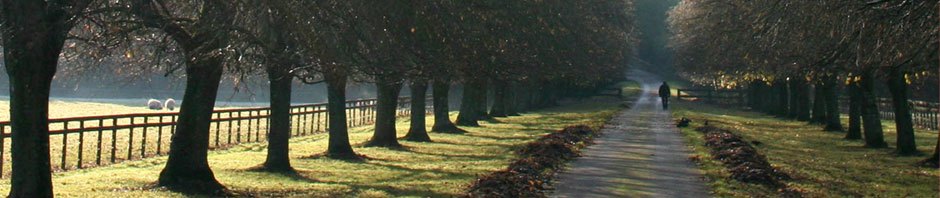
Saturday U Walk

“I can only meditate when I am walking. My mind only works with my legs.”–Jean-Jacques Rousseau

Posted in Uncategorized | Leave a comment

Eli and “The (Other) Misfits”

Well, I don’t know if I’d agree that the late Eli Wallach’s character Guido in The Misfits was “likable” as one press item put it. He was a very memorable misfit who flew his beloved temperamental plane over the bare Nevada desert in mustang hunts pursuing a big financial strike and lusting after Roslyn–Marilyn Monroe’s beleaguered divorcee character. He gave a truly convincing performance of a lustful male pressuring her for personal affirmation and sex. It is hard to imagine any other actor of that time outdoing Wallach’s portrayal of persistence, transparent superficiality, and raw need. Easily one of his best performances in an amazing 100+ film career.

He was joined in this 1961 ‘flawed’ classic by several other misfits. John Huston, the celebrated eccentric maverick director, drank, gambled, and womanized the nights away on the 110+ degrees-in-the-shade desert set. Despite this, he patiently tolerated Marilyn’s numerous delays and a pill meltdown which jeopardized completion of the shoot. No one else could have directed this tense, behind-schedule, over-budget movie. A lover of literature, he made sure that Arthur Miller’s script was closely adhered to.

Montgomery Clift had been through serious accidents and added to his physical problems by injuring his nose (bandaged in scenes) when he tried working with the rodeo animals himself. His alcoholism and penchant for self-destruction had made him uninsurable, but Miller and Huston backed him up so he was able to do the film. He turned out to be the scene-stealing rodeo bum Perce who has two powerful scenes–the phone booth call to his mother in a single-take extended monologue and the one close-up with Roslyn. Clift had no problem with his lines, unlike Monroe who did as many as 17 takes in the church steps scene. Though a true misfit, he acquitted himself very well.

Clark Gable gave the performance of his life, so he felt and many critics agreed, as Gay, the hard-living, restless womanizer-cowboy. His drunk scene outside the casino in which he pleads with his imagined, alienated son is a classic. Gable took all kinds of risks and did his own stunts as much as possible, even being dragged which injured him and likely hastened his heart attack the day after the shoot ended. Like Monroe, it was his last movie, and it was strong, Oscar-worthy performance. (Clift and Wallach could also both have been nominated for Best Supporting Actor and Ritter Best Supporting Actress.) Though playing a misfit character, Gable was also the sunny, sunburn-faced hero who cuts the stallion free in the climax. (For the record, the mustang hunt is one of the most powerful man vs. Nature scenes ever committed to film.) Miller got close to ‘The King’ and even dedicated his original novella to him.

Marilyn Monroe’s relationship with Miller was in break-up mode after she had an affair with Yves Montand in her previous movie. Frequently fumbling her lines, she was totally dependent on intrusive method-coach Paula Strasberg who was an ever-present black-clothed blight (the others called her Black Bart) and completely controlled Monroe, threatening and undermining any shred of self-confidence that her still-loyal husband Miller had tried to instill by gift-writing her the Roslyn part and movie screenplay. It is amazing she ever completed the shoot, frequently disrupting it by showing up late or not at most of the time. The shoot even had to close down when she had an overdose and had to return to L.A. to recover.

That, and the pathetic dissolving-marriage-on-set did much to invest a sense of doom and gloom about this movie which made it even more unique and powerful finally. To Monroe’s credit, she has several powerful scenes that showed she was extremely talented when momentarily focused and lost in a role. She is frequently moving and vulnerable throughout the picture, especially in the scenes in which she is ‘hunted’ by the various misfit male characters. Her best scenes are the one on the desert where she is filmed in long shot screaming at the ‘death side’ men, and the one in which she is dancing in abandon around a Garden of Eden tree. Again, no one else could have rendered these scenes more beautifully and deeply.

The movie itself is about the death of the American Dream–cowboys reduced to chasing beautiful, wild, free mustangs to turn them into dog food. All the characters are alienated and disconnected. This is one of the most powerful movies ever about the failure to communicate and a certain incompatibility between men and women which Miller immortalized forever. And all of the actors (including Thelma Ritter as the delightful, ‘older but wiser’ Isabelle) made the film work. They were all that focused and serious about doing their best work. Even Monroe when she made it to the cameras.

The passing of Wallach yesterday poignantly brought back many memories of these other great actors long gone. He was the last of “The Misfits” from 53 years ago. The last link to movie greats and greatness, and a whole other age long passed. It was a special time and a very special, remarkable movie. One of my favourites, indeed.

………………………..

Etc.

According to Miller, Monroe was described by Huston as “some kind of a crazy genius”. Miller also described his misfits as demonstrating “displacement in life of commitment”, living in “moment to moment reality’; “people trying to connect and afraid to connect.”

Posted in Uncategorized | Leave a comment

Fridge & Freezer Deaths

It can happen. A point made more palpable when fridge thermometers suddenly record numbers like 10 C for fridges and 0-5 for freezers. Suddenly the recent, mysterious sounds from a kitchen or basement begin to make more sense. In my case, a 13 year-old fridge and a 42 (!) year-old freezer. At the same time no less. (A sign?)

And so the scramble to buy a new fridge with a 1-2 week delivery date. “Guess you’ll be eating out”, said one salesman. Fortunately, my deceased parents came to the rescue with an inherited olde-icebox-looking mini-fridge to store whatever milk and juice. But there’s still a lot of food that bites the dust from the fridge’s freezer and the hassle of unplugging the declining machine–removing the visual treasure trove of photos, grandson artwork, and sacred trip mementoes from its exterior. The removal of memories like some Alzheimer’s patient on his way out and cleaning up a behind-fridge dust-bunnies estate.

My parents also–perhaps, if it still works–come to the rescue re. the downstairs freezer leaking its last down the small basement sewer pipe. Their freezer has waited 7 years in the same area to be reactivated when the first large appliance (1972) bit the biscuit. “The readiness is all.”

I removed the one large boomerang of ice that formed near the top of the dying machine and fumbled it into an undersized bucket to cast outside into the night. The slippery white signature of dead technology.

Well, there you have it. What Arthur Miller so eloquently bemoaned and criticized in Death of a Salesman–the inevitable planned obsolescence, the end of all things, the limits of technology and other various life forms. The need, finally, to replace when one can no longer say “if it ain’t broken, don’t fix it.” The end of process and the beginnings of new life, and brave new machines. The disruption, messiness and inevitability of death. Ends and beginnings. The principal markers of process per se. When fridges and freezers die.

……………………………………………………………..

postscript/ Arising from under the ribs of death, the 42-year-old basement freezer was defrosted and reactivated and is now running quietly at a safe temp. It is my folks’ freezer which has remained dormant, as in deceased, after a long move (from Wpg.) and 7 years waiting.

It just shows you never know or can be sure, especially when you think someone or something is counted out. The topsy-turvy Macbeth-type theme for sure. Also to be found in Robert Altman’s excellent Short Cuts, when at a hospital, a kid who seemed to be doing ok after an accident suddenly dies while another kid who seemed so close to death miraculously recovers.

Call it Life and Its Mysteries and Ironies. Or, in the case of the freezer and so many people’s lives–Live to Work (or Serve) Another Day.

Posted in Uncategorized | Leave a comment

Today I am

a small blue thing
Like a marble
or an eye…

I am falling down the stairs
I am skipping on the sidewalk
I am thrown against the sky
I am raining down in pieces
I am scattering like light

……………………….

lyrics and music for a dismal June day in Edmo–excerpts from “Small Blue Thing” by Suzanne Vega, Solitude Standing, 1987(also from Connections 1: Imagining (2nd ed.) by Richard Davies)

……………………….

An excellent illustration of the artist expressing her Inner Child and that important, recurring theme….

Posted in Uncategorized | Leave a comment

Sissinghurst Memory

“The impossible can always be broken down into possibilities.”–Unknown

-1-

Ariel was reading again. The stack of garden books beside his bed told him everything he needed to know. He pored over the pages of magical places–Giverny, Hidecote, Kew. The faraway traffic sounds of a busy August evening called to him through the window screen. The light was fading and it was getting increasingly difficult to see the full-colour illustrations. He hated turning on the bedside lamp because that spoiled the special quality of light and air that happened on perfect evenings like this.

He had been sorely depressed again that evening. The effects of two drinks in the preceding twenty-four hours. It was right what the experts said: alcohol was a depressant. At first, it made you feel good and deadened the pain of loss and loneliness. Then it wiped you out and left you feeling empty again. It became necessary to fill oneself up over and over again with various anodynes. He concluded that it would be easy under these conditions to become suicidal and alcoholic. But he would be all right if he could just get that book on Sissinghurst he had left on the end table in the family room.

After he had retrieved it, he crashed on the bed and the book fell open to a page–”The White Garden”. There were glorious white flowers growing everywhere outside a cottage. And the copy said that Vita had planned it so the flowers would light up the yard, even after dark, in such a way the family would be able to enjoy it after dinner–this lingering luminosity. He had seen this effect similarly before in ‘magic rings’–the ones sold to children at the folk festival that preserved the last rays of sun to glow later in the dark.

Ingenious. He smiled at the cleverness of creative imagination that could interact so with nature to produce heightened effects of sensuous pleasure.

It was difficult to say at what point he forgot what time it was, who he was, and what he had ever felt thoroughly rotten about. He kept turning the pages….

Landscape. Moat. Tower. Nuttery. Lime-walk. Dionysus. Orchard. This is my home, he thought. I belong here most….

-2-

They were taking breakfast together in the long library. Harold and Ariel. Reaching over to pluck a pear from the bowl on the table, Harold asked him how he had slept and what his plans were.

“I feel good this morning,” he said. “Is it all right if I walk about your place a bit?”

“That sounds splendid, old sport. Just watch for Vita, though. She was up early gadding about the Tower. I think she’s working on a new book–one about gardens. Something metaphorical I believe. All a mystery to me. Sure you won’t stay and have another piece of toast?”

“No, thank you. I have a hunger which has brought me to the mystery that is Sissinghurst. I must go where footsteps lead.”

“Up and down the garden path, I expect–see where it goes and all that.”

“Yes, voices.”

“Now come to think of it, I’ve heard them too,” he laughed. “Our boys’ mostly, climbing like vines or weeds, chasing birds, getting into things. At times here, place seems like a children’s lark,” he said, momentarily pensive, putting down his cup. “I used to loiter a lot when I was their age on the family properties. It always seemed like dawn when I was that young. I remember leaning over the edge of a pool and watching the goldfish taking their time, oblivious of me and the larger garden we were all in. We had a meadow, too–called it Fields of Praise. Very Wordsworthian. That’s the way the world is when you’re six and seven. Pagan spirits, sweetgum, green grass.”

“Yes, that is true. Everything shimmers with a first-timeness. The thrill of running water. Ponds. Bliss of cottage. Silver mist and children’s voices.” He paused a moment and looked at Ariel with the absent-mindedness of an old general. “I say, you’re new here. Don’t seem to recall seeing you before. What did you say your name was?”

-3-

Each of the overviews from the Tower was splendid and serene. “This was a ruins once,” a woman’s refined voice spoke from the corner of the room.

“I’m sorry,” said Ariel, “I didn’t see you. Afraid you caught me looking. You must be…”

“Vita,” she said and shook his hand. “Didn’t my old pouf of a husband tell you I’d be up here in the Tower working on my new book?”

“I was hoping to get a better look at Sissinghurst from up here.”

“Right you are. Whenever you need perspective, make tracks for the nearest tower. Yeats did. Why don’t you sit down? You look as ashen as Ginny did that time she came down here without her husband Leonard.”

Ariel sat down on the divan under a shelf of old books, Vita continued, “She fell asleep right where you’re sitting. Like a child she was,” she added dreamily, “a poor o’erwrought child. That man knew she needed watching. But he never realized that a man’s love is never quite enough. Ginny needed to be petted and coddled, fawned over. Tenderness. What she never got from her tyrant-father Leslie. Poor wreck of a man when his wife died, though, leaving him with all those children to look after.”

“No, what Ginny needed was protection from the elements, her stepbrother, too. Taken advantage of, she was, like me. Spoils you for so-called normal life, but ‘gad it feeds your art,” she laughed.

“When Ginny got to Sissinghurst, she positively budded. Life from ash, I told Leonard later. It was like this great spirit, an old soul had arisen from the ashes of her compressed London half-life. We dressed up like pre-Raphaelite goddesses and ran around the Bacchante statue at the end of Harold’s lime-walk. The old bugger found us rolling on the grass by the lake,” she said affectionately, stroking her hair. “It was never the same after that. The lake.”

“Come,” she said, grabbing Ariel’s arm and leading him to one of the Tower casements. “The White Garden in full Bloomsbury,” she proudly announced. His eyes roamed the beds and paths until he spotted a little statue.

“Another goddess?” he ventured, pointing.

“Put your hand down, dear. It ain’t polite to point from the Tower. That is the Vestal Virgin. Ginny asked me the same question and I told her, ‘It’s you, love.’ I put it up for her visit. She cried when she saw me standing guard over the foxgloves and columbines. I took her next to the Priest’s House. Summer bedding, she called it. I say, do you have a light?” she asked with a proferred cigarette. Ariel found a match in his pocket.

“It was late summer. I had picked roses all that morning before she came up. She laughed about the bachelor button I left by the maidenhair. ‘Gawd,’ she cried, just like that. ‘We’re two rare plants, aren’t we?’”

At that point, Ariel inquired about her new book.

“It’s not poems or literature for a change. More like a treatise about the power of gardens to seduce and sustain. Sissinghurst was a lot of bloody hard work. It was a real balls-up when Harold and I first arrived. Took a lot of cleaning up and money, the restoration, you know.”

“But planting’s are vital. ‘Vital’, that’s what my mother always called me. She said, “Vita, you are vital to the many untended gardens of the world. Go first and find a garden to clear with that man of yours, Harold Whathisname. He’s got bold planting schemes. Then the next thing I know, I got baby’s breath and two sons. And that was how Sissinghurst became a family of gardens.”

“Which you had to write about and share with others.”

“Exactly. A little digging, a little scratching, and voila–moat walls! I mean Sissinghurst is hardly on ordinary soil. Its blue-blooded past was everywhere. Harold and I saw it as a necessary conservation project–a long-term growth plan for ourselves and others. Voltaire was incredibly right when he said we must go and work in the garden. The perfect re-creation for frightfully bored aristocrats like us. And the money from our writing helps maintain the place, too. We literally had to write ourselves and the garden into existence.”

Ariel said, “Labour, vision. The busy bees of Sissinghurst.”

“And hence, the new book which I doubt I’ll get finished. You know–that perfectly wonderful feeling that you could die at any minute, leaving all those unpicked weeds and unrealized blooms. In fact, I was just saying to Harold the other day, ‘We’ve only scratched the surface with this place. This is about as close to heaven as I would ever want to be.’”

“But it got me thinking about the genius of hardiness (and I’m not talking Thomas). I mean, we have eked out a vision here, a sublime arbour of tranquility with the prospect of permanence. You like apples?” she suddenly asked Ariel.

“Yeah, sure.”

“Here, catch. It’s from The Orchard.”

“Hmmmm, pretty good. Pendulous stuff.”

“‘Garden of Eden,’ I said to Harold. ‘Let’s call it The Orchard.’ I mean, all the metaphors are here you’d ever want. Temptation. Love. Roses. Roundness. Tulips.”

“Ever hear any voices?”

“Just that one day,” she smiled. “that day Ginny came.”

-4-

What intrigued him most about the most about The Nuttery wasn’t the nut walk or the hazel trees. It was the odd statue of a young god on a plinth. Ariel wondered about the manic embellishment Vita had once spotted from a bus in London’s Euston Road. She had to tell the driver to stop and let her and then she had brought the god and the lime-walk goddess back to life from dear, dead London.

Ariel speculated on the balanced symmetry of male and female elements, god and goddess, Vita and Harold, man-made and woman’s touch. He noticed an old man puttering in the shade of the copse. “I don’t suppose you couldn’t tell me anything about this statue, sir. Is there a story to it?’

“Why yes, mister,” the gardener replied, straightening up to wipe off his hands. “there is a lot to be said for gardens as you may know–their therapeutic value, their symbolic value…”

“Like?”

“Well, consider the issue of the true path. Is there one when you finally get to a garden as special as this? I mean, where exactly do you start or even end at Sissinghurst?”

“Good questions, I thought gardens were supposed to make you sage and philosophical about briars or the need for shelter. And, as you yourself get older, you acquired a wisdom about life’s mystery from nursery to winter.”

The gardener leaned on his hoe and asked, reflectively,”Like meditation? Prunings? Deeper ripples on the pond?”

“The layers of forget-me-knots.”

“The one thing we never completely lose,” the gardener said, “is consciousness. If ever you fell asleep, you could wake up in any garden you’d care to imagine.”

“And what if one wants to plant?”

“A personal choice, methinks, as it was for Harold and Vita, I’d say. Some people plant stone gardens, others rock gardens. In that case, we’re talking of people who’ve died back, lost their faith in the effects of colour and light, such key parts of our ephemeral lives.”

“Vita…” muttered Ariel.

The old man turned his head, not understanding. “What’s that?”

“Huh?”

“You called me Vita like you were somewheres else, mister. As I was just saying, some people’s idea of a garden is a bleak thing with feverfew, grey days, misery, uncertain steps, a perennial maze. They think life was meant to be this barren, sterile thing like that poem by that Eliot chap. They don’t realize that roots and plantings are all just an attitude, part of what some call the human condition. I mean, take a look-about. What do you see?”

Ariel looked down the path. “Solitude.”

“Do you feel hunger at all, as in for any particular kind of experience?’

“I need, I need…” started Ariel, “a garden of dreams. I need wisteria, new light, warmth.”

“And so you’ve come to Sissinghurst at what you believe to be the end of your season.”

“Yes.”

“Did it ever occur to you that there will be other seasons beyond the floating lillies and twilight sorrow? Here, come with me.”

They walked together down to the margin of the lake and stood silent several minutes before the old man spoke again. “Show me the bones,” he said simply.

“What?”

“Show me the end of things.”

Just then a swan swam into view by the reeds. “There,” answered Ariel.

“I don’t.” replied the old man. “I see nothing but calm and a gentle sleep. A faith in whiteness, monochrome, much like milady’s White Garden. Uh, what did you say your name was, mister?”

“Ariel.”

“Well then, why don’t you take to the air? You know you can anytime,” he winked.”You are a bird or spirit, after all, and this is evening.”

Ariel glanced at the old man. Like looking in a mirror of water. Old man, face and eyes.

“You can, you know, my boy. Go on. Vita’s watching, you know”

“Where?” said Ariel.

“Up in the Tower.”

-5-

And so, the final effects of air. As it was in the beginning. Bird, spirit, heights. An idea well beyond habit or impervious soil. Something about flowering and late blooms. And voices, yes voices. New light and wonder now. Summer mindscape’s immanence. A transcendent dream of garden.

…………………………………..

“Become a possibilitarian. No matter how dark things seem to be or actually are, raise your sights and see possibilities–always see them, for they’re always there.” –Norman Vincent Peale

Some passing passions may turn out to be inspirational game-changers or turning points in one’s life. This fantasy, strongly based in historical facts, wrote itself in a long ago dark period.

Ariel was a persona who played a key role in a number of interesting writings from tha period. The Tempest context is also revisited here, complete with Ariel’s final release and the writer’s (and reader’s) understandings, acceptance, and transcendence with an empathic culmination of ‘moving forward’ beyond crisis, limits, and limitations.

As mentioned before, Harold Nicholson and Vita Sackville-West lived their passionate Sissinghurst dream and many others (not just Ariel and me) have been inspired or moved by that dream, notably Virginia Woolf (Ginny to Vita), who based her satirical Orlando on her relationship with Vita and the latter’s character. Additional notes: Leonard Woolf was Virginia’s editor-co-publisher husband-protector, Leslie Stephen was Woolf’s father, T.S. Eliot is the author of the influential 20th century poem The Waste Land, and Bloomsbury was the cultural crowd centered around the Woolfs. (Over time, a number of the selection’s details have found echoes today with such ‘trendy’ topics as child abuse, sexual assault, and same-sex relationships.)

As for the story’s exposition and complicating incident, I think many of us, in various ways, find ourselves limited or trapped in immediate contexts or ruts, and have to fashion our own escapes and transcendences via our passions and whatever creative imagination we can muster. In any case, our passions loom large, supporting, sustaining, and inspiring us. And they may define ( e.g.,Ariel) who we most are and save us when we lose our ways. We also fashion our own freedoms as well as life-narratives. The final road to these two are revealed by our passions and attitudes in response to challenges.

One of the great lessons in life (illustrated in this selection) is how we can free ourselves from many limited, limiting contexts and “mind-forg’d manacles” (Blake, “London”) via the magic of art and powerful, self-actualizing/liberating imaginings.

“I’m an optimist. It doesn’t seem too much use being anything else.”–Winston Churchill

ps/ I eventually did become a serious gardener in the 2000s. Natural beauty such as that represented by Sissinghurst (or Monet’s Giverny) will always be one of my recurring central passions.

(previously published here October 16, 2012)
Posted in Uncategorized | Leave a comment

Recalling Suzanne

002 (6)

Tonight listening to her excellent DVD-CD boxset Retrospective: The Best of Suzanne Vega and recalling meeting her at the Arden in March 2010. She had finished her concert and I was first at the autograph table (as I often am and have been with many performers–call it Focus and Knowing What I Most Want to Do/Who I Most Want to meet Live, Close-up, and In-Person). She was a little older and taller than I expected, but still quite pretty and distinct-looking. She was surprised what I had brought for her to sign–this imported boxset (autographed above), her Solitude Standing LP, and her autobiography.

We chatted a bit and I mentioned I had used two her songs (“Luka” and “Small Blue Thing”–both which she sang that evening) in a couple of my high school texts. She seemed to appreciate that and I complimented her on a number of tunes and for doing a strong one-woman show. Nice lady. Very much her own person, but friendly. I never thought I would ever see or meet her, so this evening, with my daughter, was quite the treat.

Posted in Uncategorized | Leave a comment

Sunday Walk, U of A

001 (17)

I usually park by the president’s house. The last president high-tailed it when the media leaked news that she made more money that the Prime Minister of Canada. She deflected questions when that point was raised, when she was asked what she did to deserve such a ridiculously high salary. No answer. Just arrogant, ‘entitled’ silence.
A couple of Ring houses are nearby; the tulips are long gone, but their gardens are nicely in bloom come late August.

The Faculty Club reminds me of the 1977 U of A Conference on Literacy which featured the late Rowland McMaster’s powerful speech on societal and individual needs for reading. That speech sent me scrambling to Northrop Frye’s seminal The Educated Imagination–a basic bible for all English teachers, and influenced the direction of my teaching of English forevermore. It was also at the club that my ED CI prof-friend, the late Glenn Martin, had his memorable 70th birthday party in which he invited ‘everybody he ever knew’ including his mechanic and barber!

I usually take the main walk toward SUB, passing the quadrangle I first saw in ’68. I pass by the Admin building where there used to be a red mailbox on the west side which had rare Sunday pickup in those days. I recall concerts by Bruce Cockburn and John Cleese at the SUB theatre, and seeing I Never Sang for My Father, still the best movie ever on dealing with a cantankerous, spirited old father who can’t admit to being ‘incompetent.’

I check out the five ponds and streams on the North campus, eventually heading toward HUB. I have enjoyed many strong plays at the TIMM centre, and before that at the old theatre in Corbett Hall. A few summers in the late ’60s-early ’70s, I took in the Torches summer theatre offerings outside Corbett on the west side. Great memories. Our Town (more-than-magical when performed on a summer evening), Goldoni’s The Servant of Two Masters (performed with Mozart’s famous fast piano piece), as the evenings moved gradually from light to darkness.

I stop at the 1915 Arts building and explore the interior design of this beautiful place which has been spared the wrecker’s ball. I recall seeing and hearing Tafelmusik for the first time here one Sunday afternoon with my then-teenaged daughter. (Just this past week, I received a Telemann CD box set which features 5 gorgeous discs by Tafelmusik.)

I head toward the Humanities building and Rutherford House, built in 1911. There I check as I always do the fleurs outside and recall the many excellent lunches at the Arbour Restaurant in falls and winters past, the colors or snow outside the quaint room.
I go by the mirrored Science building west of Tory and have a privileged glimpse of myself rambling past, each time a little older and more blurred.

Large birds fly north down over the high trees into the North Saskatchewan valley as I stop to remove a stone from my sandal left over from the u’s winter gravelling of sidewalks. The GeoScience garden plaques on the grass explain the various rocks and boulders that lie along the Saskatchewan Drive sidewalk on my way back to my car.
I think it’s still before 9 am and the only sounds I have heard have been of birds and the splashing sounds of the stream waters.

Solitude. This is the best Sunday walk in town any/every Sunday (Saturday if you want to shop the SUB bookstore or use the libraries). I used to walk the campus most most weekends of the year with regularity (sometimes to mark student essays at the now-gone V-wing), alone with my thoughts, memories, and sense impressions. The U of A on a Sunday has long been a sacred place for me.

Today I think of my son and daughter who have both worked for the university–my son still at Cameron as a Cataloguing and Metadata Specialist. The university has also been good to both of them and my wife (pictured above when she took a year of classes here in ’68-’69 before returning to graduate at the U of W).

Today I find peace, many good memories, and a flow that is echoed by the running waters. A non-stop pleasant flow of emotions, recollections, and ideas. I have always appreciated my courses, studies, and profs here. (Likewise, at the U of W where Karen and I first met and started our post-secondary years). These venerable institutions have remained special, deeply affecting places. There were many possibilities at both–for instance, I played music on both campuses and became interested in Canadian literature, before taking a year of Education that led to a 30 year teaching career and in-depth love of The Word, language, and  literature.

These are the places where I first discovered love, truth, books, ideas, consciousness, history, freedom, and many other unforgettable possibilities which continue to inform and enhance my life these days.

Whenever I walk U of A these daze, I feel a major flow and positive flood in me all over again. And I feel the presence of myself and my special memories in these many hallowed places. I know that a part of me will always be and remain here forever.

……………………………..

(above, Karen Reade, winter of ’68-’69, outside Tory building)

“The larger university is one you can never leave.”–Northrop Frye, “To the Class of ’62 at Queen’s”

Blog entries are copyright by entry date, Richard Davies.                                         If accessing site from Internet, activate any photos not showing automatically, by clicking on any picture frame. Then, despite Caution, safely click “Continue to this website”–pics will then emerge. When loaded, double-click upper left-pointing arrow twice to re-enter entire website with all blog photos now displayed. Pictures can then be enlarged or smallened as wished by clicking on each photo per se. This blog is, incidentally, Read-Only, but you can reach me by Google-searching “Richard Davies Edmonton” for the first link which comes up–my LinkedIn address, and you can access basic and contact info via there.

Posted in Uncategorized | Leave a comment

Trouble in Paradise

Honolulu and Hawaii island. Thinking of moving and retiring there? Think twice. Many homes there cost a million or more, many running to 10 million. It is so expensive living there, that there is now a significant homeless problem, especially for native Hawaiians, who, ironically can’t afford to live where they once did, some even leaving the island.
The writing is also on the wall for these places. They have to export much of their food and gas and oil via tankers. What happens when the tankers don’t come? La-la Land is not a terribly self-sufficient little island and getting more crowded all the time; i.e., the land is mostly used up. And, although wind turbines have begun to be used, there will, inevitably, be an energy shortage and crisis.

Fresh water is another basic Hawaiians are short of, too. It is simply vanishing. Agriculture has declined with the %age of farmers down, from 80+% to 2ish %age. Less water for irrigation. Desalination is too expensive and impractical, too. So the island will eventually come to rely on tankers, too, to bring in water to slake the thirsts of high-rolling residents. Social chaos will, no doubt, ensue when the water situation hits the fan (not unlike Phoenix-Scottsdale area when the water runs out in 20 years thereabouts).
Roads and highways have gone as far as they can be developed also; major congestions with the ever-increasing traffic. Poor urban planning has not helped transportation around the tight little island.

And tourism–people continue to pour in–most Hawaiians workers work in the tourism industry. But, again, ponder the draw on resources and spiralling costs to travel to an increasingly crowded, changed destination which has to fight to maintain that ever-more tenuous source of income with the resort cities in the Americas.

Honolulu and Hawaii–not like they once were in the ’70s and ’80s, and changing fast. Medium-term sustainability seriously in doubt. Big trouble in Paradise when that all that island fresh water gets used up. Many folks are blinkered when it comes to their views of both places.

Posted in Uncategorized | Leave a comment