Dickens’ Bleak House–part 2

The recurring thematic patterns of his serious novels:

Early mistakes in life usually based on passion
Secrets and Guilt–trying to make a new better life
Information (many characters’ chief motivation and fears)
Control and manipulation of others (often via knowledge of others’ information and secrets)
Evil (those characters who control and manipulate others for their own pleasure and amusement, often hurting, abusing, and ruining others’ lives)
Cruelty and Abuse (women and children as favorite targets)
Suffering (of innocents, victims) and sometimes Healing/Recovery and Forgiveness
Death (some suicidal, others circumstantial) or Happy Endings (prosperity, love, marriage)

………………………

Of course, the parallels abound with our own time–Dickens’ timelessness. What matters most to the author is the individual–the kind of person he/she is, his/her characters and their values, and their treatments of others as a means to ends or as ends in themselves. The latter is always central to understanding Dickens characters and assessing their relative goodness or harmful influence.

Posted in Uncategorized | Leave a comment

Facing the unknown

is a lot easier when you have dealt with unfinished business of the past and resolved all past missing pieces and conflicts, and truly know, understand, and accept yourself. As well, such is easier if you have made many plans for the future as if nothing else will change. By doing so, you direct the course of your own life quite apart from whatever else may happen.

There are two schools of thought relative to such anxieties. One says You should live each day fully, as if it was your last because “you never know”. I must admit it is very satisfying having full, constructive, forward-moving days–taking care of biz, doing a variety of activities, and getting things done, while leaving room for impulse, pleasure, and serendipidity.

The other school says Live as if you will live forever with no special regard or anxiety for passing time. This view is closer to a fatalistic one that we will all die one day, that death is inevitable and so one might as well enjoy the immediate passing moment. This view is also reflected in the way many people live–they just ‘go on’ without seemingly a care to actual limits, limitations, and a more realistic sense of process; i.e., that we can be accidentally ‘rubbed out’ at any time.

Which to choose? Obviously we all, at different times, live by both approaches.
I feel, though, more and more, as I age, the inevitability of process, my own limits and limitations, and some days I just enjoy or savour a la approach 2. But other days can also be comforting with the first approach–knowing one has anticipated many possibilities and already acted and chosen (route 1). In that, no restlessness–instead, peace, and acceptance that defies whatever sudden challenges or turn of events.
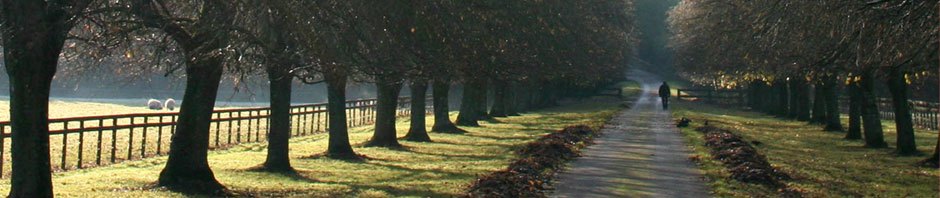
Thoreau’s comments on walking (in the previous blog entry) can be applied in a larger sense to one’s own life. Similarly, Hamlet’s “The readiness is all.” And the title of my 2001 poetry book Negative Capability–a phrase from John Keats, which sums up this position–“This is when a man is capable of being in uncertainties, mysteries, doubts, without reaching any irritable reaching after fact or reason,”

If/whenever such a balance has been achieved, there is a satisfied inner state consisting of relative peace, integrity, acceptance, and letting go that looks through, past, and beyond whatever imagined or real crisis or challenge. A profound sense of both arrival and completion in one’s own life.

And one is really ready for whatever–Thoreau’s walk, the continuous massive societal and cultural changes of the day, great losses of those closest to one, major upheavals in living conditions or lifestyle, serious illness, tragedy, and even death.
Posted in Uncategorized | Leave a comment

Ultimate Walks/Walking

“If you are ready to leave father and mother, and brother and sister, and wife and child and friends, and never see them again; if you have paid your debts, and made your will, and settled all your affairs, and you are a free man; then you are ready for a walk.”
–Henry David Thoreau, “On Walking”

……………….

“The readiness is all.”

Posted in Uncategorized | Leave a comment

Significant 2014 Oscar Snub

For Best Actor nominee–Robert Redford.

He was terrifically convincing as a desperate, but hopeful yachtsman in All Is Lost. What was most incredible about his strongly empathic performance is that it was 99% a silent one, in which you can clearly read his emotions, thoughts, and spirit in his face, gestures, behaviors, and actions. Though 77 now, he also did many of the physically demanding stunts. Only a consummate actor could have pulled off that performance which makes the movie. It is hard to imagine Leonardo di Caprio or any other Hollywood actor pulling off that risky role.

All Is Lost is an excellent ‘little’ movie, but a very simple, basic one at the same time. Although Redford had won a Best Director award for the ground-breaking Ordinary People and received a Lifetime award for his work, he was definitely snubbed for a fine, surprising, nomination-worthy performance.

Posted in Uncategorized | Leave a comment

Grade 9–A Big Life Turning Point

001

(gr. 9–author as ‘cool chick magnet’; note: fashionable white Ivy League socks, ‘Beatles’ black jacket, slim tie, shirt collar was likely a bar collar–I knew no other students who wore one. Hair styles were still short until next year when kids started to push the high- school-rules envelope. Seated with me are the yearbook staff. Leslie Smith with the risque suspenders skirt beside me–in  May 2012, we reconnected in person at the school’s centenary, which I was the main speaker at; she went into nursing, me teaching. We both kept our senses of humor.)

An only child, I had travelled through school pretty much in my own haphazard, learn-as-you-go way. There were definite limits and limitations showing, despite a burgeoning love of pop music and an interest in romance.

My oldest childhood friend, who took the road not taken, and changed schools in grade 3 thereabouts, had gone on to the ‘big’ high school nearby which then housed a grade 9 class at its lowest level. All the bright, clever kids were in that class as I was about to find out. Hugh invited me to come to a dance at a church hall that his friends were putting on or going to attend in large numbers. It was the biggest favour he ever did for me–opening up a large, stimulating, entertaining, educational world. There was, to boot, a girl whom I became attached too, who was herself, a bit of a snob and outsider, and we both instantly became an item, invited everywhere, and her own popularity soared by the simple fact of my mere presence.

This all happened suddenly, fast–I became and was “one of them” for several months into the grade 10 year. It didn’t hurt that my family had just moved into Billingsley Manor and I was having more friends over. I also remember from that point on seeing my various new friends walk by on Portage Ave. sometimes going out to join them.
There were numerous parties, every week it seemed–that was the year The Beatles burst upon the scene. It was such a wild, free, good clean fun time. Anything and everything by way of cool behaviors seemed possible. Overnight, my life became very full, rich, enhanced, with many seemingly endless possibilities.

And this all started with an invitation from a good friend–one that I initially fudged on as I recall. As major turning points go, that set up my senior high years, and opened up writing and music even more. I suddenly had a life, a big new life. And the only child got a lot less ‘only’ and majorly connected for three significant, powerful, incredibly formative years.

……..

ps/ 50 years on–though the 45s, the Granny’s Kitchen bread fights, Pettigrew berets, original impromptu Sandy Nelson dancing, and the school itself have long gone, Hugh and I are still connected along with his still-best friend Dave. Though we are separated by geography (Edm. & Wpg) you could not ask for better friends and company. Bright funny guys. Nothing’s changed. Sometimes we do get very lucky.

Posted in Uncategorized | Leave a comment

Dickens and Life Today: “Bleak House”

(BBC 8 part tv series starring Diana Rigg and Denholm Elliott)

It’s been a while…

Funny how little London had changed between the late 1500s and the mid 1800s. It was still a smelly, grimy, ugly place in which road sweeps helped anyone with money across the horse-muddy streets. The buildings were sordid and run-down and multitudinous rats roamed freely. (Dore’s sordid pictures of London did not lie.)

So much for whatever Romantic notions derived from reading Jane Austen’s country estate novels. Definitely a more realistic picture with thousands of poor, orphans, illegitimate children, serious illnesses, hard labor, slavery, and pathetic deaths. Sort of like our modern world, no?

The view of courts, law, and justice are extremely negative–where trials drag on and fortunes are milked by the legal system. Indeed, every one in this book seems to have an angle or agenda–again something very realistic and modern. Information which may have been kept secret (for reasons of privacy) becomes sought after for the money it can bring the criminal or the power over others it can bring the unscrupulous. (Information as dross, currency)  Again, all very modern like e-spying or online bullying. The worst of human beings never changes–a truth that Dickens revisited many times in his books.

And always the ones who are strange, crazy, or eccentric like Crook or Miss Flite. Have we not known our share of crazies and kooks in our own time and lives?
Bleak House which is actually a haven for rebuilding lives is much sunnier than miserable London where corruption flourishes, no more so than via the legal system and court–supposedly marks of civilization and fairness. Dickens points out that life ain’t fair and many unfortunates cannot help or avoid their fates because of the contexts they are born into. Those who are corrupt use others freely, pushing the envelopes of slavery and abuse without blushing. But he also presents people who are kind and good, who try to ameliorate the tragic and hopeless situations of others. Dickens’ picture of humanity and human nature is, amazingly and aesthetically, a balanced one.

I am halfway through this outstanding production which oozes with mystery, suspense, and atmosphere. Long before tv and iPads, readers once found entire, accurate worlds in Dickens’ deservedly-famous novels. He keeps the reader interested and fascinated with his many interlinked plots and subplots. He was a master storyteller.

It is a shame he has fallen off the modern cultural radar. As much as Shakespeare and other truly great writers, he showed us who we really, sadly, are and where we could stand serious improvement as a species.

Posted in Uncategorized | Leave a comment

From “The City of Words”

by Alberto Manguel

“The love of liberty is the love of others; the love of power is the love of ourselves.”
–William Hazlitt, Political Essays, 1819

“Language is our common denominator.”

“Writing…a constant flow of language that allowed words to shape and name the reality which is always in the process of being formed.”

“Language as an instrument both to shape and understand reality.”

“Language…forces reality to manifest itself, it burrows into its depths and brings forth the fundamental situations…of the human condition.”

“Language…is a form of loving others.”

“Reading is a task of memory in which stories allow us to enjoy the past experience of others as if it were our own.”

“Stories can feed our consciousness, which can lead to…an essential awareness that develops through confrontation with another’s voice.”

Posted in Uncategorized | Leave a comment

Full Moon: Waxwing Dream

They circled the open well lazily, no discernible pattern–about twenty of them–five feet off the ground. You could feel that something was about to happen.

Then they shot up in a linear swarm and turned suddenly at the leader’s chosen zenith to arc straight-down, still  in formation, toward the well and its unseen nadir. I watched them disappear into its depthless darkness at top speed and wondered at their inexplicable, soundless, frenzied ends. Not a single bird emerged again.

Posted in Uncategorized | Leave a comment

A Full-Moon, 100km-Wind Day in Winter

Can one be pounded any more, any harder, now that normal climate no longer lives here?

A day for facing the basic fact that life is chiefly about personal survival for the most part. That it’s each man for himself and for those closest to him. And that life can still go on or work when reduced to its simplest operations and dimensions.

And that passing trifles, such as making tea for someone else, become magnified hugely–the smallest, tenderest acts of kindness by strangers; the spontaneous gifts of self, like shared poems when and where least expected; the truthful ironic witty perspectives and humor amidst the non-stop craziness and perpetual absurdity. The smallest, sweetest, and most beautiful of details that emerge, impossibly, like tiny blue pansies in wet fall snow.

Posted in Uncategorized | Leave a comment

Coming Home

It had been months since he had seen his parents and home. The city skyline gradually came into sight after a long flat prairie drive. Suddenly he was passing the familiar landmarks as he entered the outlying district where he used to live. There was the drugstore where he had worked briefly, riding his bike in the deep snow delivering prescriptions. There was the bus stop where his girlfriend had tripped as they once ran for the bus. There was the hospital where his mother had worked and walked blocks to in winter in order to save busfare. There was the little hall where a September Saturday dance had once been and he had been introduced to all his friend’s grade 9 classmates from another school–opening up an entirely new world of amazing possibilities for him.

There were the two streets where he had delivered papers for several years, the building his parents had found him in upstairs when at 5 he wandered off with some strange kids and they showed him how to box, complete with boxing gloves. There was the old store which had a giant cartoon tramp painted on its side, which punned it was a long tramp to the next town. There was the bend in the road where the bowling alley he and his parents had had once bowled in, and the six-storey apartment block they had once lived in–the school a long cold walk across the open sports field in winter.

There was another newer apartment block where a student in a band he used to go see had lived in; a handsome, funny teen who had once charged the Beatles’ plane when it stopped to refuel at the airport–a few years before the student had joined one of the country’s most famous bands (later being fired) and finally being killed as an innocent hiking-passenger in a wild car ride on the same city street late one wrong-place-at-the-wrong-time-night.                                                                                                                                       There was where the bakery had been before it exploded, killing the baker and others, taking out the rest of the block’s buildings–the bakery he and his new grade 9 friends used to stop at, to eat and comically tear apart loaves of bread on their way home from school–the clothing store where his father had, on credit, bought him dark green leather loafers which never fit right and which finally fell apart–and the barber’s where he had once sat and envied the annual Export A NHL calendars on a facing wall.

Beside the deathly-still vacant lot was the street where, a few houses down, he had gone to in grade 8 with an older teen to see his friend’s uncles’ two Corvettes parked on a driveway–a consummation of his private Route 66 tv show fantasies. And there, further down the main avenue, was the restaurant he had never been in, but which he would finally go into after his 40th school reunion with those same, aged grade 9 friends. And there was the supermarket where his musical friend–now a married, computer expert for another city, had once worked as a bagboy.

He parked the car in the same store’s lot and went in to buy some better quality hamburger. Then he drove across the avenue to the parking lot beside the walk-up near the river where his parents still lived. The same building the big planes passed on their low descents to the airport. His folks were both well and happy to see him, much like the old Corgi cross who slowly got up from her bed. She was obviously very tired and quite ill–‘on her way out’.

After supper, he went to the stove, took out a red saucepan and cooked up some of the hamburger. The dog lay motionless beside him on the floor, her head up, patiently waiting. When the meat was cooked, he put some in her yellow bowl and she limped over and tried to eat. It was the least that he could do, after all this time between, for his close childhood companion.

Later that evening the dog passed away quietly and the family all said goodbye to her peaceful body on the living-room floor. In the long silence that followed that evening, he thought to himself: Everything changes. Everything passes. But inside, he was still glad that he had come home, in time at last, to do one nice, last special thing for his old, never-forgotten friend.

Posted in Uncategorized | Leave a comment