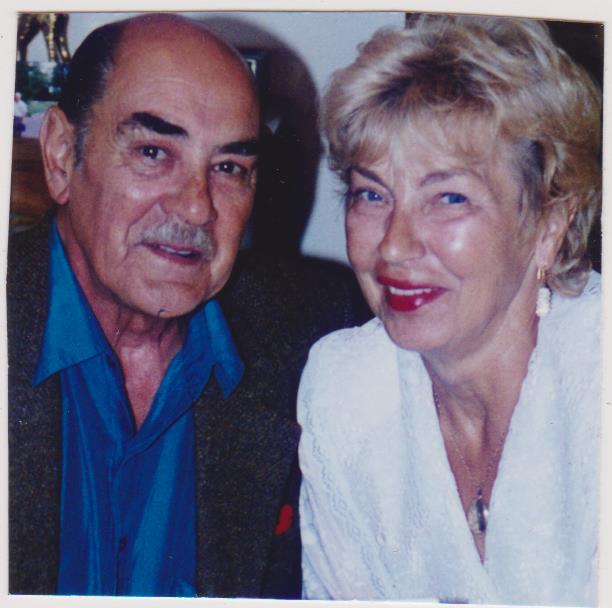

(O Lucky Man! My 30s was the last time I dressed up for work and wore a tie and jacket.)

(My favorite years were at Scona 1986-2002. top: at the annual June men’s stag which I always played at–here relaxing with Don Richards and Bill Badger; bottom: playing the 50th anniversary do with Don Richards, doing oldies; I always performed each year for students and the schools I worked in. My band Fudge played from 1990 to 2003. )
…got me thinking back to my 30-year stint in high-school classrooms. These women obviously weren’t concerned about abusing their positions; they were more in teaching for themselves, like so many young teachers these days. They were especially more interested in having power and control over vulnerable students to satisfy their sexual appetites (as have so many male teachers, before them, historically speaking).
Well, a loss of perspective, given how many teachers go into education because they enjoy kids and helping them, which are the best reasons overall to forge a career in teaching.
Thinking back, I had a germ of an idea that I might like to become a senior high English teacher (junior high and elementary were never even considered then) after having two memorable English teachers in Winnipeg–a Mr. Brian Kells and Mr. George Brown–as well as several influential u profs later. From high school on, there was only one subject of real interest: English (literature). Eventually I took one year of training with R. Glenn Martin at the U of A who also published my first adult prose writings.
The choice of senior high was confirmed after my junior high practicum; my efforts as a subject facilitator would have had to taken a backseat to the daily grind of human relations at that grade level. Likewise then, I would have had no background, skills or affinity for teaching younger kids–with even more (necessary) ‘basic’ human relations skills.
Not to say, I didn’t have many friends or didn’t relate well enough with adults of all kinds; just that I was more focused on what I wanted to do and aware of what my limits and limitations were at that age (22).
I loved English and relished the possibility of sharing that love and enthusiasm with kids within a curriculum which was certainly more subject-centered then, especially in English 10, 20 and 30 (now 10-1, 20-1, 30-1). So it was my interest in my subject area that drove my choice, not kids per se. It would be also the prospect of helping students to understand, interpret, and appreciate good and great literature that I looked forward to. I knew that there were many truths, values, information, and insights worth sharing with teenagers through the study of literature.
And so I struck off, focusing on text immersion and interaction with literature, getting the students to think and process so many works. And they would share what they had learned through talk, oral presentations, creative work, and mostly critical writing assignments, as in essays and reports.
A lot of marking, more than any other subject area, let me tell you. To say nothing of mentally establishing various standards for each course in both marking and grading.
My big transitions in consciousness came through theme teaching (subject-based on ideas) and textbook writing. Core to these came a better understanding, via English 13-23-33 then (10-2, 20-2, 30-2 now), that if you made the student the centre of those courses in the non-academic stream, then you could then teach appropriate subject matter and actually facilitate interesting possibilities those kids didn’t even know they had, such as getting 100% on an assignment. The work with/for those kids changed my whole view of marking and evaluation. Suddenly those course averages were in the 60s, not mired in the 50s, and I could honestly give out marks higher than 80% on assignments or for work.
In other words, while subject matter remained central to teaching 10-20-30, connecting and human relations on a 1-to-1 level remained the core for success in all ways for 13-23-33. (Later, I would bring in more of the same approach with the academics with good results).
The constant bane of being an English teacher then was marking. I always had work to grade after hours, on holidays, and on weekends. It often caused a definite separation between myself and family for sure.
Still and all, I can look back and remember enough students who made a positive impression on me, those whom I quite enjoyed and liked. Likewise, with many staff members, fellow inmates who suffered the same trials of innumerable, boring-ass, useless meetings, selfish administrators, bean-counting school boards, and indifferent politicians more interested in horse racing than education.
And a lot of good did arise from my original naïve entry into teaching. I introduced students to many good and great works of literature through books. I got them thinking, always, challenging them in many ways; I never left their naivete, complacence or laziness alone.
They were always challenged and stretched; as one memorable student put it: “Mr. Davies taught me how to think.” I sure as hell did, and am proud of that honest, freely-proffered comment.
I taught them a lot about the process of writing, the process of doing oral presentations, the process of reading, even the process of viewing (the latter through film studies). In my classroom, they always saw and read the best: King Lear, Hamlet, Macbeth, Lord of the Flies, To Kill a Mockingbird, Great Expectations, Brighton Rock, Who Has Seen the Wind, The Apprenticeship of Duddy Kravitz, A Bird in the House, Our Town, The Great Gatsby, Death of a Salesman, The Glass Menagerie, Cry the Beloved Country, Camus’s The Outsider, 1984, Fahrenheit 451, The Kon-Tiki Expedition, The Doll’s House, as well as the poetry of Robert Frost, Emily Dickinson, John Keats, William Wordsworth, E.E. Cummings, T.S. Eliot, W.H. Auden, Pablo Neruda, Bob Dylan, Leonard Cohen, Margaret Atwood, P.K. Page, Bruce Cockburn, and, too, films such as North by Northwest, Citizen Kane, Il Postino, The Verdict, Dr. Strangelove, Psycho, My Dinner with Andre, Kurosawa’s Ran, Field of Dreams, Dial M for Murder, The Birds, The Fall of the House of Usher, High Noon, Branagh’s Henry V, The Mosquito Coast, Never Cry Wolf, The Odyssey, On Golden Pond, Ordinary People, Zefferelli’s Romeo and Juliet, Olivier’s Richard III, A River Runs Through It, Rosencrantz and Guildenstern Are Dead, Shine, Sounder, Taps, Breaking Away, Fiddler on the Roof, The Taming of the Shrew, Whose Life Is It Anyway?, and the stories of Edgar Allan Poe, Shirley Jackson, Morley Callaghan, Alice Munro, Carol Shields, and Ray Bradbury via my own textbooks.
Speaking of the latter, it was a pleasure to be able to teach both streams for 20 years from my own textbooks authorized for Alberta classrooms (and all the other provinces). Certainly this was an anomaly for the kids to be taught by the guy who made their books! There was also the pleasure of giving workshops across Canada to thousands of teachers in each province. (I can still go to other provinces today and find kids who have used my books!)
Looking back, finally, it was time to exit when parents started interfering more in classrooms, when administrators sided with parents not teachers, and when technology became more distracting and intrusive: phones ringing with outside the school calls from parents and marks programs forcing teachers to enter marks immediately without any flexroom for more big-picture, accurate weightings of overall student marks.
All in all, I had it pretty good and mostly my way on the core, key stuff up until the end. By that point in 2002, serious and true education was beginning to lose its best ways and drifting toward a technological Never-Never land fantasy which has since replaced it. Overall, my stint in education went well and I had my impact and then some. Times were different then, and the teacher was the key and guide to the learning that went on You could close your classroom door and just teach without the distractions galore of today. It was a special, privileged life and career, in retrospect. No, I have no regrets on career choice. I made my destiny and connected with innumerable people, showing them myriad possibilities and reference points for living. Very satisfying in the end.
And very much befitting of the unique individual I wanted to be in/with society during my most socially-engaged years. I was pretty much in a category unto myself, and in that there is much pleasure and deep satisfaction to be taken.
………………………………..
The ‘Evidence’
1972-1975: the new Grand Centre High School, now part of the enlarged Cold Lake town; this is where I began theme unit teaching on a quarter system
1975-1983:McNally Composite High; this is where I began to write and edit textbooks with Glen Kirkland
1984-1986: the new J. Percy Page, unofficial dept. head; where my son later went
1986-2002: Strathcona High School, where my daughter later went; this is where I created Academic Challenge courses and refused EPSB’s attempts to groom me for admin positions.
…………………………………..
The Turning Points:
-deciding to stay in Education and teaching; during my junior high round, I had seriously about quitting, but my mentor-friend Professor Glenn Martin convinced me to stay in the program; I would send him a Xmas card every year after up to his death; later when I returned to Edmonton, he sent me student teachers, especially problematic ones
-teaching in the sticks since there were no jobs in Edmonton; hired by Edmonton Public with 2 other offers from Edm. area in ’75
-going into textbook writing and conference presenting
-deciding to retire from teaching in 2002 on my own terms at age 51.