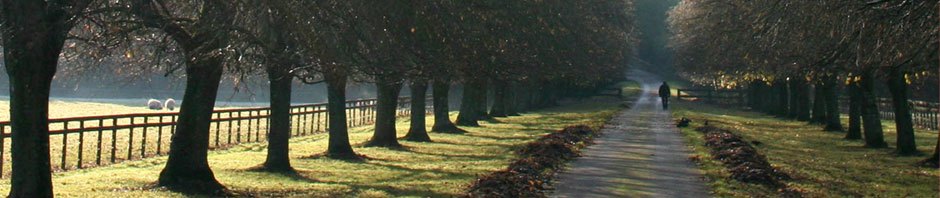
Moments of Being

“God is in the detail/s.”–Gustave Flaubert, “The bien Dieu est dans le detail.”

Moments of being are those more elusive transitory times when one is especially aware of the sublime pleasure and excitement of a given moment, and how it is unique and distinctly different from the many more ordinary, mundane moments in the passing flow of daily life. Moments of being tend to ‘announce’ or ‘proclaim’ themselves with an extreme obvious positiveness. At the time that they are experienced, the person (and sometimes persons) involved know and sometimes even share the specialness, uniqueness, and importance of the moment. Often there is a definite pleasurable sense of discovery, revelation, or epiphany about the moment in question.

The “being” part of whatever moment usually manifests itself in/as a heightened sense of being or becoming. A moment of being might very well also be the consciousness of significant change–possibly of imminent or possible change–an awareness of great hitherto inexperienced individual or situation potential. In any case, moments of being are primarily inner individual experiences in response to context and external events.

It is not surprising that moments of being comprise our most treasured memories of important things that have happened to us in the past. Think back to when you had special recognition that no one else you’ve known has had such as being chosen by your principal to receive the gift of a painting for the school’s official opening, or of being allowed the privilege of playing disc jockey in charge of your high school’s noon-hour intercom music. Often it is these sorts of special defining moments which determine one’s direction in life, too, career-wise.

Often moments of being have to do with relationships such as the first time one spoke to or spent time closely with a particular person. Experiences with members of the same or opposite sex in a first-time intimate way can introduce us to aspects of ourselves and others that ‘mark us’ for life.

Moments of being sometimes occur in moments of learning through the arts such as when we read a very emotionally moving book such as To Kill a Mockingbird, experience a powerful piece of music such as Beethoven’s “Diabelli Variations” or visit a gallery containing Monet’s enormous panels of water-lillies. In such experiences, we are moved through our senses to experience something deep and true about the human condition that connects us with other people and other times. Moments of being can have that kind of broadening, enriching impact and influence.

We know, too, that Nature can also create moments of being, an effect we attain anytime we go to the mountains, the seaside, or desert. Under favorable active or contemplative circumstances, interaction with Nature can produce deep inner effects that go way beyond words to transportive spiritual satisfactions, akin to those we might call religious. In that sense, ‘God’ can be found in the “details” that make up whatever moving moments of being.

As we look back on our lives, we find that our lives can be, to a large extent, defined and understood by the many personal moments of being that we have been lucky to experience and sometimes fortunate to share and communicate to others. To them, we should pay special attention, as we should, indeed, to all passing, precious transitory moments, regardless of their relative ‘shine’ in the great scheme of things.

“We have only this moment, sparkling like a star in our hand…and melting like a snowflake.”–Marie Beynon Ray

(previously published October 12, 2012 here)

Posted in Uncategorized | Leave a comment

Of Dreams, Dreaming, and the Realization of Dreams

Many poets and writers have speculated that life is largely but a dream or dream-like state. In The Tempest, Shakespeare writes “We are such stuff/As dreams are made on; and our little life/Is rounded with a sleep.” We spend one-third of our days in sleep and the still relatively mysterious world of dreams. By day, we daydream, make plans, and imagine other possibilities and possible lives. Optimally, dreams might be thought of this way, in the words of Cheryl Renee Grossman, “I dream, therefore I become.”

What gives our lives meaning to a large extent are usually dreams. We have large dreams such as wanting to live independently, to own a house, to have a significant other, to create a family, to take a dream vacation, or to retire securely. These are more long-term and may require a significant investment of time, effort, patience, focus, and hard work. Often these involve personal sacrifice or compromises of some kind, but they are often the most satisfying and fulfilling of all realized dreams.

By day, there are often smaller, minor dreams and desires, such as having a morning coffee, having some pleasant engaging diversion during a work day, or coming home to a safe, known home-base that protects one from whatever harsh weather conditions. In the course of the day, a dream realized might include scoring an ‘A’ on a school test, getting an unexpected e-mail from an old friend, being promoted at work, or having a favorite food for supper. Ordinary or small victories are all dreams and desires realized that mean something positive for each dreamer.

More significantly, we may reach crossroads in our lives or perhaps look back on our pasts and wonder if we have accomplished various things we set out to do and once wanted to realize. It is as at those personal inventory moments that we may measure the relative success or failure of our lives. Usually, this is done in terms of dreams (and desires) achieved, deferred, or realized. Only each person can know what those dreams are and what they signified to oneself. It is in times such as these that we may come to know that the highest form of living and the best-lived moments are simply those many dreams we have been lucky to personally realize.

(previously published October 3, 2012 here)

Posted in Uncategorized | Leave a comment

On Being Open to Love

Much there is that makes us distrustful of others in our daily experiences. Too often we find too few to trust or believe in the honesty of. Openness is a key state to receiving whatever benefits of love and affection. The naturalness and comfort we feel toward pets, for instance, does not come as easily with other humans, even if they are family or friends.

To be truly open to someone else one definitely needs to be in a receptive, even ‘needy’ or ‘needful’ state. To be open to and for someone else requires more than simple giving. It means that one must pay attention to what the other person wants, needs, and may initiate. It requires a relaxation of normal defences and defence mechanisms. One cannot be truly open and guarded simultaneously.

To be open to love means ‘not resisting’ the other person. It means empathically ‘going with the flow’. This is not easy for people used to checking their cellphones every minute for the trivialest of messages! It means that time itself must stop or cease to be a concern and that watch or clock time cease to exist and are no longer the most important things in the world. One has to make time for the other person in order to be truly open for him or her.

To be open to love means that whatever previous conclusions about love must be erased and a new slate created for whatever possibilities of the moment. Whatever one believes, therefore, is ‘thrown out’ or discarded temporarily in a real sense. One must be open for newness and discovery, ready to receive the unique information and possibilities of the love that might follow.

It may be also that a number of strange and wonderful things subsequently occur. For instance, one may no longer be limited by regular mealtimes or capable of consuming larger-than-necessary meals. Too, one may spontaneously do unusual, freer activities like jumping up as high as possible from a standing position just to enjoy the feel of escaping gravity! Similarly, it may be that all the trivial things that one once considered so important don’t matter as much or anymore, unnecessary self-imposed chores like repainting a fence every few years. Perspective and priorities get changed that much by love and a full reception of love. Many limits and limitations suddenly, magically, become blissfully fewer.

Receptivity is, indeed, the key. Too often we see ourselves in the role of agents or initiators, so much so that we do not stop to receive whatever information and affection others may wish to give us. “The readiness is all.” (William Shakespeare) In that sense, we must be ready to receive love if we are to ‘get it’ at all. We have to be prepared to allow the love of others for us to happen, to understand and accept it, sometimes passively at first. It is through this ‘passivity’ and open attitude that our own active expressions of love, in return, may emerge and find their way.

After all, openness to love requires that the other, at some point, accepts the love we find in our hearts and souls to share and communicate. A rare agreement and common will/ingness to love mutually on a receiving, as well as giving, basis.

(previously published here October 17, 2012)

Posted in Uncategorized | Leave a comment

Spring Flight Epiphany

003 (15)

Early April, 2007. Driving back from Winnipeg after my mother’s death. I stopped the car north of Regina on a wide expanse of big sky prairie. Above me were mobile skeins of myriad bird flocks flying north for yet another spring and summer in northern Canada. Many of these were made up of geese and sandhill cranes. The air was vibrantly alive with their various distinctive, multitudinous cries.

There were no other cars around, just mine, parked by the roadside where I stood leaning against the Toyota, looking up everywhere around me, savouring for a long, long time. There were easily thousands, maybe even tens of thousands travelling by at that exact moment on that stretch of prairie that gloriously sunny, spring-warm afternoon.

This was probably the most privileged, significant episode I’ve ever had with respect to birds or animals. “Awesome” is too small a word to convey the joyful rush and full-some consciousness I had in that pure, blissful, unexpected moment of being after the steady haze which follows the death of someone important and close. I was left feeling spiritually reinvigorated and profoundly refreshed, ready to resume my long drive home to Edmonton and whatever would happen next in my life.

Posted in Uncategorized | Leave a comment

Beyond Spock

photo (11)001 (63)

I was never a Nimoy or Star Trek fan, though I used to enjoy a 16 mm film I showed in the classroom several times of him reading and explicating Robert Frost’s “Mending Wall”. He had a very good reading voice also on the Caedmon LP, shown above, recorded in 1976. It was only natural that Nimoy perform some other science-fiction and this he does well, reading two popular Bradbury stories.

Too, I watched for the first time last evening and enjoyed, on DVD (available from Image Entertainment), his 1981 one-man-show Vincent which he directed, wrote, and starred in, playing both Theo and Vincent. Nimoy also includes a visual travelogue and follow-up about what happened after Theo died and his own take on Vincent’s problems. Highly recommended.

There is often more to the picture than the obvious popular iconic image. As Nimoy himself said in his first memoir: he was not Spock, or rather, as I’ve learned, just Spock.

Posted in Uncategorized | Leave a comment

Fall of 1965 Revisited: A Mere Half-Century Ago

001 (63)

(Brian Kells clowning–bottom right with sponge mop–and some of the S.H.C.I. Art Club 1966-67; my close friends Hugh Hanson–top left and Dave Cherrett–top right; we’re still connected today as well)

DSCN0368

(R. Glenn Martin, starting out promising Harvard graduate in the late 1930s, student in Robert Frost’s class; picture from 2009 funeral which I read the eulogy at)

Fall, 1965. Grade 11, Silver Heights Collegiate, Winnipeg. My ELA teacher Brian Kells drawing birches on the blackboard as he visually explained Robert Frost’s poem “Birches”. A turning point in my life, introducing me to Frost, his poems, and connecting all of this, imaginatively with the Nature I already well knew and loved. It also struck me, at the time, that humorous, eccentric males who loved poetry and the arts were interesting teachers and could make a career out of these elements. Kells was my first male teacher influence, someone who offered a model for English teaching, and eventually an unexpected friend in the new millennium.

I hadn’t seen him since the reunion in 2007. On a whim Brian looked me up and phoned me from Wpg. today and we had an hour long chat. He is still very much an arts man and, of late, in a choir called Celtic Mist. He read me a poem he had read at his wife’s funeral. A nice boyhood memory of his dad bringing home the Christmas tree and him pushing his face into the branches to smell and absorb the tree at a deeper level. Later in the poem, he sits in the room, imagining doing that action again. A well-done piece. I was honoured he shared for the first time one of his creative endeavors. Student responding to teacher all these years later. We were both lucky to be sharing that and many other memories and moments of being today.

………………………………..

I recognized afterward that Kells has become an older ‘mentor’-friend much like the late Glenn Martin, my Ed CI–English prof whom I used to chat with at length on the phone and the only one who ever sent him an annual Christmas card. Later I would pinch-hit (for a winter traveller-friend) to escort him to ESO concert dates and pre-concert dinner dates at Gabbana’s. The level of conversation with these two men is/was relatively erudite, cultured, and has/had a lot of humor, irony, and depth. They are/were both remarkable people, easily the two smartest men I have met in the areas of art, literature, poetry, and music. Martin, like Kells, was eccentric and unique to the end, quietly whistling a Beethoven symphony while reading a newspaper when I visited him for the last time in the hospital.

Posted in Uncategorized | Leave a comment

If you like a good entertaining mystery

or a good British series, you cannot beat the Poirot Complete Cases collection on DVD with David Suchet as Hercule Poirot. Having now watched 3 series from the set, I have yet to see a weak/er show. Excellent acting and cast with a strong Japp, Hastings, and Miss Lemon in support. The writing, adaptations, and dialogue are uniformly impeccable. The music, sets, and costumes top-notch.

I would have to put this collection up there with the Kenneth Clark’s Civilization series, Jeremy Brett’s Sherlock Holmes, Brideshead Revisited, Foyle’s War, and the 2 seasons of the Diana Rigg-Patrick MacNee Avengers. Clever, well-done, and genuinely entertaining (U.K.) tv at its best.

Posted in Uncategorized | Leave a comment

Monthly Massage Works

(for me anyway). I find that it is nice to have the physical and inner parts and workings loosened up and freed. Although I live and enjoy life as a retired free man, massage has been a big bonus. Extra freedom and easier movement. Less restrictiveness, fewer knots, and diminishment or elimination of pain without drugs. Today there was just one poor area–left calf that was strangely tight and hurt with initial manipulation–but now it’s better, freer. And the rest, the overall unlimited affects in me feel very good, very free.

Now there’s more to this than first seems. I find also that my thoughts and thinking are freed in the process. That is to say, I have fewer limits to both my thinking and consciousness which makes it even easier to reflect, imagine, and express, both verbally and in writing (as in this blog entry).

Certainly I believe that the various levels–emotional, physical, spiritual, are all connected and related as much as the different parts of the body (e.g., during a shoulder release today, I felt a twinge on the instep of my left foot). What is good for one part, then opens up and frees these other levels. Everything is better, including hearing, smell, and taste. Lunches taste particularly good after a massage!

But all of this only works if you have a really good, knowledgeable therapist, and if you yourself are open, accepting, and go with the flow of the massage. If you have a good therapist, then she will find knots, blockages, and pain much easier so she can stop to work on problem areas. Also, she can tell from your sighs or expressions how the treatment is going. More information from you communicated to her always works.

My life changed forever in 1998 when I rediscovered my body and increased freedom and flow through massage therapy. I can honestly say that it has significantly improved my life, made me healthier and happier, and given greater life flow and spiritual awareness.

“Happiness can exist only in acceptance.”–George Orwell

Posted in Uncategorized | Leave a comment

The Truth about Alberta’s ‘Saviour’: ‘King’ Ralph

The old drunk who arrogantly dropped in on the Edmonton shelter to tell the ‘bums’ to get jobs after he had axed thousands of jobs and ruined thousands of Alberta dreams and lives gets his comeuppance in today’s Edmonton Journal, page A13, “Klein’s Policies Got Us into This Mess” by Ricardo Acuna.

“The very concept of objective truth is fading out of the world. Lies will pass into history.”–George Orwell (KIng Ralph the Saviour of Alberta?!)

Posted in Uncategorized | Leave a comment

How I’ll Spend Oscar Night

(repeat of my earlier review of Boyhood)

Hugely overrated. In no way is this film a masterpiece or a miracle. Weak trivial ‘plot’. Uninteresting episodes. Not much here of note. Boy himself lacks interest, depth, and consequence. Familiar domestic situations do not rise above clichés. (All three husbands have substance abuse problems; two have power-control issues. One of the fathers is nastily abusive to his family.) Movie lacks focus–drifts to boy’s first father and mother, who, in some ways, are more interesting than Mason, who, at best, can only mutter some clichés.

The only interesting, truthful scenes are with Mason’s girlfriend in the truck and when they break up. Those scenes have an honest feel and something to say about the communication problems between the sexes and the values of late adolescents. Music wanders likewise. There are far many more interesting, truth-full movies about male coming-of-age. A pretentious movie which drifts meaninglessly like the protagonist. A truly weak candidate for Best Movie.

Linklater deserves no awards for his insipid, casual, free-fall-random, undistinctive, uninspired  ‘directing’ and mediocre-plotted and empty, cliched-character screenplay. These nomination frauds are on the level of Malick’s worst movie Tree of Life.

I don’t have a major problem with Hawke’s and Arquette’s nods for Supporting roles. They, at least, do give performances (unlike the boy) and have some redeeming features as changing parents. Editing is unremarkable since there’s nothing major, significant, or valuable to link and set off.

The concept of shooting the same characters over 12 years is just a simplistic gimmick that does not yield interesting insights or great success in 165 boring minutes. I hope I never see another Linklater film or Ellar Coltrane onscreen again.

……………………………………

I had hoped to see Mr.Turner by now, but it’s playing only at the Princess. I see that it’s coming out this spring on 2 DVDs and I’m sure it’ll be good (much better than Boyhood) so I’ll wait to buy and see it twith my daughter hen.

So Oscar Night will be spent watching something worthwhile and truly entertaining minus all the phony baloney emotional reactions and crying, political correctness, already-predicted shoo-in winners, superficial red carpet fashions, and references to lousy or fake movies and performances like Boyhood: the concluding night of the Westminster Dog Show. Lots of honest fun without pretence and fakery.


“To see what is in front of one’s nose needs a constant struggle.”–George Orwell

“Orthodoxy means not thinking–not needing to think. Orthodoxy is unconsciousness.”–George Orwell

Posted in Uncategorized | Leave a comment