Despite

002 (33)

whatever dreams, ideals, hard work, order, civilized past, personal choices, best intentions, and various other controls, much of life, society today, and human behavior is basically and recurringly random, arbitrary, ironic, ambiguous, crazy, irrational, and plain absurd. This fact explains and illuminates much of what happens in human experience during a typical day or in the course of a lifetime. This says much about overall process. For more on the topic, Fitzgerald’s novel exemplifies and explicates all of the above.

Posted in Uncategorized | Leave a comment

Women Quotables

“Most women would rather have someone whisper their name at optimum moments than rocket to the moon.”–Merle Shain, Some Men Are More Perfect Than Others

“I touch the future. I teach.”–Christa McAuliffe, Aug. 1985 speech

“I have everything I need, but I have lost the main part.”
-Keri Hulme, The Bone People

“The thing you have to be prepared for is that other people don’t always dream your dream.”–Linda Ronstadt, “Ronstadt Backed into Her Notoriety”

“The artist is bisexual; I’m not necessarily talking about who you choose to sleep with but about how deeply you can enter into both your own psyche and that of someone unlike you.”–Karen Malpede, Interviews with Contemporary Women Playwrights

“Part of teaching is helping students learn how to tolerate ambiguity, consider possibilities, and ask questions that are unanswerable.”
-Sara Lawrence Lightfoot, quoted in A World of Ideas

“Surviving meant being born over and over again.”–Erica Jong, Fear of Flying

“In our rapidly changing society we can count on only two things that will never change. What will never change is the will to change and the fear of change.”–Harriet Goldhor Lerner, The Dance of Intimacy

“I have to protect myself from the toxicity of this culture.”–Kate Braverman, quoted in “From the Tropic of L.A.”

“Good teaching is one-fourth preparation and three-fourths theatre.”–Gail Godwin, The Odd Woman

“If I could know me, I could know the universe.”–Shirley MacLaine, Dancing in the Light

“The moment of change is the only poem.”–Adrienne Rich, “Images for Godard”

“The liberation of language is rooted in the liberation of ourselves.”–Mary Daly, The Church and the Second Sex

“To me gender is not physical at all, but is altogether insubstantial. It is soul, perhaps, it is talent, it is taste, it is environment, it is how one feels, it is light and shade, it is inner music.”–Jan Morris, Conundrum

“When you don’t read, you don’t write.”–Helen Barolini, The Dream Book

“Cherish your wildness.”
-Maxine Kumin, “You Are in Bear Country”

“I think women need kindness more than love. When one human being is kind to another, it’s a very deep matter.”–Alice Childress, Interviews with Contemporary Women Playwrights

“That is what learning is. You suddenly understand something you’ve understood all your life, but in a new way.”–Doris Lessing, The Four-Gated City

“Truth could never be wholly contained in words. All of us know it: At the same moment the mouth is speaking one thing, the heart is saying another.”–Catherine Marshall, Christy

“Love between women in seen as a paradigm in love between equals, and that is perhaps its greatest attraction.”–Elizabeth Janeway, Between Myth and Morning

“To keep a lamp burning we have to keep putting oil in it.”–Mother Teresa, “Saints Among Us”

“Love interferes with fidelities.”–Sylvia Ashton-Warner, Teacher

“Happiness is a by-product of an effort to make someone else happy.”
-Gretta Brooker Palmer, Permanent Marriage

“Love in itself, she felt should be like the creation of a succession of works of art.”–Hayashi Fumiko, “Lady Chrysanthemum”

“I will not be just a tourist in the world of images, just watching images passing by which I cannot live in, make love to, possess as permanent sources of joy and ecstasy.”–Anais Nin, The Diary of Anais Nin, Vol. V

“A poet is a state of mind.”–Virginia Moore, “Saint Teresa”

“I don’t like quintessential certitude.”–Louise Bogan, Letter to Rolphe Humphries

“Brevity is the soul of lingerie.”–Dorothy Parker, quoted in While Rome Burns

“Any authentic work of art must start as an argument between the artist and his audience.”–Rebecca West, The Court and the Castle

“There is no such thing as conversation. It is an illusion. There are intersecting monologues, that is all.”–Rebecca West, There Is No Conversation

“Technology dominates us all, diminishing our freedom.”–Dorothy McCall, quoted in The Los Angeles Times, 14 March 1974

“There’s nothing half so real in life as the things you’ve done,” she whispered. “Inexorably, unalterably done.”–Margaret Ayer Barnes, Westward Passage

“Marriage: a souvenir of love.”–Helen Rowland, Reflections of a Bachelor Girl

“If a man is worth loving at all, he is worth loving generously, even recklessly.”–Marie Dressler, My Own Story

“Language grows out of life, out of its needs and experiences….Language and knowledge are indissolubly connected; they are interdependent. Good work in language presupposes and depends on a real knowledge of things.”–Anne Sullivan, Speech, July 1894

“There is nothing ridiculous in love.”–Olive Schreiner, “The Buddhist Priest’s Wife”

“I say that the strongest principle of growth lies in human choice.”–George Eliot, Daniel Deronda

“It is the mind that makes the body.”–Sojourner Truth, Interview, Battle Creek, Michigan

“Is not amusement the very soul of life?”–Francis Milton Trollope, The Life and Adventures of Michael Armstrong

“The greatest happiness is to transform one’s feelings into action.”–Germaine de Stael, Letter to de Pange, May 1796

“O Sensibility divine!”–Anna Young Smith, “Ode to Sensibility”

“Minds ripen at different ages.”
–Elizabeth Montagu, Letter to Mrs. William Robinson

“I am like an owl in the desert.”–Anne Clifford, Diary entry, May 1616

“When my self is not with you, it is nowhere.”–Heloise, Letter to Peter Abelard

(previously printed here June 2, 2013)
Posted in Uncategorized | Leave a comment

Edmon Wide, 2000ish (shot with disposable camera)

088

(view of downtown from west of McNally where I taught from 1875-1983; Dawson bridge on far right)

083

(the first vista I saw when I first came to Edmo in spring, 1968: looking toward Laurier Park)

082

(looking west to downtown then; a greatly changed skyline)

086

(looking south at High Level Bridge & LRT bridge)

085

(east end of Emily Murphy Park)

Posted in Uncategorized | Leave a comment

Blog Trigger Warning

The model for this blog, as previously mentioned, was Michel de Montaigne (1433-1592), author of  Essays. I think what he says by way of intro to and purpose for his great work would also suffice for this blog:

You have here, Reader, a book whose faith can be trusted, a book which warns you from the start that I have set myself no other end but a private family one. I have not been concerned to serve you nor my reputation: my powers are inadequate for such a design. I have dedicated this book to the private benefit of my friends and kinsmen so that, having lost me…they can find here again some traits of my character and of my humours. They will thus keep knowledge of me more full, more alive….
And, therefore, reader, I myself am the subject of my book: it is not reasonable that you should employ your leisure on a topic so frivolous and so vain.
(written in 1580, trans. M.A. Screech, Penguin)

Posted in Uncategorized | Leave a comment

More Matter and Less Art, Prince Hamlet?

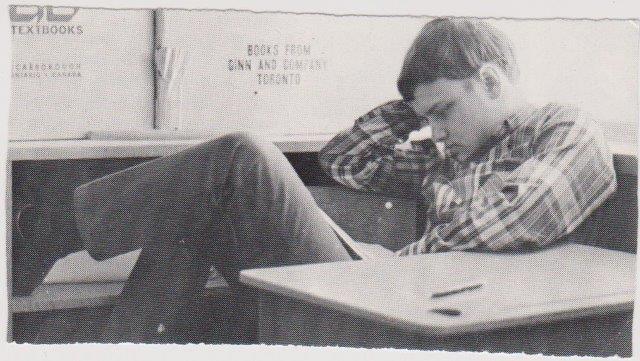
005 (11)

(Melancholy ‘genius’ at 17, gr. 12 English class–a lad lost in a first exposure to Hamlet)

Posted in Uncategorized | Leave a comment

The Necessity of The Wild

007 (2)007 (2)

DSCN5275

As powerful as the desire and drive for peace and civilized experiences are those for The Wild in its many shapes and forms, ranging from gardening to free, intense living and uninhibited natural behaviors.

For many urban dwellers, this desire and drive can be seen in the weekend and vacation getaways, often to the country or wilder locations such as the sea and mountains. The reason many folks own pets is to have that sense of The Wild in their own living rooms with a comfortable/comforting proximity. Dogs represent one kind of ideal of wildness with their responsiveness and interactions with humans. Cats are more ‘primal’ and untameable to varying degrees. (They are their own creatures and definitely a ‘wilder’ species except in the cases of such dogs as pit bulls and others that can lose whatever learned controls.)

Even bird followers and feeders seek that connection with The Wild, sometimes feeding chickadees by hand, for instance. And one thinks also of the frenzy generated in motorists by Rocky Mountain sheep or ducks appearing on a highway or city road.

Wild landscapes seem to evoke strong feelings and active passions in many who go hiking and climbing. Many times there are edges or extremes to these experiences such as in skydiving, hang-gliding, climbing Everest or canoeing the Nahanni. People feel most alive and reconnected with Nature in these more active encounters with The Wild, and closer to Earth, whether on land, in the water, or in the sky. The Wild in its physical exterior forms, then, is an insatiable, recurring part of human experience and desire.

But there are other forms of The Wild as represented by human nature, behaviors and passions. Ofttimes these behaviors ‘break out of the conventional’ to express and fulfill themselves. Something there is, as mentioned above, that wants excitement, drama, depth, and connection with wilder manifestations of human possibilities of experience.
Some of the most interesting forms and variants of The Wild are to be found in the arts–in music, painting, movies, and literature, in particular.

In movies, it can be seen in the ‘human wilds’ or natural chaos depicted by such diverse works as Deliverance, Into the Wild, Apocalypse Now, All Is Lost, Persona, Ran, Psycho, Vertigo, The Birds, Cape Fear (1962), Pierrot le Fou, Who’s Afraid of Virginia Woolf?, Dog Day Afternoon, Equus, Badlands, Reflections in a Golden Eye, Mississippi Burning, The Misfits, The Mosquito Coast, Brewster McCloud, Picnic at Hanging Rock, Dances with Wolves, Dead Ringers, Crash (2005), The Godfather, A River Runs Through It, La Dolce Vita, Straw Dogs, Walkabout, Wild Strawberries, Zorba the Greek, and Lawrence of Arabia. Often there are psychological dimensions or madness to such edges. Director David Lean perhaps spoke for many of us when he enthused about his Lawrence: “I love nuts.” And so do the masses, especially loving antiheroes, psychopaths, and criminals (to wit, Silence of the Lambs and other films of that disturbing ilk).

Some of the most interesting, ‘wild’ painters have included, first and foremost, Vincent van Gogh, Pablo Picasso, and Jackson Pollock. People have found beauty and a strange aesthetic or soul satisfaction from their wild, edgy works. For examples of The Wild in music, one need go no further than Beethoven, John Cage, the ’50s avant-garde jazzmen, Jimi Hendrix, or The Who. (In Canada, Buffy Sainte-Marie, Gordon Lightfoot and Bruce Cockburn have frequently turned to The Wild, particularly of nature, for their song subject matter.) Regardless of genre, music aficionados have generally sought and welcomed the ‘wilder’, more challenging artists who have pushed the limits of music, reinventing it and us in the process.

And The Wild is to be found in the greatest works of memorable literature: The Odyssey, Hamlet, Macbeth, Othello, Robinson Crusoe, Wuthering Heights, A Tale of Two Cities, Walden, The Return of the Native, War and Peace, Heart of Darkness, Ulysses, The Moon and Sixpence, Lady Chatterly’s Lover, A Passage to India, To the Lighthouse, The Waves, Mrs. Dalloway, 1984, Lord of the Flies, Suddenly Last Summer, On the Road, Rosencrantz and Guildenstern Are Dead, One Flew Over the Cuckoo’s Nest, the poetry of Emily Dickinson, Walt Whitman, and Robert Frost; and such diverse Canadian titles as “David”, Never Cry Wolf, Who Has Seen the Wind, Beautiful Losers, Wolf Willow, Where Nests the Water Hen, The Apprenticeship of Duddy Kravitz, the poetry of Archibald Lampman and E.J. Pratt, and even those olde animal stories by Grey Owl, Charles G.D. Roberts and Ernest Thompson Seton.

The Wild, then, is potentially a very broad topic and mode of experience. For many, it superficially has more to do with Nature than people. But as shown above, The Wild runs deep and long through the history of human behavior, culture, and civilization. Like the English Romantic Rebellion of the late 1700s–early 1800s, it rears its head from time to time in history, and still drives much of what still interests or fascinates us about life today: the raw energy, the unconventional enthusiasms, the need for Nature or human nature and their many edges. Our spirits, souls, bodies, and consciousnesses perpetually and repeatedly hunger for The Wild. It goes with the territory of being human, ultimately.

…………………….

I will just add that perhaps the supreme forms of The Wild are The Wild as experienced, understood, and appreciated by individual consciousness, are The Wild as experienced by and in the Imagination.

photo credits:

-”Self-Portrait with Pipe” (Jan. 1889 by van Gogh)

-cropped close-up of much larger original photo by Roddy McDowall of Sir Laurence Olivier in the 1964 production of Othello

-lake scene east of Jasper, Alberta

(blog entry reprint)

Posted in Uncategorized | Leave a comment

Waterton Wide, 2000ish (shot with disposable camera)

003 (22)

Buffalo on way into Waterton

009 (3)

Prince of Wales hotel seen from lake cruise

Posted in Uncategorized | Leave a comment

Ernest Hemingway Quote:

IMG_2279

“There is no friend as loyal as a book.”

Posted in Uncategorized | Leave a comment

Legendary Songwriter-Performers: Ian and Sylvia Tyson

IMG_2554

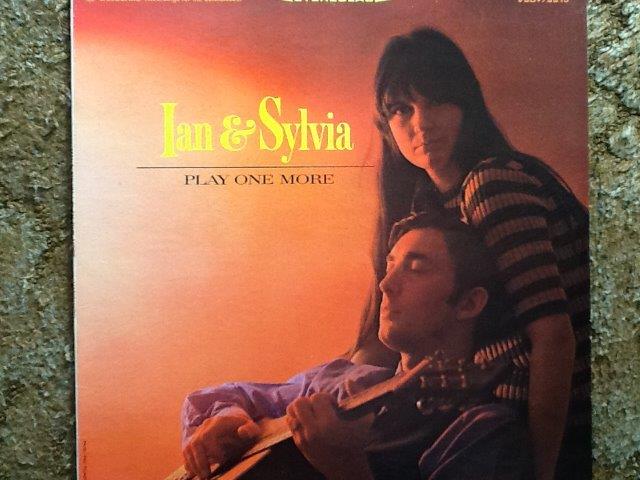
(Vanguard, 1965; photo: Paul Rockett, design: Jules Halfant)

IMG_2552

(So Much for Dreaming –closeup/excerpt of jacket, Vanguard, 1967; authentic, rare flatsigned cover: “Sylvia” to left of Ian’s head, “Ian Tyson” on his neck; photo: Philippe Halsman)

IMG_2551

(MGM, 1967;)

IMG_2553002 (33)

(left: Columbia, 1967; right: highly recommended book by John Einarson and the Tysons, McClelland & Stewart, 2011; photo: Paul Rockett, Elliott Contemporary; design: Terry Nimmo)

IMG_2555

(Ian’s preferred image and authentic cowboy identity; the popular Cowboyography 1987 Stony Plain LP; photo: Kurt Markus, design: Elaine Prodor Design)

004 (12)003 (22)

(Left: signed illustrated bio–1994 Gibbs & Smith, photo: Ellen Brodylo & Mike Morrow, design: Mary Ellen Thompson; right: 2010 Random House–written with Jeremy Klaszus, photo: Kurt Markus, design: Terry Nimmo)

Ian Dawson Tyson (1933-) and Sylvia (Fricker) Tyson (1940-) have been entertaining for decades with their unique voices and songs. Ian and Sylvia, as they were first known, began working together in early ’60s Toronto and eventually developed a wide-ranging fan base on both sides of the border. As a duo, they released many fine, interesting albums into the ’70s including their country-rock masterpiece Great Speckled Bird, as well as writing many popular songs including “You Were on My Mind”, “Loving Sound”, “Someday Soon”, and the iconic “Four Strong Winds”–frequently voted the most favorite, popular Canadian song.

They started as a folk duo, eventually being supported by such famous musicians as Felix Pappalardi, David Wilcox, Amos Garrett, and David Rea. They explored folk rock briefly before transitioning into country rock, largely through Ian’s background and tastes. Along the way they had their own tv shows such as Sunday, Nashville North, and The Ian Tyson Show.

After they split, Sylvia hosted a CBC radio show Touch the Earth, anchored the popular all-female folk group Quartette, and wrote a well-reviewed novel Joyner’s Dream. Ian, meanwhile, embraced his cowboy roots fully with a successful run of cowboy albums for Stony Plain Records. He authored two books about his life, and eventually, he and Sylvia did some reunion appearances (notably on a CBC special) and told their story together in Four Strong Winds, shown above.

I first got interested in them in 1967 (when I was in grade 12) via their first folk-rock album So Much for Dreaming, and learned to cover several of their songs. Later that winter, my later-wife and I saw them in a big sold-out gymnasium at U of M; they were hot and the perfect epitome of a handsome, talented folk duo-couple for the height of the hootenanny era. They would send shivers down your back with their a cappella Appalachian songs; I have never heard a couple sing tighter and more powerfully than they did that night.

We later went to see them in their country-rock glory as Great Speckled Bird at the U of A cafeteria–an amazing show that left many of their purer folkie fans in the dust. But they had many great new songs (“”Trucker’s Café”, “Smiling Eyes”, “Love What You’re Doin’ Child,” “Calgary”, “This Dream”) and their best-ever back-up road band. They deserved a far better fate as tastes changed and their sales and concerts dwindled.

But they were both survivors and I’m glad I got to see Ian in his full cowboy sensibility playing live several times, including with ESO. The three books released above cover his and Sylvia’s life and work together and apart nicely. Much of their best Ian and Sylvia work is covered by Great Speckled Bird and by The Complete Vanguard Studio Recordings. They influenced my early music, folk sound, and developing understandings of the possibilities of song. They were truly beautiful, charming, tasteful entertainers and wonderful examples of Canadian voices, songwriters, and artists who came to the timely fore of Canada’s then-Centennial era.


Posted in Uncategorized | Leave a comment

The Tempest: A Masterful Production

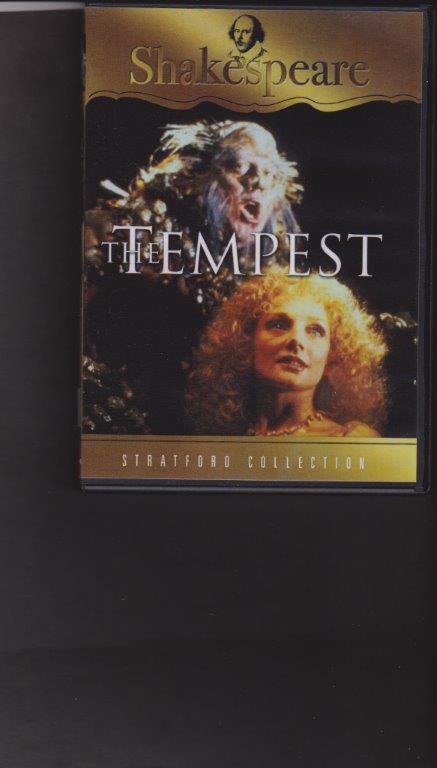
001 (80)

The Tempest is a magical romance, and a late play clearly written by Shakespeare based on its poetry, quotables, imagery, and motifs–unlike the dubious Cymbeline, Pericles, and The Winter’s Tale (see review that follows) commonly attributed to Shakespeare, which don’t reveal any of the above familiar qualities of The Bard.

I would highly recommend Stratford Festival’s 1982 production of this play which was originally televised by CBC. John Hirsch’s direction and Len Cariou’s Prospero are both masterful. The casting and acting are uniformly excellent and engaging. The sets and costumes (Caliban and Ariel’s, in particular) are miraculous. Each scene is about as perfect as one can imagine.

Despite this being a filmed live production, it does not seem stiff. The audience’s laughter is miked to give one a strong sense of how jokes and scenes went over. The CBC Home Video also punctuates the production with trumpeters and scenes outside the theatre as well as occasional, unintrusive shots of audience members and instances of actors talking to the camera. If anything, these make one feel that one is also there in the audience. I was impressed overall by this illusion which echoes Prospero’s various lines to the audience. If you are a fan of the play and want to revisit the play when you wish, you couldn’t do better than this memorable, powerful version.

ps/ Watch for a small cameo by Loreena McKennit and a super performance of the drunk Stephano by Nicholas Pennell, of the original BBC Forsyte Saga.

Posted in Uncategorized | Leave a comment