“Where there is no vision, the people perish.”
–Ecclesiastes
(Sorry, nice haircuts, non-stop selfies, and Vogue photo shoots don’t help a country in troubled, dangerous times.)
“Where there is no vision, the people perish.”
–Ecclesiastes
(Sorry, nice haircuts, non-stop selfies, and Vogue photo shoots don’t help a country in troubled, dangerous times.)

A basic continuum and duality.
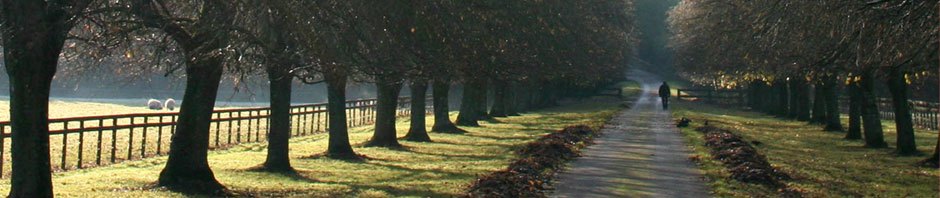
Was watching a DVD of beautiful Japanese gardens and recalling those I’ve visited in the past. The overall peaceful, harmonious, civilized feel to such a pace/context. How time is magically slowed down as you watch scenes of absolute stillness juxtaposed with very slow movement such as raindrops falling on pools or rings emanating slowly from the drops hitting the water, or slow-gliding goldfish of various sizes. The steady sound of water flowing, babbling, splashing over rocks.
Anyway the whole 9 yards imagined of Walden, formal European gardens, bright English country gardens (with their natural messiness)–a whole range of garden concepts reflecting the best of Eastern and Western civilized ideals, an interest in patterns and design with respect to Nature. Wordsworth, Constable, the Romantics et al.
And on the other end of the same continuum, I see the Beast Within of Lord of the Flies, King Lear, the Middle East, ISIS blowing up people and great ancient monuments, child-bombers (a complete evil destruction of innocence), pipelines, fracking, irrational hate and war. Zero interest in flowers, gardens, people as ends in themselves, civilization and its many fruits up to the 1990s. Primitive people, animal-like or worse, often soulless and totally unempathic.
I also envision something that hates Beauty and Nature as well as the simultaneously built-in, indifferent “Nature red in tooth and claw” aspects of animals killing one another and forces of Nature– tornadoes, floods, and ice storms destroying, willy-nilly, people and their lives.
In all of this, how Nature per se contains the duality Man plays out irrationally, blindly, and impersonally. The capacities for peaceful civility and brutal violence built into both Nature and Man, Man being part of Nature playing out what has always been in the background/context.
But I am left pondering the main difference between the two of unique, irrational human hate, even though gentleness, peace, tenderness, and potential nurturing are so built-in and remain possible within and for both Nature and Man.
Meantime, there is, in many of us out there, something that doesn’t love a garden.
she wore a glove.
(An old joke. Humor: the pleasure of deception or irony. Playing games with expectation and assumptions.)

(Heinemann, 1961 dj)
Graham Greene is, arguably, England’s most prolific, popular, successful best novelist from the 1930s to ’60s, he, the author of The Power and the Glory, Brighton Rock, The Third Man, The Heart of the Matter, Travels with My Aunt, The Comedians, Monsignor Quixote, and many other fine novels and ‘entertainments’ as he called some of his works.
Querry is an architect who has mysteriously ‘dropped out’ and gone to the heart of Africa, to a leperosie to help the church there to build a much-needed hospital. He has sworn off women and religion, but people there have a need to turn him into a martyr and hero, aided by Parkinson, a media-hound, who falsifies Querry’s life-story and complicates and compromises his chosen seclusion. The ending is somewhat tragic with a significant, totally unexpected betrayal.
As with all of Greene’s books, the protagonist and main focus is an outsider who has an uneasy relationship with the Catholic church. Conflicts are realistic and layered and there is no shortage of characters with agendas. Best of all is Greene’s fantastic, smooth dialogue which communicated most of the conflicts and themes. Greene novels are always deeply ironic with many surprises and absurdities which ring true, echoing real-life experiences. His books are page-turners of high thought–well-worth the minimal effort. This book also has many interesting views of male-female relationships and love.
Highly recommended.
-The child is the father of the man.
-Strongest minds/Are often those of whom the noisy world/Hears least.
-A man of hope and forward-looking mind/Even to the last!
-They flash upon that inward eye/Which is the bliss of solitude.
-That best portion of a good man’s life./His little, nameless, unremembered acts/Of kindness and love.
-We are laid asleep/In body, and become a living soul:/While with an eye made quiet by the power/Of harmony, and the deep power of joy,/We see into the life of things.
-For Nature then…/To me was all in all.
-I have learned/To look on nature not as in the hour/Of thoughtless youth; but hearing oftentimes/The still, sad music of humanity.
-I have felt/A presence that disturbs me with the joy/Of elevated thoughts; a sense sublime/Of something far more deeply interfused,/Whose dwelling is the light of setting suns,/And the round ocean and the living air,/And the blue sky, and in the mind of man.
-Nature never did betray/The heart that loved her.
-The world is too much with us; late and soon,/Getting and spending, we lay waste our powers:/Little we see in Nature that is ours;/We have given our hearts away, a sordid boon!/…for this, for everything, we are out of tune.
-Thy soul was like a star, and dwelt apart.
-There was a time when meadow, grove, and stream,/The earth, and every common sight,/To me did seem/Apparelled in celestial light./The glory and the freshness of a dream./It is not now as it had been of yore;–/Turn wheresoe’er I may,/By night or day,/The things which I have seen I now can see no more.
-But yet I know, where’er I go,/That there hath past away a glory from the earth.
-Whither is the visionary gleam?/Where is it now, the glory and the dream?
-Our birth is but a sleep and forgetting.
-Shades of the prison-house begin to close/Upon the growing boy.
-Though nothing can bring back the hour/Of splendour in the grass, of glory in the flower.
-In the faith that looks through death,/In years that bring the philosophic mind.
-To me the meanest flower that blows can give/Thoughts that do often lie too deep for tears.
-Whether we be young or old,/Our destiny, our being’s heart and home,/Is with infinitude, and only there;/With hope it is, hope that can never die./Effort, and expectation, and desire,/And something evermore about to be.
-There is/One great society alone on earth:/The noble living and the noble dead.
-That blessed mood,/In which the burthen of the mystery,/In which the heavy and the weary weight/Of all this unintelligible world,/Is lightened.
-Plain living and high thinking are no more.
-One impulse from a vernal wood/May teach you more of man,/Of moral evil and good,/Than all the sages can.
-‘Tis said that some have died for love.
-Pleasures newly found are sweet/When they lie about our feet.
-Men are we, and must grieve when even the shade/Of that which once was great is passed away.
-Small service is true service, while it lasts.
-Poetry is the breadth and finer spirit of all knowledge; it is the impassioned expression which is in the countenance of all Science.
-Poetry is the spontaneous overflow of powerful feelings: it takes its origin from emotion recollected in tranquillity.
-Every great and original writer, in proportion as he is great and original, must himself create the taste by which he is to be relished.

(nice, informative Duke DVD, 2012)
A labor of love by several U.K. scholars including Jonathan Wordsworth (a relative). Shot on location with scenes at Dove Cottage and Rydal Mount as well as beautiful landscapes familiar to Wordsworth. Wordsworth’s poems are well-read by Ted Hughes. The scholars give quotes from the main poems, but the focus is more on the lives of Wordsworth and Coleridge with some passing references to Southey, and on the landscapes that inspired the first two’s great works. Easily the best video made on Wordsworth, giving visual background to his life and thought. Highly recommended.


(left: the script signed by Wallace Shawn; right: highly recommended: the Criterion version with interviews with the 2 stars of the most famous talking-heads movie ever made)
The great 1981 film classic directed by Louis Malle. Daring–consisting mainly of 2 hours of non-stop conversation between two male friends in a restaurant. Stars screenplay writers Wallace Shawn and Andre Gregory. Full of challenging material for complacent people and viewers. Some quotes:
“‘I could always live in my art, but never in my life.’”
“I mean, really, we’re just going around all day like unconscious machines, and meanwhile there’s all this rage and worry and uneasiness just building up and building up inside us.”
“Because somehow in our social existence we’re only allowed to express our feelings weirdly and indirectly. If you express them directly, everyone goes crazy.”
“Everything passes in a kind of trance.”
“…one of the reasons that we don’t know what’s going on is that when we’re there at one of these parties we’re all too busy performing. We’re concentrating on playing our own roles and giving a good performance, so we can’t perceive what’s going on around us.”
“And so everyone acts as if they know exactly how they ought to conduct themselves at every single moment, and they all seem totally self-confident. Of course, privately, people are very mixed up about themselves, you know, and don’t know what they should be doing in their lives, and they’re reading all these self-help books–”
“You know, we do live in ludicrous ignorance of each other….But we really don’t dare to ask each other.”
“We just put no value at all on perceiving reality.”
“Our minds are just focused on these goals and plans, which in themselves are not reality….They’re part of a dream life.”
“And if you’re just operating by habit, then you’re not really living. I mean, you know, in Sanskrit, the root of the verb “to be” is the same as “to grow” or “to make grow”.
“If you’re just eating out of habit, you don’t taste the food, and you’re not in touch with the reality of what’s happening to you; you’re in a dream world again.”
“Because we don’t see the world. We don’t see ourselves. We don’t see how our actions affect other people.”
“But has it ever occurred to you, Wally, that the process which creates this boredom that we see in the world now may very well be a self-perpetuating unconscious form of brainwashing created by a world totalitarian government based on money?…that somebody who’s bored is asleep? And somebody who’s asleep will not say no?”
“You see, I keep thinking that we need a new language, a language of the heart…some kind of language between people that is a new kind of poetry, that is the poetry of the dancing bee, that tells us where the honey is.”
“You see, Wally, the trouble with always being active and doing things is that it’s quite possible to do all sorts of things and at the same time be completely dead inside.”
“Because I do believe that if you’re just living mechanically, then you have to change your life.”
“I just had to put myself into a kind of training program to learn how to be a human being.”
“[I had to] cut out all the noise around me and stop performing for a few moments and just listen to what was inside me.”
“…or maybe what we’re really talking afraid of is thinking about a kind of existence that we’ve lost, which if were to remember would make us give up everything.”
“I think it’s that moment of contact with another person. That’s what scares us. That moment of being face to face with another person.”
(1st published here June 13, 2014)

George Orwell, author of Nineteen Eighty-four, forecast many things that have become truths and truisms today. Here are some quotes from that book and others by one of the most unappreciated authors of the twentieth century:
The essence of being human is that one does not seek perfection.
At 50, everyone has the face he deserves.
Happiness can exist only in acceptance.
Of pain you could wish only one thing: that it should stop.
Reality is inside the skull.
Reality exists in the human mind and nowhere else.
Nothing was your own except the few cubic centimetres inside your skull.
To see what is in front of one’s nose needs a constant struggle.
To think, to think, even with a split second left–to think was the only hope.
Until they become conscious, they will never rebel.
Orthodoxy means not thinking–not needing to think. Orthodoxy is unconsciousness.
Perhaps a man really dies when his brain stops, when he loses the power to take in a new idea.
If people cannot write well, they cannot think well, and if they cannot think well, others will do their thinking for them.
Ignorance is strength.
Doublethink means the power of holding two contradictory beliefs in one’s mind simultaneously, and accepting both of them.
Great spirits have always encountered violent opposition from mediocre minds.
If both the past and the external world exist only in the mind, and if the mind is controllable–what then?
The consequences of every act are included in the act itself.
Freedom is the right to tell people what they do not want to know.
Early in life I noticed that no event is ever correctly reported in a newspaper.
There was truth and there was untruth, and if you clung to the truth even against the whole world, you were not mad.
The very concept of objective truth is fading put of the world. Lies will pass into history.
The most effective way to destroy people is to deny and obliterate their own understanding of their history.
In a time of deceit telling the truth is a revolutionary act.
Myths which were believed in tended to become true.
Advertising is the rattling of a stick inside a swill bucket.
All issues are political issues.
The opinion that art should have nothing to do with politics is itself a political attitude.
Political language is designed to make lies sound truthful and murder respectable and to give an appearance of solidity to pure wind.
Power is inflicting pain and humiliation.
Power is tearing human minds to pieces and putting them together again in new shapes of your own choosing.
If you want a picture of the future, imagine a boot stomping on a human face–forever.
The power is not a means; it is an end….The object of power is power.
Big Brother is Watching You.
Within certain limits, it is actually true that the less money you have, the less you worry.
Perhaps one did not want to be loved so much as to be understood.
If you loved someone, you loved him, and when you had nothing else to give, you still gave him love.
(previously published here Aug. 20, 2014)

(t-shirt from Johnny Clegg concert; artist: South African’s Norman Catherine )
The Truths and Wisdom of the Many Famous
To get to an entry/selection: look up by month and year in right-hand column on any of blog’s pages.
Worth Remembering, Dec. 14, 2012
Oscar Wildeisms, Jan. 16, 2013
Truer Words Were Never Spoken–Shakespeare, Jan. 29, 2013
Nature Quotables, May 8, 2013
Individual Quotes, May 25-30, 2013
Women Quotables, June 2, 2013
More Memorable Quotes, June 5, 2013
Quotes on Tenderness and Touch, Aug. 9, 2013
Henry David Thoreau, Aug. 12, 2013
Risking, Oct. 8, 2013
Trust, Oct. 8, 2013
On Letting Go, Oct. 8, 2013
Ponderables, Oct. 9, 2013
Enthusiasm, Oct. 17, 2013
Decisions, Choices, Oct. 19, 2013
‘Instincts’, Intuitions, Oct. 19, 2013
From The City of Words, Jan. 19, 2014
Some Personal Outtake Quotes, Feb. 1, 2014
Worth Quoting Relative to Now, Feb. 4, 2014
Granite and Rainbow, Feb. 5, 2014 (Virginia Woolf)
V-Day Quotables, Feb. 14, 2014
Concurrences on Writing, Feb. 23, 2014
Katherine Mansfield’s Goodbye, Mar. 22, 2014
Of Woolf, Coleridge, and Shakespeare, Mar. 27, 2014
The Value of Aphorisms, Apr. 14, 2014
On Life-Luminosity by Woolf, Apr. 18, 2014
Prophetic Orwell, Aug. 20, 2014
Some Aldous Huxley Views, Oct. 23, 2014
Holiday Reflections, Dec. 27, 2014
Year-End Musings, Dec. 28, 2014
Assorted Musings, Jan. 17, 2015
Aphorisms, Jan. 31, 2015
Friday: The Day’s Conclusions, Jan. 30, 2015
Quotes, Mar. 12, 2015
Quotes, Mar. 16, 2015
Quotes, Mar. 20, 2015
Quotes, Apr. 7, 2015
Just finished watching an exuberant, over-the-top 1999 Royal Shakespeare Company live presentation on DVD of this play by Shakespeare, and had a familiar feeling as I watched (which I’ve had before through much of Cymbeline and Pericles). This play which was heavily borrowed from other sources was either only partly Shakespeare, or very weak Shakespeare, or not by Shakespeare.
True, there are some superficial resemblances (to Ophelia) such as the flower imagery in the exiled king’s daughter speech and the great overblown anger of Leontes, mirrored in two other fathers, Polixenes and the Old Shepherd, that resembles, superficially Lear’s great blow-up. There is also the scolding of Paulina, which is an extended version of Emilia in Othello. But, by and large, this could be simple copying by another writer of the Bard’s time (The play was not in the First Folio.). There are way too much singing, bawdy songs, clowning, empty bombast, and non-stop melodrama minus the majesty and poetry of, say, The Tempest–a more obvious Shakespeare text.
A sampling of some trite lines:
“Paddling palms and pinching fingers”
“A sad tale’s best for winter/I have one of sprites and goblins.’
“I am a feather for each wind that blows.”
“Exit, pursued by a bear.” (stage direction)
“This is fairy gold.”
“Set my pugging tooth on edge.”
“Summer songs for me and my aunts,/While we lay tumbling in the hay.’
“A snapper-up of unconsidered trifles.”
“For the life to come, I sleep out othe thought of it.”
“Good sooth, she is/The Queen of curds and cream.”
“Lawn as white as driven snow.”
“I’ll queen it no inch further.”
These are great memorable lines by Shakespeare? Shakespeare wrote this trite crap? Methinks not. Not his diction, not his inspired, imaginative style. And moreso, the extraneous, unnecessary, overdone bawdiness, folk dancing and singing, the Delphic oracle device, a statue come-to-life, much of the second half’s totally autonomous feel, and a 16-year-break between the two halves of the play.
………………………………..
To Royal Shakespeare’s credit, they explore and project the text like a Broadway show; “there’s something for everyone here”. Right down to the billowing draperies which create the main setting effects. But nothing can convincingly sell the overwroughtness of the plot and empty words attributed to the great Shakespeare.