Grandson Meets Voltaire

IMG_0704

“Il faut cultiver notre jardin.”
–Voltaire, Candide, “It is necessary to cultivate our (own) garden.”

As in “We must tend to our own affairs.”
Or “We must focus on growing and creating our own life, world, and beauty.”
Or (given the craziness, chaos, destruction, violence, and absurdity of Voltaire’s/Candide’s/our world),”it is our individual (and collective) responsibility to make our own way/s in life (in order to survive, to achieve some beauty, balance, and perspective).”

Posted in Uncategorized | Leave a comment

Nobody’s Fool (1994): A Nice, Truly Entertaining Movie

001 (69)

(The great Paul Newman; Paramount DVD)

Paul Newman’s and Jessica Tandy’s last strong roles. (Both she and Newman were undeservedly robbed of Oscars again. Newman did, though, garner 3 critics’ awards.) Newman plays a working class stiff in a small New England town made up of ordinary, unglamorous folk who all have relationships with him of varying kinds. Tandy plays his aging landlady who loves him in spite of his bad behaviors, including his staunch refusal to have tea with her.

Bruce Willis, in an unbilled cameo, plays Sully’s arch nemesis-boss who enjoys their feud and always outwits him. Melanie Griffith plays the boss’s wife who is fed up enough with her husband’s bimbo-philandering (even when she’s pregnant) and offers to escape with Sully by flying to Hawaii. All the other characters–his not-all-there-best friend, the one-legged Jewish lawyer, Sully’s son, his grandsons, the daughter-in-law, Sully’s ex-wife and her husband, the town crazy woman, the cop who has it in for Sully, the female bartender–are well cast and very believable and likable in their own ways.

All of this is a credit to the writer and director Robert Benton, best-known for his Oscar-wnning work on Kramer vs. Kramer. In another’s hands, this film would have been overly-schlocky, over-the-top coarse, obvious, and unnuanced. John Bailey’s cinematography and Howard Shore’s music enhance the implicit underlying poignancy and limited lives of the protagonist and others in this town. Nobody’s Fool is a genuinely pleasant, very impressive, understated ‘little film’ that has a ton of playfulness and charm despite the ordinariness of the characters and their somewhat limited small-town lives and dreams. Highly recommended for viewing and/or purchase.

Posted in Uncategorized | Leave a comment

The 2 Big Misassumptions

1. Things will always remain the same. Nothing will ever change.
2. The Moment or The Opportunity will be there tomorrow. One does not have to act in the here-and-now.

Posted in Uncategorized | Leave a comment

Lord Jim (1965)

001 (69)

(Columbia Tristar DVD)

Richard Brooks, director of The Blackboard Jungle and In Cold Blood, always was a director who took chances. In 1965, he decided to film an ‘unfilmable’ Joseph Conrad classic, Lord Jim, in southeast Asia. The original book is likely unreadable now for 90% or more of today’s English-speaking population in North America. It is typical Conrad–very much a modern, psychological novel, concerned with inner mind-spirit workings of a unique protagonist. As with other of his ‘mystery men’, Conrad’s main concern is exploring, endlessly, what makes Jim tick and make the existential choices he does.

As such plot is about the furthest thing from Conrad’s mind. Only character, psychology, and atmosphere truly matter. Conrad is the first major 20th century English novelist of consciousness, predating Joyce, for example. Brooks successfully extracts the story, plot, and other conflicts and characters that are ‘hidden’ in the original book, and gives the viewer a visual interpretation of the complexities of Jim in fairly understandable, credible way. There are no false notes in Brooks’ faithful adaptation.

The talented Peter O’Toole is perfectly cast as a thoughtful eccentric, much as he is in Lawrence of Arabia, and this choice works well. It is hard to imagine who else might have played the role as strangely, memorably, and wilfully. Brooks’ script makes the same essential points that Conrad had made about guilt, the search for redemption, and the honorable death of the protagonist. The viewer feels the strand of fate or destiny running through the film right through to the ending.

James Mason, Eli Wallach, and especially Curt Jurgens all make effective villains. Jurgens gives a memorable performance of a desperately greedy, egotistical hanger-on parasitically attached to both Wallach and Mason. Daliah Lavi makes a plausible, enigmatic love-interest for Jim once he gets to the tin plantation.

The look of the film is realistic for both the film and book time periods. The action scenes are the very sort of thing missing from Conrad’s original that readers and viewers alike both expect. These plausibly contribute to both of Jim’s inner and external conflicts. No film could ever duplicate the inner workings and depths of psychology embedded in the original novel, but Brooks boldly and successfully catches the core of this Conrad classic. Jim is the archetype of today’s deeply-conflicted man who tries to retain his integrity and stay true to himself. Highly recommended for purchase or rental by those viewers interested in truly unconventional characters and classic movies no longer made today.

Posted in Uncategorized | Leave a comment

A Master Builder (2014)

001 (69)002 (29)

(One of the best film scripts ever, signed)

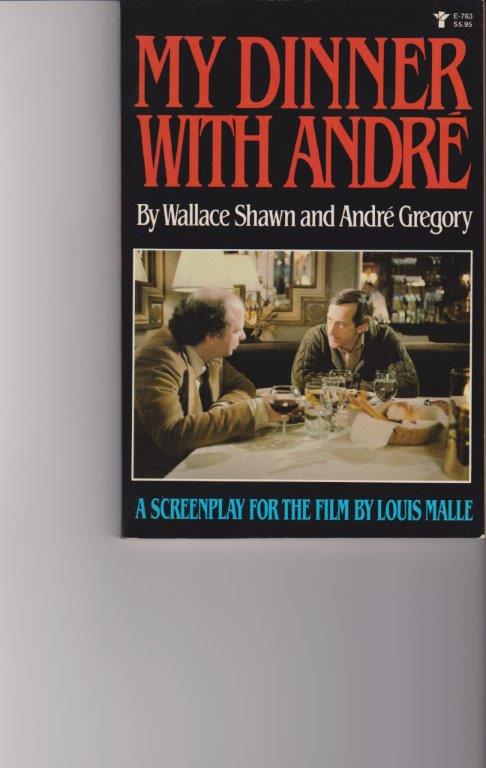
Ibsen’s play has been adapted by the team that brought you the successful My Dinner with Andre and quirky Vanya on 42nd Street. I will save you a lot of time and recommend those two over this new Criterion release.

One danger with taking oneself too seriously and pushing ego and art for art’s sake, is that things can end up over the top and excessively effusive with little grounding or relevance. This film is too weird, crazy and unfocused despite its offbeat source material; it lacks a convincing central theme and purpose that most audiences can identify with.

Casting himself as the master builder with female love interests is just a little too unbelievable and fake when Wallace Shawn is the protagonist! The opening context of Solness dying in his own house is gratuitous and its artificiality does not ring true in the ending. Jonathan Demme does his best to rein all the exuberance and ‘deep angst’ in, but fails. Only the second (supplements) disc is interesting with an interview with Demme, Gregory, and Shawn about what they were trying to do, and another interview with Shawn and Gregory talking about their work (more interesting), though a lot of both interviews focus on their personalities, differences, and ultimately egos.

In short, My Dinner with Andre unquestionably remains the latters’ masterpiece, but Vanya on 42nd Street is a clever Chekhov adaptation which actually works entertainingly, unlike A Master Builder. One can learn much about life, relationships, and the importance of attitude from those two earlier successful, intriguing movies.

Posted in Uncategorized | Leave a comment

TKAM–The 1st Edition Dust Jacket

001 (69) 002 (29)

TKAM remains a classic despite the publication of Go Set a Watchman. Simply put, it is the greatest children’s book ever written and a must-read for anyone wanting to find out information about how bad and unjust life was for many American blacks in the Southern states, in particular.

Beyond that, it is a strong coming-of-age novel about two children who move from innocence to experience very convincingly, with truthful observations about irrational fear, prejudice, discrimination, outsiders, and the importance of empathy and justice in dealing with others. If an adult or teacher was trying to encourage or ‘teach’ the value of empathy, this is a very appropriate book for that purpose.

Is it the Great American Novel? Here the arguments begin with many other contenders. Two books more squarely about the old American dream and the corrupt modern American dream are The Grapes of Wrath and The Great Gatsby. Like TKAM, they, too, feature obvious instances of maturation and injustice.

Grapes has more to say about Nature and the tragedies that occur when Nature ‘fails’ and politics and commercial interests override humanity. It ends with a stunning instance of generosity and sharing in the name of common brother-sisterhood. Like TKAM, it is a powerful book about humanity triumphing over limiting social contexts.

My money has long been on Gatsby. It is about the corruption of 20th century America which began after WWI with the rise of organized crime and the obsessive pursuit of materialism–both still flourishing today throughout North America. All of us dream as do all the characters in Gatsby, but all must balance dreams with whatever realities and truths that emerge, as Hamlet put it–“a little soil’d in the working”. Like Scout, Nick, too, comes to learn greater truths about Gatsby, Gatsby’s failed dream, his own life, himself, passion, purpose, and the American dream. For a modest-looking novella, this novel packs quite a rich, nuanced punch and is definitely a book for young adults grade 12 and on; it clarifies the conflict between dreams and reality, truth and illusion, and the prevailing values of our time which remain unchanged from when Fitzgerald wrote it.

Each of the three books mentioned are poetic in their own ways and make masterful use of language, emotions, and ideas. All three spoke to me largely the first time I read them. If I was recommending empathy and equality, I would recommend TKAM. If I was recommending the importance of human struggle, love, and the family, I would back Steinbeck’s great novel. But if I was recommending perspectives on recurring basic values of society today, I would recommend Gatsby. (For a relevant example of the latter, look no further than the movies of  Wall Street The Wolf of Wall Street.)

Posted in Uncategorized | Leave a comment

A Portrait of the Artist as a Young Man: Sons and Lovers (1960)

A well-done adaptation of D. H, Lawrence’s pre-WW1 classic about the coming-of-age of a wanna-be artist from a coal-mining town, encouraged by his possessive mother and frustrated by his alcoholic coal-mining father. Dean Stockwell gives a convincing performance of Paul Morel, the protagonist, and his mixed emotions about the women in his life; the ‘spiritual’ Miriam (Heather Sears), the passionate suffragette Miriam (Mary Ure), and his manipulative mother (Wendy Hiller).

The three women characters are likewise believably portrayed, setting up the conflicts in Paul’s life, which, initially, have more to do with them than him. (Spoiler:) But the finale is realistic with Paul freeing himself from all three as he sets off to make his way in the world away from Nottinghamshire. The handling of love and sex gets at the central truths in the relationships of men and women and so the movie still stands up well today. The cinematography by Freddie Francis (who later went on to work with the great David Lean on his epic blockbusters) deservedly won an Academy award; his work is some of the best B & W photography from that time period. Jack Cardiff’s direction of the Lambert-Clarke script is delightfully seamless and thought-provoking. A big thumbs-up for this one.

Part of watching a good film is the vicarious experience of identifying with its characters, plot, conflicts, and themes. This movie recalled to me both my late parents: a hard-working, suffering mother who meant well and did whatever she maximally could to see that I would be successful in adult life, and my father who was an alcoholic for most of his early adult life up to 50. He became ‘someone else’ when he went on a bender, not unlike people today who change dramatically from serious drug abuse. My mother was similar to Paul’s mother–emotionally manipulative and possessive, judging each girlfriend according to herself and her own narrow specific values.

Such were both parents, that it was necessary for me to leave my home and city, to go on my own journey west from Winnipeg to the then-rising city of Edmonton. iI was a journey in which I followed my bliss and love, eventually marrying and launching into a career, becoming a master teacher, musician, and writer in the process. About as cliché as it gets, but the conventional did get balanced with love and my involvement in the arts. I wanted ‘more’ from Life (not necessarily money) and got it.

Of the women characters, I can only add that the representations in the film and book are very accurate for many of the girls and women I have met along the way, though often they have been a blend of both main aspects, and always very individual people rather than the simplified, polarized types presented in the film.

Further/ I think one of the key things to mention about the father and mother is that they were realistic; despite their negative qualities, the script, acting, and direction show them as having the best possible reasons for behaving as they did. They acted in the only ways they knew how, with the father being more comfortable with Paul’s attempts at freedom while the mother, in turn, supported him in his artwork.

Overall, the book and movie are right. One has to be responsible for one’s own life, ultimately, and it may be necessary to ‘move’ in order to follow one’s own necessary, individual process. Those who interact with us will have their reasons and various limits and limitations, always. No one is perfect, but sometimes people will end up offering their best in any case. Regardless of outcome, it is best to explore and to try out possibilities and opportunities in order to arrive at whatever pleasure, happiness, and information about oneself, others, and the world. It is this process view which is the strength of Lawrence’s novel and this movie, too.

Posted in Uncategorized | Leave a comment

Enjoy the First Three Years’ Archives That Follow!

They will make it easier for you to find and explore different topics of interest. (Use the months and years in the right-hand margin to get to pieces you are interested in.)

The raison d’etre of this blog continues to be  An Idea Garden, which is essentially an unpublished manuscript for a book of essays. It is my own personal favorite section and best reflects my values, beliefs, interests, and sensibility.

Tothineownselfbetrue.ca will now be taking a well-deserved summer break.

Posted in Uncategorized | Leave a comment

An Idea Garden: Meditations, Reflections, and Opinions

DSCN5352

(A Manuscript Toward an Opus Book of Essays)

I thank you for wandering around in my idea garden today. It is actually a consciousness garden of a large, sensitive sensibility. If ever you care to know who I am and was, it is pretty much here, so to speak. Enjoy and feel free to make a connection, or pick up an idea or inspiration.

To get to an entry/selection: look up by month and year in right-hand column on any of blog’s pages

On Individual Process–Aug (24) 2012

On the Necessity of Being an Individual–Aug (24) 2012

Conferring the Meanings of One’s Own Life–Aug (24) 2012

Consciousness–Aug (26) 2012

Connected Consciousness–Aug (29) 2012

Connected and ‘Removed’ Aug (30) 2012

Presence and Non-presence–Aug (30) 2012

Process, Context, and Choice–Sept (2) 2012

Life Possibilities–Sept (6) 2012

Moments of Being–Sept (10) 2012

Life as a Play: Of Performances and Roles–Sept (16) 2012

Of ‘Missing Pieces’–Sept (16) 2012

Of Dreams, Dreaming, and the Realization of Dreams (and Desires)–Oct (3) 2012

Of Dreams and Relationships–Oct (3) 2012

Of Passions–Oct (8) 2012

On Being Open to Love–Oct (17) 2012

Open-Heartedness and Intimacy–Oct (23) 2012

The Best Freedoms?–Oct (23) 2012

Of Imagination and Creativity–Oct (24) 2012

Poetry in an Unpoetic Age–Oct (30) 2012

In the Knowing–Oct (31) 2012

Epiphany–Nov (2) 2012

A Need for Play–Nov (5) 2012

The Importance of Daily and Existential Choices–Nov (7) 2012

Acceptance–Nov (7) 2012

Proof: On Being There for Others–Nov (10) 2012

Living Large–Nov (16) 2012

Why Literature?–Nov (18) 2012

Rare/st–Nov (25) 2012

The Newcomer–Nov (26) 2012

William Blake Speaking–Dec (2) 2012

Technology: Three Further Takes on Four Daze–Dec (4) 2012

A Meander–Dec (5) 2012

Recalling a Blithe Spirit–Dec (8) 2012

When We Dead Awaken– Jan (2) 2013

The Day, The Day–Jan (7) 2013

Self?– Jan (8) 2013

Only people– Jan. (18) 2013

4 Things about Death– Jan (19) 2013

An Orphan’s Musings– Jan (19) 2013

“O Tell Me the Truth about Love”– Jan (23) 2013

And, of course– (Jan 25)

Alienation, Within– Jan (27) 2013

Role Models and “Copying’– Jan 27 (2013)

Agendas, Politics–That Crapola– Feb (10) 2013

The Gifts of Self– Feb (17) 2013

Life Being Largely about Possibilities– Mar (10) 2013

Of Freedom: Personal and with Another– Mar (10) 2013

Some Conclusions Re. Communication– Mar (17) 2013

Of Easter Bunnies and Dreamers– Mar (30) 2013

Magic Moments– Apr (1) 2013

Living Free– Apr (11) 2013

Taking Charge of One’s Own Education– Apr (17) 2013

Each Day– Apr (24) 2013

An Idea Garden–Apr (26) 2013

Significant Connection–May (1) 2013

Sartre and Beyond–May (11) 2013

Doh! Ain’t No Apps for–May (11) 2013

Sound, Image, Movement–May (20) 2013

Father’s Day–June (16) 2013

Beyond Limits, Limitations: Adjustment, Acceptance, Autonomy, and Attitude–June (17) 2013

Life Beyond the Paradigms: An Immodest Proposal–June (18) 2013

Understatement–June (25) 2013

“ight”: On Making Connections–June (25) 2013

Winston Churchill–June (29) 2013

Taking Stock of One’s Day–July (10) 2013

The Increasingly Unempathic World July (20) 2013

The Only Constant–Aug (1) 2013

‘What People Look for Every Day’–Aug (3) 2013

Five Quick Takes–Aug (8) 2013

On Obliteration–Aug (9) 2013

Of Sensibility–Aug (9) 2013

The Process of Life–Aug (10) 2013

Observation, Anticipation, and Dependency–Aug (12) 2013

Of Johnny Carson and Play–Aug (12) 2013

Of Cages: Limits, freedom, and Awareness–Aug (14) 2013

Context, Environment, and Heredity–Aug (15) 2013

Freedom: Largely an Inner Matter–Aug. (15) 2013

Ultimate Sensibility–Aug (20) 2013

Garage Sale 1, 2, 3–Aug (26) 2013

Night Flight–Aug (27) 2013

On Falling Asleep to Paul Newman’s Voice–Sept (21) 2013

Some Key Points and Questions–Sept (21) 2013

From Shakespeare on Death to Attitude–Oct (23) 2013

On Fate or Mystery, But Still Choices–Oct (24) 2013

A Life of Projects–Oct (24) 2013

Consciousness and Attitude–Oct (26) 2013

Limits, Limitations, Freedoms: A Restatement–Oct (26) 2013

On Fear–Nov (3) 2013

Life as Risk–Nov (13) 2013

The key–Nov (15) 2013

Continuity of Purpose–Nov (17) 2013

Continuing Signs of the EM/D-Times–Nov (28) 2013

That ‘Awful’, Politically Incorrect Holiday–Dec (5) 2013

Yet Another Christmas Perspective–Dec (5) 2013

Government Control: The Continuing Limitation of Individual Freedom–Dec (14) 2013

Deborah Kerr and the ’24-hour flu’–Dec (21) 2013

Of Solstice Survival in the Frozen North–Dec (22) 2013

Antiques Roadshow Disappointments–Jan (14) 2014

Antiques Roadshow Jackpot Items–Jan (14) 2014

Facing the Unknown–Jan (24) 2014

The Continuing Values and Truths of Jean Paul Sartre–Feb (7) 2014

Crossing Hemispheres Feb (10) 2014

Of Process and Heraclitus Feb (14) 2014

Of Dumb Luck, Consciousness, Parmenides, and Reality–Feb (19) 2014

Attitude and Choice–Mar (4) 2014

Mutual Trust, Acceptance, and Openness–Mar (4) 2014

Me and Some Ideas of Western Philosophy, part 1–Mar (15) 2014

Part 2–Agreements with Specific Philosophers–Mar (15) 2014

Part 3–Personalism and Existentialism–Mar (15) 2014

Most of our days are spent…–Mar (28)  2014

Of the Bests, Letting Go, Etc.–Apr (3) 2014

Evidence that I Was Here–Apr (3) 2014

Actualizing Possibilities–Apr (7) 2014

The Performance Bug–Apr (14) 2014

Revisiting Presence and Sensibility–Apr (20) 2014

In the Midst of Life, We Are…–May (6) 2014

Head Close to Earth–May (6) 2014

Norman Bates on ‘Traps’–May (7) 2014

Power and Control–May (7) 2014

The Necessity of The Wild–May (8) 2014

Observations on Mansplaining–May (10) 2014

iPhone5 Commercial: The Lotos-Eaters Are Here–May (15) 2014

Technologies Taken for Granted: An Homage–May (2) 2014

“Go Play!’–May (21) 2014

Bertrand Russell Extrapolation– May (30) 2014

Head Close to Earth–part 2–June (5) 2014

Man and Nature by Design–June (6) 2014

2 Key Acceptances–June (15) 2014

Robin’s Song, 3:30 am–June (18) 2014

Always Nice–June (200 2014

Trouble in Paradise: Hawaii–June (22) 2014

“Context is all”–John Updike–June (29) 2014

What’s Most Important in Life–July (1) 2014

The Death of Hard Media News–July (5) 2014

Cues from Nature–July (23) 2014

Two Years Ago: The Skin of Our Teeth Revisited–July (26) 2014

A Great Epiphany–July (31) 2014

Suffering and Grief–Aug (14) 2014

Living Authentically–Sept (5) 2014

To Cover or Not to Cover Sept (11) 2014

Worst and Saddest of All–Oct (6) 2014

Watch What You Say–Oct (7) 2014

Parliament Hill Shootings–Oct (22) 2014

More Irrationality Today–Oct (22) 2014

A Zillion Processes–Oct (260 2014

Black Like me Revisited 50 Years later–Oct (3) 2014

Thoughts du Jour–Nov (30) 2014

Give us This Day Our Daily Changes–Nov (4) 2014

On Winter, Plastic Bags, Not Finishing Jobs, Close Calls, Luck, and ESP–Nov (9) 2014

The Bird and the Butterfly–Nov (22) 2014

6 Degrees in Minus 15–Nov (17) 2014

Although consciousness is important..–Nov (27) 2014

There are many who glide teflonly…–Nov (28) 2014

Further–Nov (30) 2014

“I am large, I contain multitudes”–Dec (1) 2014

Cyber Monday–Dec (1) 2014

Especially Crazy–Dec (6) 2014

Tragically, this crazy world at Xmas…–Dec (15) 2014

The Great Delusion–Jan (3) 2015

Sans Context and Perspective–Jan (10) 2015

Walking on Eggs: Our Intimidation Culture–Jan (10) 2015

More Insanity: “Doing Our Best to Save Nature”–Jan (14) 2015

The Human Need for Design–Jan (16) 2015

The pork tempest today…–Jan (16) 2015

The Necessity of Solitude and Retreat–Jan (18) 2015

It is easy to see that…—Jan (19) 2014

1% of the world’s population owns half of the world’s wealth–Jan (26) 2015

Dependencies–Jan (26) 2015

“Can Students Have Too Much Tech?”–Jan (31) 2015

Today we see a lot of dehumanization…–Feb (1) 2015

Related to synchronicity and coincidence…–Feb (4) 2015

Death on One’s Own Terms–Feb (7) 2015

The Amazon Drones Will Never Be Used–Feb (8) 2015

The Common Cold Revisited–Feb (13) 2015

Death as Close as–Feb (14) 2015

Monthly Massage Works–Feb (23) 2015

On Living Limitedly, Large Scale–Mar (3) 2015

Where Agatha and Her Husband Once Dug–Mar (9) 2015

Drone Endgame Madness–Mar (16) 2015

Grade 12 Diploma Exams Reduced to 30%–Mar (17) 2015

“Back to the Basics”–Mar (17) 2015

Solitude–Mar (170 2015

Why I Write–Mar (20) 2015

On Language–Mar (22) 2015

Further Personal Observations on Language–Mar (27) 2015

Those delightful memories when we trip over happiness–Apr (5) 2015

“There are more things in heaven…”–Apr (5) 2015

Monday, Monday–Apr (14) 2015

Musical Juxtaposition–Apr (25) 2015

Big Brother Lives in Alberta Education–May (2) 2015

Social/Global Responsibility: Making a Real $ Contribution–May (2) 2015

The Limits and Limitations of Technology–May (11) 2015

Most plugged-ins would rather have e-distractions and faux, virtual ‘connections than have to think–May (18) 2015

Revisiting Personalism and Existentialism–May (21) 2015

Prioritized Values–May (29) 2015

Dream Vision–May (29) 2015

The Truly Hard News of the Day–June (2) 2015

Re. Education in Alberta–June (30) 2015

Three Truths about Our Society Today–June (18) 2015

The most outrageous stuff…–June (18) 2015

Only Through Choice–June (19) 2015

Everything–June (24) 2015
Posted in Uncategorized | Leave a comment

The Individual vs. Society

DSCN7633

(see “Rappel Heaven” poem)

To get to an entry/selection: look up by month and year in right-hand column on any of blog’s pages

And so lately, Aug. 24, 2012

Rutting season, Aug. 25, 2012

Fly intimations, Aug. 25, 2012

The Waking Vision, Aug. 25, 2012

First winter/after bylaw, Sept. 2, 2012

Winter garden, Sept. 5, 2012

Free, Sept. 15, 2012

Proximity, Oct. 3, 2012

Zenith, Nov. 6, 2012

The painter’s brush, Oct. 3, 2012

Lastly, Nov. 28, 2012

December Shores, Dec. 11, 2012

Upsy-daisy, May 30, 2013

Something Like a Life, July 13, 2013

Beacon, Nov. 12, 2013

Sunday, Invermere, Sept. 28, 2014

Northern Journey, Dec. 20, 2014

And so, Dec. 20, 2014

5pm/july/the city, Jan. 11, 2015

Spring Flight Epiphany, Feb. 28, 2015

Rappel Heaven, Apr. 25, 2015

Posted in Uncategorized | Leave a comment